
India’s Bullet Train: MAHSR’s Progress & Impact
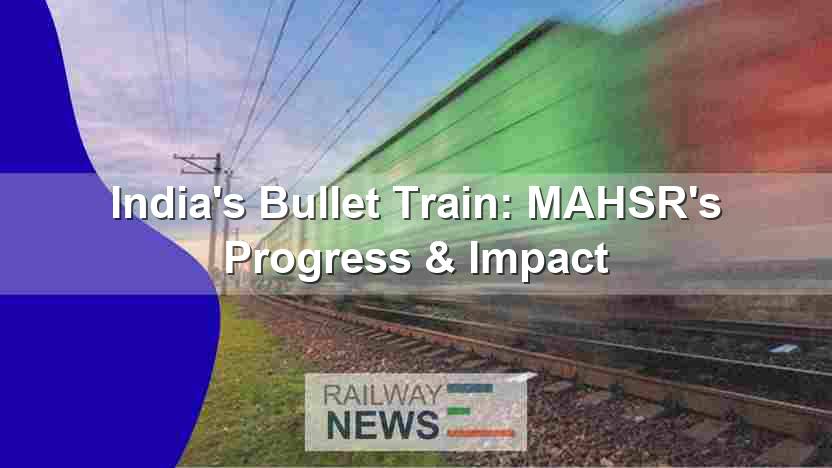
The Mumbai-Ahmedabad High-Speed Rail Corridor project in India is a landmark initiative aimed at reducing travel time between major cities by 90% through advanced engineering and international collaborations, focusing on sustainable environmental practices and strategic partnerships for successful implementation.
Introduction
This article explores the significant advancements in India’s high-speed rail infrastructure, focusing specifically on the Mumbai-Ahmedabad High-Speed Rail Corridor (MAHSR). The project, a landmark undertaking for India, represents a considerable leap forward in the nation’s transportation network. The construction of this corridor involves intricate engineering challenges, requiring collaborations between national and international experts. We will examine the key contracts awarded, the technological aspects of the project, and the implications for passenger connectivity and overall national development. The analysis will cover the design and construction of critical infrastructure components, the integration with existing railway systems, and the strategic partnerships driving this ambitious venture. This examination seeks to illuminate the complexities and innovations inherent in developing a high-speed rail system within a densely populated and geographically diverse landscape like India’s. The article also briefly explores the potential of integrating technological advancements such as centralized train control systems and sustainable environmental practices in rail operations. It will conclude by discussing the broader implications of the MAHSR project on India’s economic growth and future transportation strategies.
The MAHSR Project: A National Endeavor
The Mumbai-Ahmedabad High-Speed Rail Corridor (MAHSR), spanning 508 km, is India’s first bullet train project. It aims to connect Mumbai, the country’s financial capital, with Ahmedabad, a major commercial hub in Gujarat. The project is spearheaded by the National High-Speed Rail Corporation Limited (NHSRCL), a joint venture between the Indian government and participating state governments. The successful implementation of this project will significantly reduce travel time between the two cities, boosting economic activity and facilitating seamless passenger movement. The ambitious scope of the MAHSR necessitates a phased approach to construction and awarding of contracts for various segments.
Strategic Partnerships and Contract Awards
NHSRCL has strategically partnered with both domestic and international firms to ensure the project’s successful execution. A key example is the agreement with Larsen & Toubro (L&T), a leading Indian engineering and construction conglomerate, for the design and construction of an 8km viaduct, including the Vadodara high-speed rail (HSR) station. The strategic integration of the Vadodara HSR station with the existing Indian Railways platform No. 7 is a crucial aspect of ensuring seamless passenger transfer between the HSR and conventional rail networks. Additionally, the collaboration with Japan Railway Track Consultant (JRTC) for the design of the track work underscores the emphasis on international best practices and technological expertise. The awarding of 100% of civil contracts for 352km of the corridor, including eight HSR stations and two rolling stock depots, demonstrates substantial progress in the project’s physical implementation.
Technological Integration and Sustainable Practices
The MAHSR project is not merely about constructing a high-speed rail line; it’s about integrating advanced technologies and sustainable practices. The design and implementation of a centralized train control system (CTCS) is crucial for optimizing train operations and ensuring safety. The use of Continuous Welded Rail (CWR) further enhances the efficiency and smoothness of the railway operations. Moreover, incorporating sustainable features such as heat recycling HVAC (Heating, Ventilation, and Air Conditioning) systems in the stations minimizes the environmental impact of the project. This commitment to sustainability aligns with global trends in responsible infrastructure development.
Challenges and Future Implications
While the MAHSR project presents significant opportunities, it also faces challenges. Land acquisition, right-of-way issues, and potential cost overruns are common obstacles in large-scale infrastructure projects. Effective project management, transparent communication, and proactive mitigation strategies are vital for navigating these challenges. The successful completion of the MAHSR will not only revolutionize transportation in India but also serve as a model for future high-speed rail projects across the country. The project will demonstrate the feasibility and effectiveness of high-speed rail in a diverse geographic and demographic context, paving the way for similar ventures elsewhere.
Conclusions
The Mumbai-Ahmedabad High-Speed Rail Corridor (MAHSR) stands as a testament to India’s commitment to modernizing its transportation infrastructure. The project’s success hinges on a multifaceted approach encompassing strategic partnerships, advanced technological integration, and a commitment to sustainability. The collaboration between NHSRCL and firms like Larsen & Toubro (L&T) and Japan Railway Track Consultant (JRTC) showcases the synergy between domestic capabilities and international expertise. The design and construction of the 8km viaduct, incorporating the Vadodara HSR station, exemplifies the meticulous planning and engineering required for seamless integration with existing railway systems. The project’s emphasis on incorporating advanced technologies such as centralized train control systems and sustainable practices like heat recycling HVAC systems underscores a forward-thinking approach to rail development. The successful completion of the MAHSR, however, relies on overcoming challenges such as land acquisition and effective project management. The broader implications extend beyond mere transportation improvements; the project promises to stimulate economic growth, enhance regional connectivity, and showcase India’s capacity to undertake large-scale, complex infrastructure projects. The MAHSR will undoubtedly serve as a benchmark for future high-speed rail endeavors in India and beyond, shaping the nation’s transportation landscape for generations to come. The project’s success will not only transform travel between Mumbai and Ahmedabad but will also inspire and inform the development of future high-speed rail networks across the country and potentially serve as a model for other developing nations.

Railway infrastructure, rolling stock and transport technologies specialist focused on global rail industry developments, high-speed rail systems, signaling technologies and freight transportation. Covering railway investments, public transport modernization, rail operations and international mobility projects across Europe, Asia and North America.
RELATED POSTS

September 5, 2026 4:19 pm
CPK launched formal tender talks with four consortia to design...

September 5, 2026 7:14 pm
HS2 Ltd signed renegotiated civils contracts with EKFB and Align...

September 6, 2026 4:12 am
Alstom delivered the first of 100 new G Class trams...
September 6, 2026 8:17 am
DB InfraGO reopened the Nuremberg-Regensburg line in Bavaria on 31...
September 5, 2026 6:17 pm
Universal Signalling won a deal to install its U-Cross system...
September 6, 2026 12:20 pm
Indian Railways ordered a probe after a fire destroyed 2...