
India’s Northern Railway: Signaling System Modernization
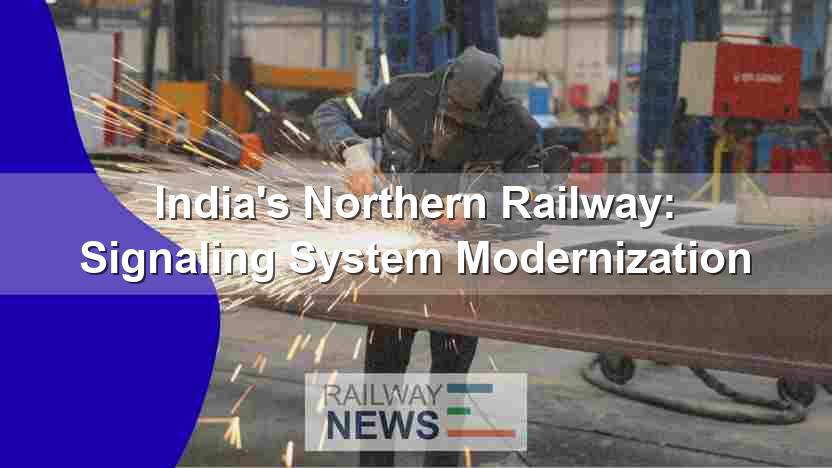
Modernizing India’s Northern Railway Signalling System involves replacing outdated mechanical interlocking systems with advanced electronic equivalents across 26 strategically located stations in three divisions of the Northern Railway zone, enhancing operational efficiency and safety protocols while increasing train speeds and overall network performance.
Modernizing India’s Northern Railway Signalling System: A Detailed Overview
This article explores the significant modernization project undertaken by RailTel, a subsidiary of Indian Railways, to enhance the signaling infrastructure within the Northern Railway zone. The initiative focuses on replacing outdated mechanical interlocking systems with advanced electronic equivalents across 26 strategically located stations. This upgrade is not merely a technological shift; it represents a crucial step towards improving operational efficiency, bolstering safety protocols, and ultimately, increasing the operational capacity of the Northern Railway zone. The project, encompassing a substantial investment of Rs 2.24 billion ($29.5 million), promises to significantly impact train speeds, safety mechanisms, and overall network performance. This analysis will explore the project’s scope, its technological advancements, the expected improvements, and its broader implications for India’s railway network.
Project Scope and Geographic Distribution
The modernization initiative encompasses 26 stations spread across three divisions of the Northern Railway zone: Delhi, Ambala, and Firozpur. The Delhi division (three stations) includes Pehowa Road (PHWR), Kaithal (KLE), and Kalayat (KIY), all situated in the Kaithal district of Haryana along the Kurukshetra-Narwana rail section. The Ambala division (nine stations) sees upgrades in Bathinda–Sri Ganganagar and Sirhind-Ambala Andaura sections. Finally, the Firozpur division (14 stations) will see improvements across the Amritsar-Pathankot and Lohian Khas-Phillaur sections. This wide geographical distribution highlights the project’s detailed approach to improving the Northern Railway network’s signaling systems.
Technological Advancements and Safety Enhancements
The core of this modernization lies in the replacement of antiquated mechanical interlocking systems with modern electronic interlocking systems. This transition significantly enhances safety and operational efficiency. The new electronic system allows for higher train speeds, increasing the maximum operational speed from 50kmph to 110kmph. Additionally, the project addresses several critical infrastructural aspects: elimination of the existing block system bottlenecks, replacement of mechanical level crossing gates with electrically operated systems, and implementation of a centralized power distribution system for improved yard management. The project’s impact on safety is multifaceted, including more accurate train control and reduced risk associated with the old mechanical systems.
Operational Efficiency and Capacity Improvements
The modernization initiative is expected to yield substantial improvements in operational efficiency. The increased train speeds resulting from the enhanced signaling system will lead to reduced travel times and increased throughput. The centralized power distribution system will improve the reliability and efficiency of power supply, minimizing disruptions and delays. Moreover, the elimination of block system constraints and the upgrade of level crossing gates contribute to a smoother and more predictable flow of rail traffic, resulting in increased capacity utilization of the existing infrastructure.
Broader Implications and Future Directions
RailTel’s investment in the Northern Railway zone’s signaling system is a significant step towards modernizing India’s vast railway network. The success of this project will serve as a model for future upgrades across other zones. The integration of advanced technologies, such as the KAVACH train collision avoidance system (an indigenous Automatic Train Protection (ATP) system), further demonstrates India’s commitment to technological advancement in the rail sector. This focus on safety, efficiency, and technological innovation aligns with global best practices and positions India’s railway system for sustained growth and improved passenger/freight service. The project’s success will not only improve the efficiency and safety of the Northern Railway zone but will serve as a significant step towards enhancing the overall performance of Indian Railways, reflecting a concerted effort towards a safer, faster, and more efficient national rail network. The eventual integration with centralized train control systems further emphasizes the long-term vision for a technologically advanced and integrated railway infrastructure across India. This modernization effort sets the stage for future enhancements and reflects a commitment to ongoing improvement and investment in the country’s vital railway system.

Railway infrastructure, rolling stock and transport technologies specialist focused on global rail industry developments, high-speed rail systems, signaling technologies and freight transportation. Covering railway investments, public transport modernization, rail operations and international mobility projects across Europe, Asia and North America.
RELATED POSTS

September 5, 2026 4:19 pm
CPK launched formal tender talks with four consortia to design...
September 5, 2026 7:14 pm
HS2 Ltd signed renegotiated civils contracts with EKFB and Align...

September 6, 2026 4:12 am
Alstom delivered the first of 100 new G Class trams...
September 6, 2026 8:17 am
DB InfraGO reopened the Nuremberg-Regensburg line in Bavaria on 31...
September 5, 2026 6:17 pm
Universal Signalling won a deal to install its U-Cross system...
September 6, 2026 12:20 pm
Indian Railways ordered a probe after a fire destroyed 2...