
Grand Paris Express Line 18: €26M Power System Project
The €26 million contract awarded to Colas Rail and Eiffage Énergie Systèmes for Line 18 of the Grand Paris Express (GPE) highlights the complexities involved in delivering and integrating traction power equipment, including rectification substations, switching substations, traction control installations, and third-rail systems, while also addressing safety and project management challenges.
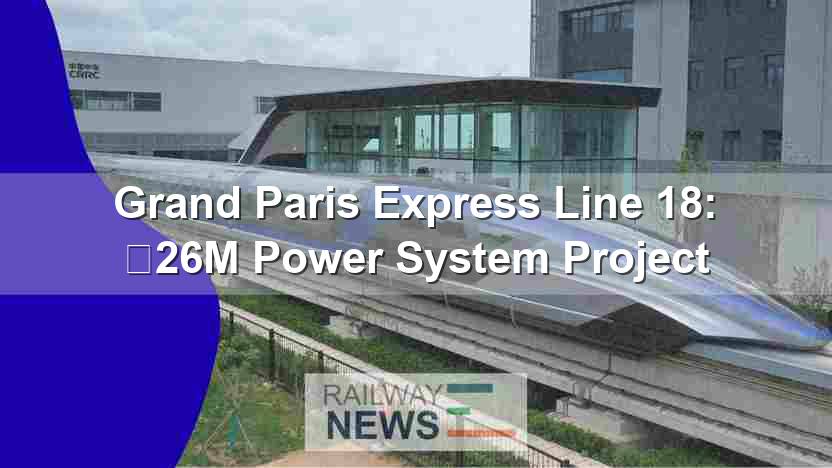
This article examines the significant €26 million contract awarded to a joint venture of Colas Rail and Eiffage Énergie Systèmes for the delivery and installation of traction power equipment for Line 18 of the Grand Paris Express (GPE) network in France. The project highlights the complexities of supplying and integrating power systems for a major metropolitan rail project, encompassing not only the provision of physical infrastructure but also sophisticated safety systems and project management. This analysis will delve into the scope of the work, the technological challenges involved, the phased implementation strategy, and the broader implications of the project for the future of rail infrastructure development. The article will further explore the significance of this contract within the context of the wider GPE project and the expanding role of public-private partnerships in large-scale infrastructure endeavors.
The Scope of the Line 18 Traction Power Project
The contract awarded to the Colas Rail and Eiffage Énergie Systèmes consortium covers a detailed range of activities related to the electrification of Line 18. This includes detailed design studies, the procurement and supply of a vast array of equipment, installation and commissioning, and detailed testing. The equipment itself is substantial, encompassing a significant amount of infrastructure: 15 rectification substations (RSS), seven switching substations (SSS), two traction control installations (TCI), and approximately 140 kilometers of traction cabling. The heart of the power distribution is a third-rail system, chosen for its efficiency in powering underground trains. This system requires careful design and installation to ensure reliable power delivery and passenger safety. Additionally, the contract mandates the integration of sophisticated automated safety systems crucial for the safe and reliable operation of the line. Project management, staff training, and the provision of spare parts are also integral components of the contract.
Technological Challenges and Solutions
Delivering a robust and reliable traction power system for a high-capacity metro line like Line 18 presents several significant technological hurdles. Precise coordination between the various substations (RSS and SSS), the TCI, and the third-rail system is paramount to avoid power fluctuations and ensure consistent train operation. This necessitates sophisticated control systems and real-time monitoring capabilities. The integration of automated safety systems adds another layer of complexity, requiring seamless interoperability with the train control systems and other safety mechanisms. The extensive length of the cabling network also presents challenges in terms of installation, testing, and maintenance. Successful execution requires meticulous planning, skilled workforce deployment and rigorous quality control throughout the project lifecycle. Additionally, mitigating the impact of construction on existing infrastructure and minimizing disruption to other ongoing projects within the larger GPE development is critical.
Phased Implementation and Project Management
The project is divided into three distinct phases spanning from mid-2023 to 2030, enabling phased commissioning. This phased approach allows for incremental testing and integration, minimizing the risk of large-scale system failures during the final commissioning stage. Effective project management is essential for coordinating the various phases and managing the numerous interfaces between different subcontractors and stakeholders. Careful planning and coordination across different work packages are necessary to ensure the timely delivery of the project within budget and to the required specifications. Regular monitoring and evaluation of progress are vital to identify and mitigate potential risks and delays.
Strategic Significance and Wider Implications
The award of this contract to the Colas Rail/Eiffage Énergie Systèmes joint venture underscores the growing importance of public-private partnerships (PPPs) in financing and delivering large-scale infrastructure projects. PPPs allow for the leveraging of private sector expertise and resources, whilst sharing the risk associated with such complex endeavors. This project’s contribution to the wider GPE network enhances Paris’s public transportation capabilities, improving connectivity and addressing the growing transportation demands of a large metropolitan area. The successful completion of Line 18 will serve as a significant benchmark for future metro projects, demonstrating the feasibility and effectiveness of adopting advanced technologies and innovative project management techniques in the development of modern rail infrastructure.
Conclusions
The €26 million contract awarded to the Colas Rail and Eiffage Énergie Systèmes consortium for the Line 18 traction power system exemplifies the complexity and scale of modern railway infrastructure projects. The project’s scope encompasses not only the delivery of substantial equipment – including 15 rectification substations (RSS), seven switching substations (SSS), two traction control installations (TCI), and 140km of cabling – but also the critical integration of automated safety systems, meticulous project management, and detailed staff training. The phased implementation strategy, spanning from mid-2023 to 2030, is a testament to the need for structured risk management and incremental commissioning in such large undertakings. The technological challenges involved, such as ensuring seamless coordination between the different substation types and the third-rail system, underscore the need for highly skilled personnel and advanced control systems. The project’s success is essential for the overall completion of the Grand Paris Express (GPE) network, significantly enhancing the public transportation capabilities of Paris and its surrounding areas. The strategic importance of this contract highlights the increasing reliance on public-private partnerships (PPPs) in financing and executing large infrastructure projects. The expertise and resources brought together by Colas Rail and Eiffage Énergie Systèmes demonstrate the benefits of collaborative approaches to tackling complex engineering and management challenges. The successful completion of this project will serve as a valuable case study for future rail projects, emphasizing the critical balance between technological innovation, robust project management, and effective public-private partnerships in delivering modern, safe, and efficient railway infrastructure.

Railway infrastructure, rolling stock and transport technologies specialist focused on global rail industry developments, high-speed rail systems, signaling technologies and freight transportation. Covering railway investments, public transport modernization, rail operations and international mobility projects across Europe, Asia and North America.
RELATED POSTS

September 5, 2026 4:19 pm
CPK launched formal tender talks with four consortia to design...

September 5, 2026 7:14 pm
HS2 Ltd signed renegotiated civils contracts with EKFB and Align...

September 6, 2026 4:12 am
Alstom delivered the first of 100 new G Class trams...
September 5, 2026 6:17 pm
Universal Signalling won a deal to install its U-Cross system...
September 6, 2026 8:17 am
DB InfraGO reopened the Nuremberg-Regensburg line in Bavaria on 31...
September 7, 2026 11:16 pm
China Railway Tunnel Group completed the 11.3-km underwater Yangtze tunnel...