
Gateway Program: Portal Bridge’s Modernization
The Portal Bridge Replacement is a critical upgrade that addresses reliability risks by constructing a new two-track, high-level bridge to replace an aging 112-year-old structure, enhancing operational efficiency and reducing service disruptions along the Northeast Corridor.
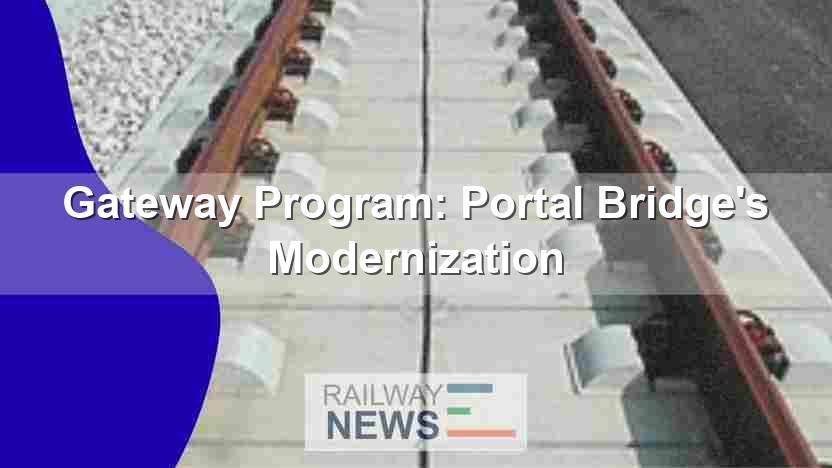
The Gateway Program, a crucial initiative to modernize and expand rail infrastructure connecting New York and New Jersey, is a prime example of large-scale railway development. This article explores the intricacies of Phase 1, focusing specifically on the replacement of the century-old Portal Bridge. The project, a testament to engineering prowess and logistical planning, involves not only the construction of a new, state-of-the-art bridge but also the complex management of ongoing rail operations during construction. We will explore the engineering challenges presented by this undertaking, the crucial role of construction management and inspection services, and the broader implications of this project for the Northeast Corridor (NEC) and the national railway system. The economic and societal benefits, as well as the potential for future improvements and expansion, will also be considered. The replacement of the Portal Bridge is more than just a construction project; it is a vital step towards enhancing the efficiency, capacity, and reliability of a critical artery in the nation’s rail network. The financial commitment, the complex logistical considerations, and the long-term benefits all point to the significance of this undertaking and the broader strategic importance of investing in modern rail infrastructure.
The Portal Bridge Replacement: A Necessary Upgrade
The Portal Bridge, a 112-year-old structure carrying Amtrak and NJ Transit (New Jersey Transit) trains across the Hackensack River, has reached the end of its useful life. Its age and condition pose significant reliability risks, leading to frequent delays and service disruptions. The replacement project, costing $1.56 billion, addresses these concerns by constructing a new two-track, high-level, fixed-span bridge. The increased height (50 feet above the river) will allow for unimpeded marine traffic, a crucial consideration for the bustling waterway. This new bridge will significantly improve operational efficiency, eliminating a major bottleneck along one of the busiest rail corridors in North America. The project’s scale and complexity highlight the challenges inherent in upgrading aging infrastructure within a heavily utilized transportation network.
Construction Management and Inspection: Ensuring Project Success
The successful execution of such a large-scale project hinges on meticulous construction management and rigorous inspection. STV Incorporated, a leading provider of engineering, architectural, and program management services, plays a critical role, overseeing the project’s progress and ensuring adherence to safety and quality standards. The complexities of replacing a bridge while maintaining active rail service on two of North America’s busiest lines necessitate precise planning and execution. This includes careful phasing and staging of construction activities to minimize service disruptions, sophisticated monitoring techniques to ensure structural integrity, and rigorous quality control procedures to meet the highest standards of safety and durability. The expertise and experience of firms like STV are indispensable in navigating these challenges.
Impact on the Northeast Corridor and National Rail Network
The Gateway Program, and the Portal Bridge replacement in particular, has significant implications for the Northeast Corridor (NEC), a critical artery in the nation’s rail network. The improved capacity and reliability resulting from the new bridge will facilitate increased passenger and freight transport, improving regional connectivity and economic efficiency. The project’s success will serve as a model for future infrastructure improvements, demonstrating the feasibility of upgrading vital rail links while minimizing operational disruptions. The potential for increased ridership, reduced delays, and enhanced freight movement will have considerable ripple effects throughout the Northeast region and the national economy.
Financial and Societal Benefits: A Long-Term Investment
The substantial investment in the Portal Bridge replacement represents a long-term commitment to improving transportation infrastructure. While the upfront costs are significant, the long-term benefits far outweigh the expenses. These benefits encompass enhanced economic productivity, reduced congestion, improved regional connectivity, and reduced environmental impact compared to increased reliance on road transport. The project creates jobs, stimulates local economies, and enhances the overall quality of life for millions of commuters. The improved reliability of the rail network reduces travel times, boosting productivity and contributing to a more efficient and sustainable transportation system.
Conclusion
The replacement of the Portal Bridge is a crucial component of Amtrak’s Gateway Program, addressing critical infrastructure needs within the heavily trafficked Northeast Corridor. The project’s scale, complexity, and strategic importance necessitate a high level of engineering expertise, meticulous planning, and rigorous construction management, all of which are skillfully implemented by firms such as STV Incorporated. The new bridge will not only enhance the reliability and capacity of the rail system but also deliver significant economic and societal benefits. This upgrade represents a substantial investment in a more efficient, reliable, and sustainable transportation system, contributing significantly to regional economic growth and improved quality of life for millions of residents and commuters. The successful completion of this project will serve as a powerful example of the transformative potential of investing in modern rail infrastructure. Additionally, it highlights the importance of collaboration between government agencies, private sector companies, and engineering professionals to overcome complex logistical and engineering challenges. The lessons learned from this undertaking will be invaluable in future large-scale rail infrastructure projects across the nation, paving the way for a more robust and efficient railway system. Looking ahead, continued investment in infrastructure modernization and expansion is crucial to ensuring a reliable and efficient rail network capable of meeting the transportation needs of a growing population.

Railway infrastructure, rolling stock and transport technologies specialist focused on global rail industry developments, high-speed rail systems, signaling technologies and freight transportation. Covering railway investments, public transport modernization, rail operations and international mobility projects across Europe, Asia and North America.
RELATED POSTS

September 5, 2026 4:19 pm
CPK launched formal tender talks with four consortia to design...

September 6, 2026 4:12 am
Alstom delivered the first of 100 new G Class trams...

September 5, 2026 7:14 pm
HS2 Ltd signed renegotiated civils contracts with EKFB and Align...
September 6, 2026 8:17 am
DB InfraGO reopened the Nuremberg-Regensburg line in Bavaria on 31...
September 6, 2026 12:20 pm
Indian Railways ordered a probe after a fire destroyed 2...
September 5, 2026 6:17 pm
Universal Signalling won a deal to install its U-Cross system...