
Sydney Metro Bankstown Line Upgrade: A $325M Transformation
The Sydney Metro Bankstown Line upgrade involves comprehensive civil engineering works, track improvements, signaling upgrades, and advanced ITS integration, aiming to modernize aging infrastructure while enhancing passenger experience and operational efficiency.
Introduction
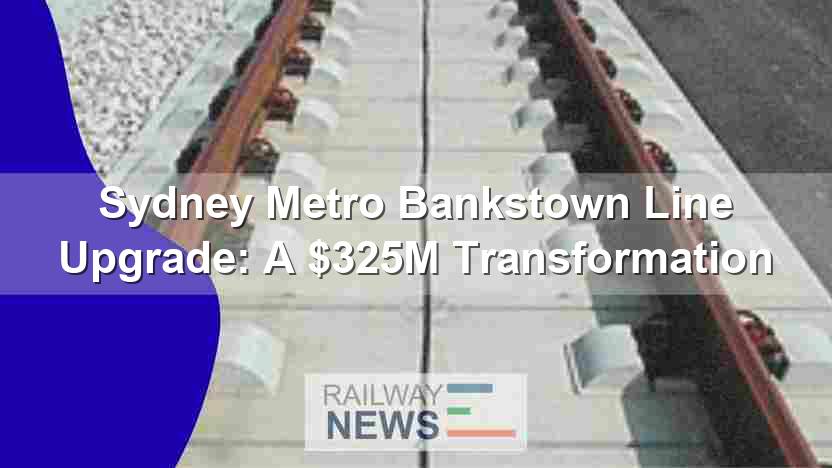
This article explores the significant infrastructure upgrade currently underway on Sydney’s Bankstown Line (T3 Line), a crucial component of the broader Sydney Metro network. The project, encompassing a substantial investment of over $325 million AUD, showcases a commitment to modernizing aging railway infrastructure and improving passenger experience. We will examine the multifaceted nature of this renovation, exploring the key elements of the civil engineering works, the integration of advanced Intelligent Transportation Systems (ITS), the enhancement of station facilities, and the operational considerations during the construction phase. The focus will be on the technical challenges and solutions implemented to ensure minimal disruption to the existing rail services while delivering a significantly improved and safer railway system for commuters.
Civil Engineering Works and Track Upgrades
The core of the Bankstown Line upgrade involves extensive civil engineering works. This includes the construction of new retaining walls to improve stability and safety along the nearly 125-year-old corridor. The project also addresses drainage issues with the development of new drainage systems for improved track stability and to minimize water ingress, a crucial aspect for preventing track degradation and ensuring operational reliability. Additionally, the project includes the construction of new ducts for accommodating future infrastructure needs and upgrades to fifteen existing bridges. A critical aspect of the project involves the separation of the existing freight lines from the new driverless railway lines, improving safety and operational efficiency. This demands precise coordination and phasing to ensure minimal interruption to freight services. The installation of new track crossovers (points) is integral to optimizing train movements and improving capacity on the upgraded line. This necessitates intricate design and construction to meet stringent safety and performance standards.
Signalling, Communication, and Overhead Line Upgrades
The renovation extends beyond civil works to incorporate substantial upgrades to the railway’s signaling and communication systems. This includes installing modern signaling equipment to support the implementation of the new driverless technology and improved communication networks to enhance operational efficiency and safety. Upgrading and refurbishing the existing overhead line equipment (OLE) is essential to provide a reliable power supply to the new trains and meet the demands of a significantly enhanced service frequency. Utility modifications are crucial to integrating the new infrastructure with existing services, minimizing disruption and ensuring the long-term reliability of all systems. The meticulous planning and execution of these upgrades are paramount to avoiding service disruptions and to support the transition to a fully automated system.
Station Refurbishment and Passenger Amenity Improvements
The $98 million upgrade to Hurlstone Park, Belmore, and Wiley Park stations demonstrates the commitment to passenger experience. The scope involves platform re-levelling to ensure smooth boarding and alighting for passengers, improving accessibility. The installation of new lifts and family-accessible toilets significantly improves accessibility for passengers with disabilities and families. A key safety feature being implemented is the installation of platform screen doors (PSD), a first for Australia, which are designed to prevent accidents and ensure passenger safety. These automated doors prevent accidental falls onto the tracks and keep objects away from the live rails. Detailed cabling works are also undertaken to support the new signaling, communication, and other systems within the stations. The careful planning of these upgrades considers minimizing disruption to passengers during the construction phase.
Conclusion
The Sydney Metro’s Bankstown Line upgrade is a significant undertaking, demonstrating a substantial investment in modernizing crucial railway infrastructure. The project’s scope encompasses a wide array of improvements, from substantial civil engineering works to the integration of cutting-edge Intelligent Transportation Systems (ITS) and state-of-the-art passenger amenities. The upgrade extends beyond merely renovating aging infrastructure; it represents a significant shift towards a more efficient, safe, and accessible railway system. The phased approach, employing temporary solutions such as rail replacement bus services during major shutdown periods, minimizes disruption to commuters while maximizing efficiency. The integration of platform screen doors (PSD), a safety feature new to Australia, showcases a forward-thinking approach to passenger safety. The successful completion of this project will not only enhance the commuter experience on the Bankstown Line but also serve as a model for future railway upgrades across Australia. The meticulous planning and phased execution, coupled with the significant investment, highlights a commitment to delivering a modern, safe, and efficient rail network for Sydney’s growing population. The successful implementation of these upgrades lays the groundwork for a more sustainable and reliable railway system capable of meeting the demands of the future. The use of innovative technologies like driverless trains and platform screen doors signifies a commitment to enhancing both efficiency and safety.

Railway infrastructure, rolling stock and transport technologies specialist focused on global rail industry developments, high-speed rail systems, signaling technologies and freight transportation. Covering railway investments, public transport modernization, rail operations and international mobility projects across Europe, Asia and North America.
RELATED POSTS

September 5, 2026 4:19 pm
CPK launched formal tender talks with four consortia to design...

September 5, 2026 7:14 pm
HS2 Ltd signed renegotiated civils contracts with EKFB and Align...

September 6, 2026 4:12 am
Alstom delivered the first of 100 new G Class trams...
September 5, 2026 6:17 pm
Universal Signalling won a deal to install its U-Cross system...
September 6, 2026 8:17 am
DB InfraGO reopened the Nuremberg-Regensburg line in Bavaria on 31...
September 6, 2026 12:20 pm
Indian Railways ordered a probe after a fire destroyed 2...