
Glassboro-Camden Light Rail: A Transit Success Story
The Glassboro-Camden Line (GCL) light rail project exemplifies the intricate balance required in modern transit development, showcasing how collaboration among diverse stakeholders ensures efficient infrastructure design, sustainable practices, and economic/social benefits for urban planning and sustainable transportation solutions.
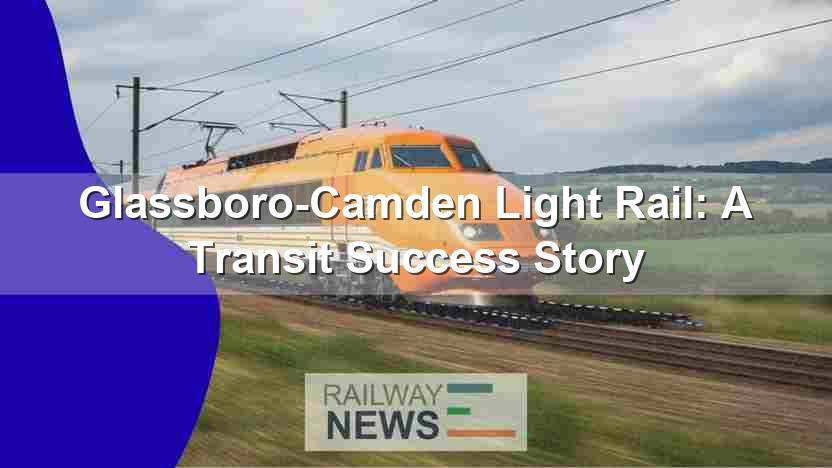
The Glassboro-Camden Line (GCL) Light Rail Project: A Case Study in Modern Transit Development
This article examines the complexities and significance of the Glassboro-Camden Line (GCL) light rail project in New Jersey, USA. The project, a significant undertaking involving the revitalization of an existing rail corridor, showcases the multifaceted nature of modern transit development. From initial planning and engineering to environmental considerations and community impact, the GCL highlights the crucial interplay between efficient infrastructure design, sustainable practices, and the positive economic and social benefits that well-planned light rail systems can deliver. We will delve into the specific roles of the key players involved, the technical challenges addressed, and the broader implications of such projects for urban planning and sustainable transportation solutions. The analysis will explore the project’s potential to alleviate traffic congestion, improve accessibility to vital resources, and stimulate economic growth in the region while minimizing environmental disruption. The project’s success offers valuable lessons for similar transit initiatives worldwide.
Project Overview and Stakeholder Collaboration
The 18-mile GCL light rail project, managed by a collaborative team including the Delaware River Port Authority (DRPA), NJ Transit, and the South Jersey Transportation Authority, aims to restore passenger service along an existing rail line. This collaborative approach is crucial for effective project management, ensuring the alignment of diverse interests and expertise. The South Jersey Transit Partners (SJTP) joint venture (JV), comprising AECOM and STV, serves as a key player, providing detailed engineering, project management, and professional services throughout the project lifecycle. This includes preliminary engineering, program management, civil and structural engineering, track design, risk management, quality assurance, schedule and cost management, permitting, environmental review, and the implementation of operational and communication systems. The coordinated efforts of these agencies are vital in navigating the intricate regulatory landscape and ensuring the project aligns with both local and regional transportation strategies.
Engineering and Design Considerations
The GCL project necessitates a thorough understanding of civil and structural engineering principles tailored to light rail systems. This includes detailed track design considerations, addressing factors such as curves, gradients, and track materials to optimize performance and passenger comfort. The project’s engineers must also account for environmental impacts, integrating sustainable practices and minimizing disruption to existing infrastructure and ecosystems. The integration of advanced signaling and communication systems is crucial for ensuring efficient and safe train operations. The project’s success hinges on meticulous planning and execution in these critical areas, reflecting the best practices in modern rail engineering.
Environmental Impact and Sustainability
Minimizing environmental impact is a paramount consideration in the GCL project. The project’s design incorporates sustainable practices, aiming to mitigate potential negative effects on the surrounding environment. This involves detailed environmental reviews and mitigation strategies to address issues such as noise pollution, habitat disruption, and air quality. The use of sustainable materials and construction techniques is also crucial. The project’s focus on providing an economical alternative to car travel directly contributes to the overall sustainability goals by reducing greenhouse gas emissions and promoting a shift towards public transportation.
Economic and Social Benefits
The GCL project aims to significantly improve connectivity between established communities and activity centers in South Jersey. Improved access to cultural, recreational, educational, economic, and medical resources will benefit the entire region. By reducing highway congestion, the light rail system will contribute to improved traffic flow and reduced commute times, positively impacting the region’s economy. Additionally, the creation of jobs during the construction phase and the subsequent economic activity generated by increased accessibility will stimulate local economic growth. Ultimately, the GCL is envisioned not just as a transportation solution, but as a catalyst for social and economic revitalization.
Conclusions
The Glassboro-Camden Line light rail project stands as a prime example of a large-scale transit initiative that integrates engineering prowess, environmental responsibility, and a commitment to community improvement. The project’s success depends on the successful collaboration between various stakeholders, including the DRPA, NJ Transit, the South Jersey Transportation Authority, and the SJTP JV led by AECOM and STV. The detailed approach to engineering and design, incorporating considerations for track design, signaling systems, and environmental impact mitigation, underscores the project’s commitment to delivering a modern, efficient, and sustainable transit solution. The project’s broader impact extends beyond mere transportation improvements; it promises to alleviate traffic congestion, enhance accessibility to crucial resources, and stimulate economic growth in the region. By providing an environmentally friendly alternative to car travel, the GCL aims to contribute to a more sustainable future for South Jersey. The project’s meticulous planning and execution highlight the best practices in light rail development, offering valuable lessons for similar transit projects worldwide. The successful completion of the GCL project will undoubtedly serve as a model for future transit initiatives focused on enhancing connectivity, fostering economic development, and minimizing environmental impact.

Railway infrastructure, rolling stock and transport technologies specialist focused on global rail industry developments, high-speed rail systems, signaling technologies and freight transportation. Covering railway investments, public transport modernization, rail operations and international mobility projects across Europe, Asia and North America.
RELATED POSTS

September 5, 2026 4:19 pm
CPK launched formal tender talks with four consortia to design...

September 5, 2026 7:14 pm
HS2 Ltd signed renegotiated civils contracts with EKFB and Align...

September 6, 2026 4:12 am
Alstom delivered the first of 100 new G Class trams...
September 6, 2026 8:17 am
DB InfraGO reopened the Nuremberg-Regensburg line in Bavaria on 31...
September 5, 2026 6:17 pm
Universal Signalling won a deal to install its U-Cross system...
September 6, 2026 12:20 pm
Indian Railways ordered a probe after a fire destroyed 2...