
$2.3B US Rail Investment: Modernization & Expansion
The US Department of Transportation’s nearly $2.3 billion investment in its intercity passenger rail network aims to modernize and expand capacity, marking a substantial commitment to improving rail infrastructure and service across the nation, with specific projects supporting strategic planning, environmental impact assessments, and creating a more efficient, safer, and accessible national rail network.
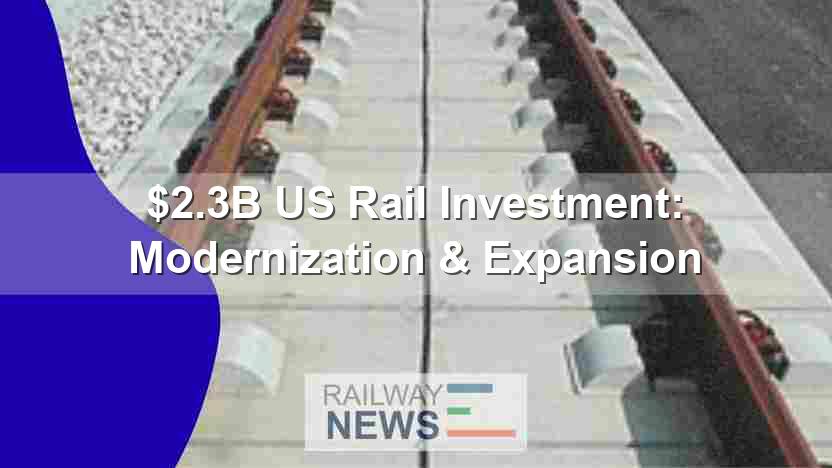
The United States is undertaking a significant investment in its intercity passenger rail network, aiming to modernize and expand its capacity. This initiative, fueled by a nearly $2.3 billion allocation from the US Department of Transportation (USDOT), marks a substantial commitment to improving rail infrastructure and passenger service across the nation. This article will delve into the details of this funding program, exploring its objectives, planned improvements, and the potential impact on the future of passenger rail travel in the United States. The program’s scope extends beyond mere infrastructure upgrades; it encompasses strategic planning, environmental impact assessments, and the ultimate goal of creating a more efficient, safer, and more accessible national rail network. The substantial nature of this investment highlights the growing recognition of the crucial role rail transportation plays in addressing national transportation challenges and fostering economic growth. We will examine the historical context of this funding, the specific projects it will support, and the long-term implications for both passengers and the broader transportation landscape.
A Renewed Focus on Intercity Passenger Rail
The USDOT’s investment, channeled through the Federal-State Partnership for Intercity Passenger Rail Grant Program, administered by the Federal Railroad Administration (FRA), represents a significant shift towards prioritizing intercity passenger rail. Previous funding under this program focused primarily on infrastructure maintenance and improvements, such as grade crossing enhancements and track upgrades. This new funding dramatically expands the program’s scope, enabling eligible entities to develop new intercity and high-speed rail services, as well as significantly improve existing ones. The expansion includes support for crucial planning phases, encompassing environmental reviews and detailed final designs, which are critical for the successful implementation of new rail lines and services.
Addressing Existing Deficiencies and Expanding Capacity
Current intercity passenger rail service in the US faces challenges including delays, infrequent service, and limited accessibility in many areas. This funding aims to directly address these issues. By supporting the creation of new lines and the expansion of existing ones, the program seeks to increase service frequency and reduce travel times. Additionally, the emphasis on improved safety and performance aims to bolster public confidence and encourage greater ridership. This two-pronged approach – enhancing existing routes and creating new ones – directly addresses the needs of both established and underserved communities.
Strategic Planning and Environmental Considerations
A key aspect of this funding initiative is the inclusion of support for detailed planning. This is not just about laying tracks; it involves a thorough assessment of environmental impacts, ensuring that new rail projects are sustainable and environmentally responsible. This integrated approach demonstrates a commitment to responsible development and minimizes potential negative consequences. This forward-thinking approach aligns with broader sustainability goals and ensures the long-term viability of the projects.
Long-Term Vision and Economic Impact
The USDOT’s investment isn’t simply about short-term fixes; it’s a long-term strategy to reshape the nation’s passenger rail network. The envisioned outcome is a modern, efficient, and interconnected rail system capable of meeting the demands of a growing population and supporting economic development. This investment is expected to generate numerous economic benefits, including job creation during construction and operation, increased tourism, and improved regional connectivity, leading to economic growth in served areas. The program’s success hinges on effective collaboration between federal, state, and local entities, as well as robust stakeholder engagement to ensure projects meet the needs of the communities they serve.
Conclusions
The US Department of Transportation’s commitment of nearly $2.3 billion to expand and upgrade its intercity passenger rail network marks a pivotal moment in the nation’s transportation history. This funding, channeled through the Federal-State Partnership for Intercity Passenger Rail Grant Program and administered by the Federal Railroad Administration (FRA), signifies a significant shift in prioritizing intercity passenger rail. The initiative aims to overcome current deficiencies, such as delays and infrequent service, by increasing service frequency, reducing travel times, and enhancing safety and performance across existing and newly established routes. The program’s scope extends beyond infrastructure improvements to include crucial strategic planning, incorporating environmental reviews and detailed final designs to ensure responsible and sustainable development. The initiative also promotes economic development through job creation, enhanced tourism, and improved regional connectivity. The USDOT’s vision goes beyond short-term improvements; it’s a long-term strategy focused on creating a modern and efficient passenger rail network that effectively serves the needs of a growing population and stimulates economic growth. This is considered by some as one of the most significant investments in passenger rail in the last 50 years, demonstrating a strong commitment to revitalizing the nation’s rail infrastructure and establishing a more sustainable and efficient transportation system for generations to come. Successful implementation of this ambitious plan requires effective collaboration between federal, state, and local authorities, along with robust stakeholder engagement, to ensure the projects align with community needs and contribute to a thriving and accessible transportation system.

Railway infrastructure, rolling stock and transport technologies specialist focused on global rail industry developments, high-speed rail systems, signaling technologies and freight transportation. Covering railway investments, public transport modernization, rail operations and international mobility projects across Europe, Asia and North America.
RELATED POSTS
July 4, 2026 11:41 pm
Eurostar cancelled all direct London–Amsterdam trains through July 2 after...
July 1, 2026 1:37 pm
NRHS awarded $187K to 34 U.S. rail heritage projects in...
July 4, 2026 11:02 pm
Eurostar suspends all direct London–Dutch trains through 2 July after...
July 7, 2026 12:01 am
Hitachi Rail completed the acquisition of Clever Devices, a U.S....
July 1, 2026 4:22 pm
Správa železnic opened a €60M multimodal hub at Jihlava město...
July 16, 2026 7:04 am
Network Rail will deliver only 83% of planned renewals in...