
Magnetic Rail’s ECR Acquisition: Reshaping Australian Freight Rail
This article analyzes the acquisition of East Coast Rail (ECR) by Magnetic Rail Group, highlighting its significance within the Australian freight rail sector, regulatory scrutiny surrounding large-scale acquisitions, implications for Aurizon, and broader market dynamics including environmental considerations and future economic impacts.
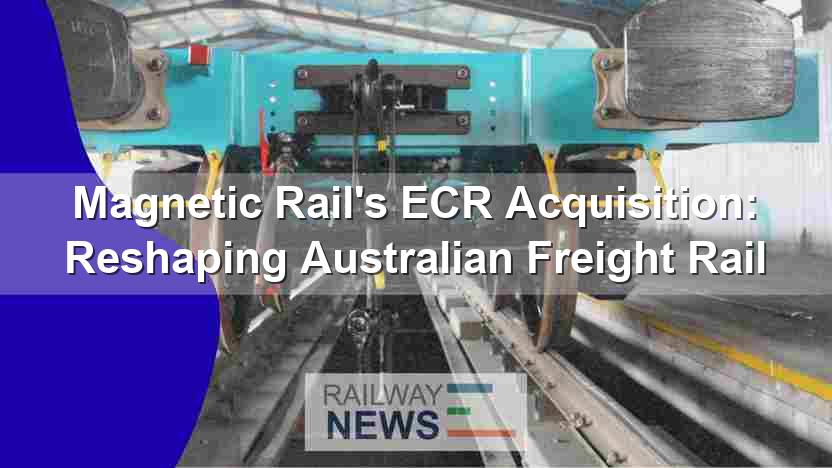
This article analyzes the acquisition of East Coast Rail (ECR) by Magnetic Rail Group, a significant transaction in the Australian freight rail sector. The deal, valued at approximately $287 million USD (A$425 million AUD), highlights the ongoing consolidation within the industry and underscores the regulatory scrutiny surrounding large-scale acquisitions. We will explore the strategic rationale behind the sale by Aurizon, the implications for Magnetic Rail Group, and the broader context of the Australian freight rail market. Additionally, we will examine the regulatory aspects of the deal, specifically the involvement of the Australian Competition and Consumer Commission (ACCC), and its impact on competition within the sector. The analysis will also touch upon the environmental considerations within the rail industry, specifically highlighting the increasing importance of sustainable practices such as electric locomotives and heat recycling HVAC systems within rail operations. The future implications of this acquisition and its potential effects on the Australian economy will also be considered.
Aurizon’s Divestment of East Coast Rail
Aurizon’s decision to divest its East Coast Rail (ECR) business to Magnetic Rail Group for approximately $287 million USD (A$425 million AUD), including the assumption of $338 million USD (A$500 million AUD) in debt, is a strategic move driven by regulatory compliance. This divestment was a condition imposed by the Australian Competition and Consumer Commission (ACCC) following Aurizon’s acquisition of One Rail Australia (ORA) for $1.75 billion USD. The ACCC sought to prevent anti-competitive practices by ensuring a competitive landscape remained within the Australian freight rail market. The sale, therefore, represents Aurizon’s commitment to meeting the ACCC’s stipulations and mitigating potential antitrust concerns. The deferred payment structure, with $84.5 million USD (A$125 million AUD) payable after 12 months, reflects a degree of confidence in the transaction’s eventual success and the ongoing performance of the ECR business.
Magnetic Rail Group’s Strategic Acquisition
For Magnetic Rail Group, the acquisition of ECR represents a significant expansion of its operations and market share within the Australian freight rail sector. ECR’s coal haulage operations in New South Wales and Queensland provide Magnetic Rail Group with access to established infrastructure, existing contracts, and a skilled workforce. This strategic move allows Magnetic Rail Group to consolidate its position within the market and potentially increase its revenue streams. The acquisition also offers opportunities for operational synergies and efficiencies. By integrating ECR’s assets and operations into its existing network, Magnetic Rail Group can leverage economies of scale and optimize resource allocation, potentially leading to increased profitability.
Regulatory Landscape and Competition
The role of the ACCC in overseeing this transaction highlights the importance of competition regulation in the Australian freight rail industry. The ACCC’s approval is crucial for the deal’s completion and safeguards against monopolies or anti-competitive behaviour. The condition imposed on Aurizon to divest ECR reflects the ACCC’s proactive approach to ensuring a fair and competitive market. This regulatory oversight is vital for fostering innovation, efficiency, and fair pricing within the industry, ultimately benefiting consumers and businesses reliant on freight rail transportation.
Environmental Sustainability in the Rail Industry
The Australian freight rail industry, including both Aurizon and Magnetic Rail Group, is increasingly recognizing the importance of environmental sustainability. The transition towards electric locomotives is a key element of this shift, reducing reliance on fossil fuels and decreasing carbon emissions. Moreover, the adoption of heat recycling HVAC (Heating, Ventilation, and Air Conditioning) systems in rolling stock contributes to improved energy efficiency and reduced environmental impact. These advancements underscore the industry’s commitment to reducing its carbon footprint and operating in a more environmentally responsible manner.
Conclusions
The acquisition of East Coast Rail by Magnetic Rail Group marks a pivotal moment in the Australian freight rail sector. Aurizon’s divestment, mandated by the ACCC, successfully addressed competition concerns following the acquisition of One Rail Australia. This transaction showcases the importance of regulatory oversight in maintaining a competitive market environment, preventing monopolies, and fostering fair pricing practices within the industry. For Magnetic Rail Group, this acquisition represents a significant expansion of its operations, strengthening its market position and offering opportunities for operational synergies and efficiency improvements. The successful integration of ECR’s assets and operations will be crucial to realizing these opportunities and maintaining a competitive edge. The ongoing commitment to environmental sustainability, demonstrated by investments in electric locomotives and heat recycling HVAC systems, underscores a broader industry trend toward more responsible and ecologically conscious operations. The future success of this acquisition will depend on various factors, including the successful integration of ECR’s operations, the prevailing economic climate, and ongoing regulatory compliance. The long-term implications for the Australian freight rail market, however, appear positive, potentially leading to increased efficiency, better service offerings, and a more sustainable industry.

Railway infrastructure, rolling stock and transport technologies specialist focused on global rail industry developments, high-speed rail systems, signaling technologies and freight transportation. Covering railway investments, public transport modernization, rail operations and international mobility projects across Europe, Asia and North America.
RELATED POSTS

September 5, 2026 4:19 pm
CPK launched formal tender talks with four consortia to design...

September 5, 2026 7:14 pm
HS2 Ltd signed renegotiated civils contracts with EKFB and Align...

September 6, 2026 4:12 am
Alstom delivered the first of 100 new G Class trams...
September 6, 2026 8:17 am
DB InfraGO reopened the Nuremberg-Regensburg line in Bavaria on 31...
September 5, 2026 6:17 pm
Universal Signalling won a deal to install its U-Cross system...
September 6, 2026 12:20 pm
Indian Railways ordered a probe after a fire destroyed 2...