
World Bank Approves 322.3 km Line for Kazakhstan Middle Corridor
World Bank approved an USD 846 million guarantee for a new 322.3 km Middle Corridor railway line in Kazakhstan.
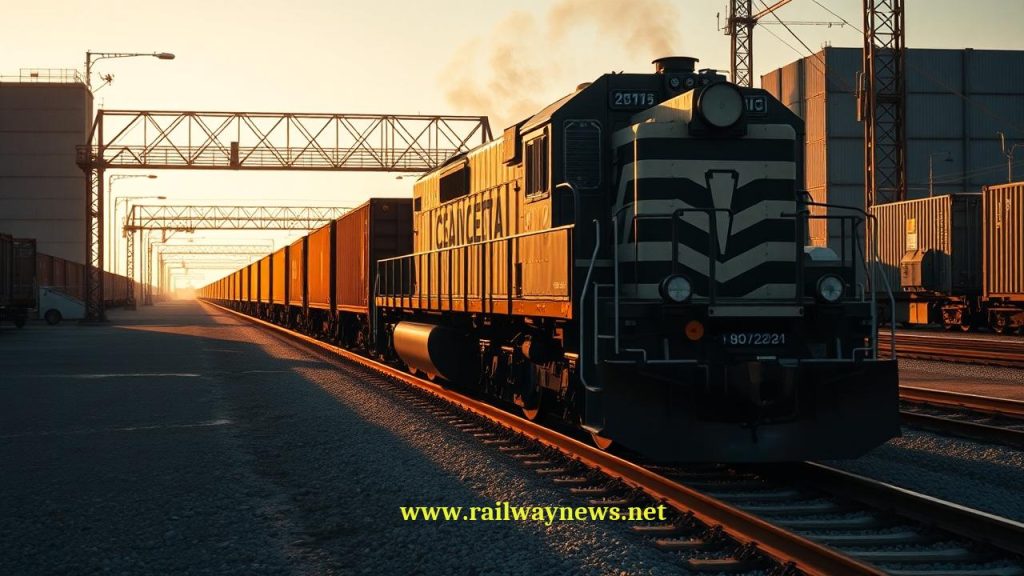
⚡ In Brief: The World Bank has approved an USD 846 million guarantee to mobilize USD 1.41 billion in private financing for Kazakhstan’s railway modernization, which includes building a new 322.3 km line to enhance the Trans-Caspian International Transport Corridor.
WASHINGTON D.C. – The World Bank’s Board of Directors has approved an USD 846 million guarantee to help secure USD 1.41 billion in commercial financing for Kazakhstan’s rail network. The investment targets the modernization of the national segment of the Trans-Caspian International Transport Corridor (Middle Corridor). The project will be managed by the national rail operator, Kazakhstan Temir Zholy (KTZ).
What Is the Full Scope of This Project?
The project, “Transforming Kazakhstan’s Rail Connectivity – Developing the Middle Corridor,” is centered on increasing network efficiency and strengthening KTZ’s financial position. The primary infrastructure component is the construction of a new 322.3 km railway line between Mointy and Kyzylzhar, which will include modern signaling and telecommunications and be designed for future electrification. In addition to the new line, the project provides technical assistance to KTZ for tariff reform, improved financial management, and preparation for a potential initial public offering (IPO).
Key Project Data
| Parameter | Value |
|---|---|
| Project / Contract Name | Transforming Kazakhstan’s Rail Connectivity – Developing the Middle Corridor |
| Total Value | USD 1.41 billion (mobilized private capital via USD 846M IBRD guarantee) |
| Parties Involved | World Bank (IBRD), Kazakhstan Temir Zholy (KTZ), private commercial lenders |
| Timeline / Completion | Not disclosed |
| Country / Corridor | Kazakhstan / Trans-Caspian International Transport Corridor (Middle Corridor) |
How Does This Compare to Similar Projects?
Comparable data for large-scale railway infrastructure financing projects of this nature in the Central Asian region was not publicly available for the 2024-2025 period at the time of publication. The multi-phase programmatic approach, designed to reduce reliance on sovereign guarantees over time, represents a common financing structure for development banks, but specific project-to-project cost and scale comparisons in the region are not available. The primary source did not provide a breakdown of costs between infrastructure construction and technical assistance.
Editor’s Analysis
This investment is a clear strategic effort to solidify the Middle Corridor as a viable alternative to traditional Eurasian trade routes. By backing the project, the World Bank is de-risking a significant private investment in a critical logistics artery at a time of geopolitical realignment. The support for KTZ’s potential IPO is notable; it aims to transition the state-owned operator towards greater market discipline ahead of a stabilizing, if mixed, global logistics market (Source: GroundBreak Carolinas). Success will depend on KTZ’s ability to implement reforms and attract traffic, especially as some freight sectors continue to face pricing pressure (Source: MarineLink).
FAQ
Q: What is the Middle Corridor?
A: The Trans-Caspian International Transport Corridor is a multimodal route designed to connect China and Europe, bypassing Russia. It traverses Kazakhstan, the Caspian Sea, Azerbaijan, Georgia, and Türkiye, and this project aims to increase the capacity and efficiency of its crucial Kazakh rail segment.
Q: How much new track will be built?
A: The project’s core infrastructure element is the construction of a new 322.3 km railway line between Mointy and Kyzylzhar. This new segment is designed to be equipped with modern systems and will have provisions for future electrification.
Q: Is Kazakhstan Temir Zholy (KTZ) being privatized?
A: The project includes specific support to prepare the national operator, KTZ, for a possible initial public offering (IPO). While this indicates a move toward partial privatization to attract private capital, the scope and timeline of any such offering have not been officially confirmed.

Railway infrastructure, rolling stock and transport technologies specialist focused on global rail industry developments, high-speed rail systems, signaling technologies and freight transportation. Covering railway investments, public transport modernization, rail operations and international mobility projects across Europe, Asia and North America.
RELATED POSTS

October 8, 2026 1:15 pm
Alstom secured a €1bn contract to build 13 automated trains,...

October 1, 2026 7:09 am
United States regulators confirmed a September 30 deadline for the...

October 4, 2026 5:14 pm
Alstom secured a CA$4.7 billion order from VIA Rail Canada...

October 8, 2026 12:18 pm
Siemens Mobility signed an agreement with VinSpeed to supply 350...

October 1, 2026 12:13 am
Illinois approved $1.5 billion annually for the Northern Illinois Transit...

October 5, 2026 6:12 pm
AECOM and Jacobs secured a contract in September 2026 to...