
What is TCMS? Train Control & Management (2026)
What is TCMS? IEC 61375 standards, TCMS vs ETCS comparison table, benefits & real-world train deployments (Alstom, Siemens). Includes architecture overview & checklist.
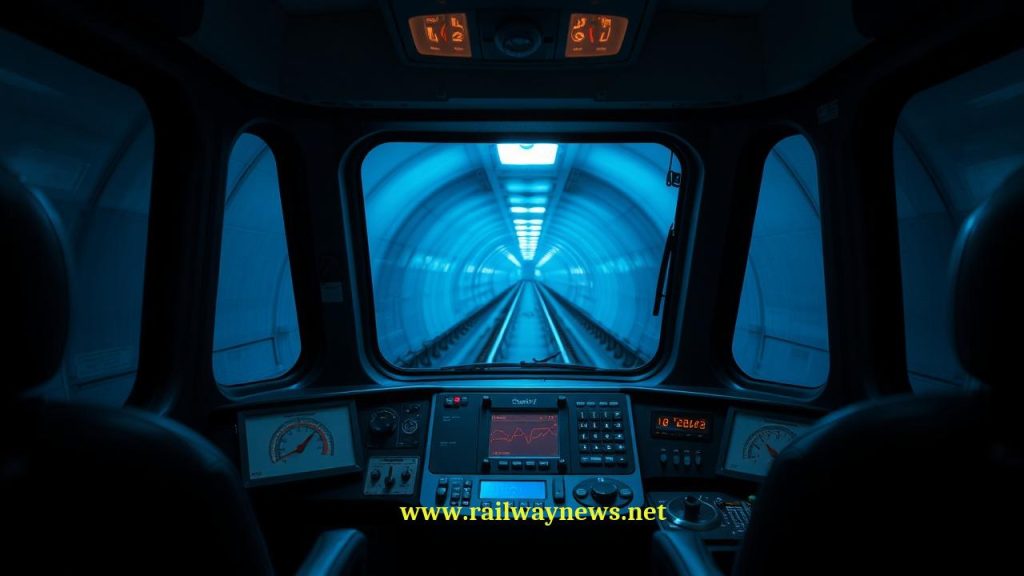
⚡ QUICK ANSWER — TCMS
What is TCMS? Train Control and Management System (TCMS) is the centralised digital nervous system of modern rolling stock. Based on IEC 61375 (Train Communication Network – TCN), TCMS coordinates propulsion, braking, doors, HVAC, and diagnostics over real-time fieldbuses (MVB up to 1.5 Mbit/s, WTB 1 Mbit/s). It replaces kilometres of point-to-point wiring, reduces failure rates, and enables condition-based maintenance. Unlike ETCS (train‑to‑wayside signalling), TCMS operates onboard, integrating all train subsystems into a single fault-tolerant network. Over 85% of new high‑speed and metro trains rely on TCMS architecture.
1. What is TCMS? Definition and Historical Evolution
Train Control and Management System (TCMS) refers to the integrated digital control and monitoring infrastructure inside a railway vehicle or train consist. It processes thousands of signals from sensors and actuators, executes traction/braking commands from the driver or ATO, and logs events for maintenance analytics. The concept emerged in the 1990s with the rise of microprocessor-based train control, replacing relay logic and analogue wiring. Early systems were proprietary, but the need for interoperability led to the IEC 61375 series (Train Communication Network – TCN), first published in 1999. Today TCMS is mandatory for new fleets in Europe, China and North America, as specified by standards like EN 50657 and IEC 62279.
The primary task of TCMS is to ensure safe and efficient train operation by supervising critical subsystems: traction converters, electro-pneumatic brakes, door interlocks, air conditioning, fire detection, and passenger information systems. Real-time communication buses allow multiple vehicles to act as a single logic unit. For example, when a driver moves the master controller, the TCMS transmits torque demands to all motor cars within milliseconds.
2. TCMS in Context: Comparison with ETCS, TMS, and CBTC
Professionals often confuse TCMS with higher-level train control systems. While ETCS (European Train Control System) manages train movements and trackside supervision, TCMS handles onboard automation. TMS (Traffic Management System) is a wayside planning tool. The table below summarises key differences.
| Aspect | TCMS | ETCS (ERTMS) | TMS / CBTC |
|---|---|---|---|
| Scope | Onboard train subsystems (traction, doors, HVAC) | Train-to-wayside signalling & supervision | Wayside traffic optimisation / moving block |
| Communication bus | MVB, WTB, ECN (Ethernet) per IEC 61375 | GSM-R / FRMCS, Eurobalise | WiFi / LTE / leaky feeder |
| Primary standard | IEC 61375 (TCN) | SUBSET-026 / CENELEC | IEEE 1474 (CBTC) |
| Safety integrity | SIL 0–2 (non-safety, with fail-safe interfaces) | SIL 4 (vital) | SIL 2–4 (depends on function) |
3. How TCMS Works: Architecture and Core Components
A typical TCMS comprises central control units (CCUs), remote input/output (RI/O) modules, intelligent gateways, and operator interfaces (driver\’s desk MMI). Data exchange follows the TCN hierarchy: the Multifunction Vehicle Bus (MVB) connects devices inside a single car (up to 4095 devices, 1.5 Mbit/s, 20–200 m cable), while the Wire Train Bus (WTB) links multiple vehicles into a train consist (1 Mbit/s, up to 32 nodes). Ethernet Consist Network (ECN) is defined for modern high-bandwidth applications (100 Mbit/s). Each CCU runs real-time applications for traction control, brake blending, door sequencing, and event recording (black box). Redundancy is achieved through dual buses and hot-standby CCUs.
| Parameter | MVB (IEC 61375-2) | WTB (IEC 61375-3) | ETB (Ethernet Train Backbone) |
|---|---|---|---|
| Data rate | 1.5 Mbit/s | 1 Mbit/s | 100 Mbit/s (up to 1 Gbit/s) |
| Max distance | 200 m (without repeater) | 800 m per segment | variable (switched) |
| Medium | RS-485 / optical fibre | Twisted pair / fibre | Cat5e / fibre (IEEE 802.3) |
| Redundancy | Optional (dual MVB) | Ring topology | IEC 61375-2-5 (TRDP) |
4. TCMS Architecture Types: Centralised, Distributed, and Hybrid
Rolling stock manufacturers select architecture based on availability, modularity, and cost. Centralised TCMS uses a single main CCU; distributed systems embed processing power in each subsystem; hybrid designs combine central decision-making with local intelligence.
| Architecture | Description | Typical use case |
|---|---|---|
| Centralised | Single powerful CCU, all I/O wired to central rack. Low complexity, lower cost but single point of failure (redundant CCUs possible). | Light rail, tramways, regional trains |
| Distributed | Each car has its own controller (sub-CCU), communicating via WTB/ETB. High scalability and fault tolerance. | High-speed trains, long-distance EMUs (e.g., Velaro, Zefiro) |
| Hybrid | Master CCU + smart remote nodes with edge processing. Balances performance and wiring reduction. | Metro fleets, automated people movers |
5. Real-World Applications and Deployment Examples
TCMS is deployed across high-speed, metro, and freight rolling stock. Leading suppliers include Siemens (Sibas), Alstom (Agate / Atlas), Bombardier (MITRAC), and CRRC (DTECS). The table lists notable implementations.
| Train family | Operator / region | TCMS platform | Key feature |
|---|---|---|---|
| Siemens Velaro (ICE 3 / Eurostar) | DB, SNCF, Renfe | Sibas G, TCN (MVB+WTB) | Distributed traction control, 320 km/h |
| Alstom Metropolis (metro) | Singapore, Sydney, Montréal | Agate TCMS (Ethernet TRDP) | GoA4 driverless, predictive diagnostics |
| CRRC Fuxing (CR400AF/BF) | China Railway | DTECS (IEC 61375 compliant) | Integrated health monitoring, 350 km/h |
| Hitachi A-train (Class 800/801) | UK (GWR, LNER) | TCMS with Ethernet backbone | Battery hybrid integration |
6. Benefits and Challenges of TCMS Implementation
Benefits include 40–60% reduction in wiring harness weight, enhanced diagnostic coverage (remote failure detection), lower lifecycle costs, and easier integration of passenger Wi-Fi and CCTV. However challenges remain: electromagnetic compatibility (EMC) in traction environments, cybersecurity vulnerabilities (IEC 62443 adoption needed), and migration from legacy trains. For older fleets, retrofitting TCMS can exceed €500k per trainset.
Standardisation also requires testing according to EN 50657 (software change processes) and certification for SIL interfaces (e.g., brake command via fail-safe gateway). The industry is moving toward open TCMS based on TRDP (Train Real-Time Data Protocol) and unified diagnostics over LTE/5G.
7. Future of TCMS: Ethernet, TRDP, and AI-driven maintenance
The future belongs to Ethernet Train Backbone (ETB) and TRDP (IEC 61375-2-5), enabling service-oriented architecture, over-the-air updates, and high-bandwidth video analytics. AI models running on edge gateways detect bearing faults, pantograph arcing, and door misalignment with 95% accuracy. Projects like Shift2Rail\’s CONNECTIVE and Europe\’s Rail are defining next-gen TCMS with cybersecurity by design, time-sensitive networking (TSN), and integration with FRMCS (Future Railway Mobile Communication System). By 2030, more than 70% of new mainline trains will feature fully IP-based TCMS.
8. Frequently Asked Questions (FAQs)
| 📖 RELATED READING — RAILWAYNEWS.NET WIKI | ||
|---|---|---|
🚅 | What is ETCS? European Train Control System ERTMS Levels, balises, onboard architecture & SIL4 safety. | Read → |
📡 | CBTC – Communications-Based Train Control Moving block, ATO/ATP, hybrid CBTC for urban metro lines. | Read → |
© railwaynews.net — TCMS wiki page. Last updated: March 2026. IEC 61375 series, TCN/ETB references. For professional railway engineers and project managers.

Railway infrastructure, rolling stock and transport technologies specialist focused on global rail industry developments, high-speed rail systems, signaling technologies and freight transportation. Covering railway investments, public transport modernization, rail operations and international mobility projects across Europe, Asia and North America.
RELATED POSTS
August 4, 2026 1:11 pm
Hitachi Rail Canada secured a $407.7M contract to install CBTC...
August 1, 2026 7:56 am
BMZ delivered two new TEM18DM diesel shunting locos to RZD...

August 1, 2026 7:14 pm
€205 billion funding shortfall threatens the TEN-T rail network's completion...

August 4, 2026 11:12 am
MBTA confirmed a $150.8 million overhaul of the 85-year-old Green...
August 1, 2026 7:11 pm
An Ipsos survey across 29 countries found that 33% of...
August 1, 2026 8:06 pm
European Commission approved a regulation on 9 July 2026 requiring...