
The Rulebook of Europe: Technical Specifications for Interoperability (TSI) Explained
Standardizing Europe’s railways. Explore how Technical Specifications for Interoperability (TSI) harmonize subsystems for a seamless cross-border network.
⚡ IN BRIEF
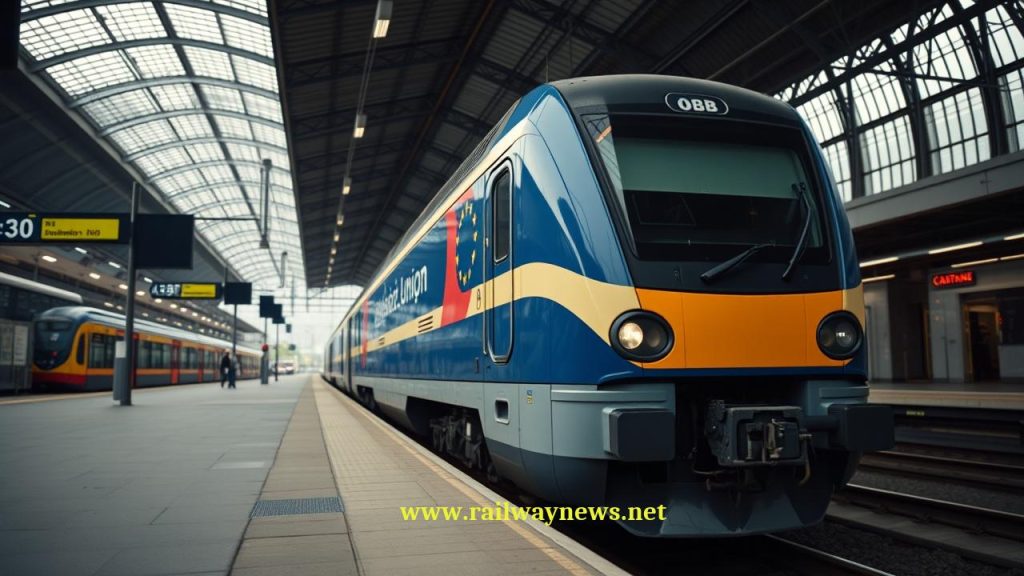
- The 1990s Gauge Nightmare: Before TSIs, a locomotive built in Germany could not cross into France because of different pantograph profiles, brake systems, and loading gauges. The 1993 opening of the Channel Tunnel exposed this fragmentation: trains had to be custom‑built for each country, driving costs up 40% and delaying cross‑border services by years. TSIs were born from this interoperability crisis.
- TSIs Are Mandatory EU Law: Unlike voluntary industry standards (ISO, CENELEC), TSIs are legal instruments adopted under the Interoperability Directive (EU 2016/797). Any new or upgraded railway infrastructure and rolling stock placed into service in the EU must be TSI‑compliant, verified by an accredited Notified Body (NoBo). Non‑compliance can stop a train from crossing a border.
- Seven Core TSIs + Three Transversal: The TSI framework is divided into structural subsystems (e.g., INF – infrastructure, ENE – energy, CCS – control‑command, LOC&PAS – rolling stock) and functional subsystems (OPE – operation, TAP/TAF – telematics). Transversal TSIs like PRM (accessibility), SRT (tunnel safety), and NOI (noise) cut across all subsystems, ensuring common safety and social standards.
- Technical Precision – Example TSI INF: The Infrastructure TSI mandates that new high‑speed lines be built to a nominal gauge of 1,435 mm, with maximum gradient ≤ 35‰ (except exceptional cases), minimum radius ≤ 250 m for conventional lines, and platform heights of 760 mm or 550 mm to align with rolling stock door thresholds. Deviations require case‑by‑case approval via “open points.”
- Essential Requirements & Notified Bodies: Every TSI is built on six essential requirements: safety, reliability/availability, health, environmental protection, technical compatibility, and accessibility. Conformity is assessed by Notified Bodies (NoBos) – independent organisations accredited by EU Member States – which issue a “certificate of verification” before a vehicle or line can enter service.
On 18 May 1994, a gleaming Eurostar train pulled out of London Waterloo station, crossed under the English Channel, and rolled into Paris Gare du Nord just over three hours later. But behind this symbolic moment of European unity lay a decade of technical agony. The train’s design had to reconcile three different national loading gauges (UK’s smaller W6, French GC, Belgian standard), two different power supplies (3 kV DC in Belgium, 25 kV AC in France, 750 V DC third rail in the UK), and four different signaling systems. The cost was astronomical: €300 million per train, twice the price of a conventional high‑speed trainset. The experience was a wake‑up call: if Europe truly wanted a single railway area, it could not afford to let each country keep its own “technical culture.” The answer was Technical Specifications for Interoperability (TSI) – a set of EU laws that now form the rulebook for every new railway project and rolling stock in Europe. From the curvature of a rail to the colour of a driver’s display, TSIs define the common language that allows a train from Hamburg to roll smoothly to Marseille, and a freight wagon from Rotterdam to reach Gdańsk without a single technical handshake.
What Are Technical Specifications for Interoperability (TSI)?
Technical Specifications for Interoperability (TSI) are EU legal acts that define the technical and operational standards for each subsystem of the trans‑European railway network. Adopted under the Interoperability Directive (EU 2016/797), TSIs replace the patchwork of national technical rules (NNTRs) that previously prevented seamless cross‑border rail traffic. They are mandatory: any new or upgraded railway line, any new or renewed rolling stock placed into service in the EU must comply with the relevant TSIs, and compliance must be certified by an independent Notified Body (NoBo). TSIs are structured around subsystems: structural (Infrastructure, Energy, Control‑Command & Signalling, Rolling Stock) and functional (Operation & Traffic Management, Telematic Applications for Passenger/Freight). Transversal TSIs (PRM – Persons with Reduced Mobility, SRT – Safety in Tunnels, NOI – Noise) apply across all subsystems to enforce common safety and accessibility standards. Unlike voluntary standards (e.g., CENELEC EN series, ISO), TSIs are directly applicable in all Member States without national transposition. Their ultimate goal is the Single European Railway Area (SERA), where a single train can operate across borders without stopping for gauge changes, driver changes, or technical checks.
1. The Structural Subsystems: Building the Railway
TSIs break the railway into six structural subsystems, each with its own set of requirements. Key parameters include:
- TSI INF – Infrastructure: Defines track gauge (1,435 mm for high‑speed, conventional lines), maximum gradient (≤ 35‰, exceptional ≤ 40‰), minimum curve radius (≥ 250 m for conventional, ≥ 400 m for high‑speed), and platform heights (760 mm or 550 mm). For high‑speed lines, the ballastless track system must be certified for speeds up to 320 km/h with a track modulus > 100 kN/mm.
- TSI ENE – Energy: Specifies the AC overhead contact line system: 25 kV 50 Hz (standard for high‑speed and most new conventional lines) and 15 kV 16.7 Hz (existing networks in Germany, Austria, Switzerland). The pantograph geometry is standardized: width 1,950 mm, contact strip length 1,600 mm, with a static contact force of 70–120 N. Cross‑border interoperability requires trains to be equipped with both voltage systems and automatic switching.
- TSI CCS – Control‑Command & Signalling: Mandates ERTMS (European Rail Traffic Management System) as the baseline. ETCS (European Train Control System) Level 2 is required on high‑speed lines; Level 1 may be used on conventional lines. GSM‑R is the mandatory radio standard. Key parameters: balise spacing ≤ 1,500 m, braking curves calculated with a safe braking distance margin of 5%.
- TSI LOC&PAS – Locomotives & Passenger Rolling Stock: Covers vehicle geometry (dynamic envelope per EN 15273), braking performance (emergency braking deceleration ≥ 1.2 m/s² at 200 km/h), crashworthiness (energy absorption of 1 MJ per end), and fire safety (EN 45545‑2 hazard levels). New passenger trains must have a maximum axle load of 17 t for 200 km/h, 16.5 t for 300 km/h.
Each TSI is updated periodically. For example, the 2023 revision of TSI LOC&PAS introduced stricter noise limits (wheel/rail roughness) and mandatory ERTMS in‑cab displays for all new trains.
2. Functional & Transversal TSIs: Making the System Work
Functional TSIs govern how the infrastructure and rolling stock are operated and how information flows.
- TSI OPE – Operation & Traffic Management: Defines rules for train drivers (licensing, language skills), safety management systems, and traffic procedures. It mandates that drivers be able to understand operational messages in one of the EU’s official languages (English, French, German) and that all safety‑critical communication use standardized phrases. It also introduces the concept of “common safety methods” for risk assessment.
- TSI TAP & TAF – Telematic Applications: TAP (for passengers) requires real‑time exchange of train running information, delay data, and reservation systems across all EU operators. TAF (for freight) mandates electronic consignment notes, wagon tracking, and train path requests. Both use UIC 450 delay codes and railML® data formats.
- TSI PRM – Persons with Reduced Mobility: Requires step‑free access (max step height 200 mm, ramp slope 1:12), at least two spaces for wheelchairs per train, and visual/audible passenger information. New platforms must have a tactile guide strip and minimum clear width of 1,800 mm.
- TSI SRT – Safety in Railway Tunnels: For tunnels longer than 1 km, mandates fire‑resistant structures (RABT 2.1 standard), emergency lighting, escape routes (max distance 500 m to an exit), and radio coverage for GSM‑R and public emergency services.
- TSI NOI – Noise: Limits pass‑by noise to 80 dB(A) at 80 km/h for freight wagons and 75 dB(A) at 80 km/h for passenger trains. Composite brake blocks are required to reduce wheel roughness.
These TSIs often incorporate or reference European standards (EN) and international standards (UIC, IEC) to provide detailed technical specifications.
3. Conformity Assessment & the Role of Notified Bodies
Compliance with TSIs is not self‑declared; it must be verified by an independent third party. The process is defined in the Interoperability Directive and follows several “modules” (e.g., Module SB – type examination, Module SD – production quality system).
- Notified Bodies (NoBos): Organisations accredited by EU Member States to assess TSI conformity. Examples: DB Systemtechnik (Germany), VUZ Velim (Czech Republic), TÜV SÜD, Bureau Veritas. They issue two key certificates: the “EC Certificate of Verification” for the subsystem (e.g., a complete line section) and the “EC Type‑Examination Certificate” for a rolling stock series.
- Designated Bodies (DeBos): For areas not yet covered by TSIs (open points), national rules apply. DeBos are national bodies that verify compliance with these national rules. However, the goal is to minimise open points by gradually expanding TSI scope.
- Verification process: For a new train, the manufacturer submits technical documentation to a NoBo, which then inspects the design, performs type tests (e.g., brake tests, EMC, crash simulation), and audits the production process. Once certified, the train receives a “certificate of conformity” and can be placed into service in any EU country without further national approvals.
The cost of TSI certification is significant: for a new high‑speed train, the process can cost €2–3 million and take 12–18 months. However, it replaces the much more expensive and time‑consuming process of obtaining separate approvals for each country.
4. Open Points & National Rules: The Remaining Gaps
Despite two decades of harmonisation, not every technical detail is fully covered by TSIs. Areas where no TSI specification exists (or where a Member State has notified a derogation) are called open points. These are typically legacy systems or special local conditions. Examples include:
- Track gauges: The Iberian gauge (1,668 mm) in Spain and Portugal, and the broad gauge (1,520 mm) in the Baltic states are not yet harmonised. New infrastructure in these countries may use standard gauge, but existing lines remain open points, requiring special rolling stock or gauge‑change facilities.
- Voltage systems: 1.5 kV DC (France, Netherlands) and 3 kV DC (Belgium, Italy, Poland) are not covered by TSI ENE; trains operating on these networks must be certified to national rules until a TSI revision integrates them (expected in 2026).
- Historic infrastructure: Tunnels built before the TSI SRT entered into force are not required to be upgraded unless they undergo a major renovation. Their safety level is assessed under national rules.
For open points, the Interoperability Directive requires that a Member State maintain a register of national rules and that a Designated Body (DeBo) verify compliance. The European Union Agency for Railways (ERA) is progressively working to close open points by drafting new TSIs or amending existing ones.
Comparison: TSI Compliant System vs. Pre‑TSI National Rules
|
| Aspect | Pre‑TSI (National Rules) | TSI Compliant System |
|---|---|---|
| Legal basis | National laws, often different for each country | EU Regulation (directly applicable, no transposition) |
| Cross‑border operation | Requires multiple approvals, often 12–24 months per country | Single EC verification certificate valid in all EU states |
| Technical specification | Varies by country (e.g., different pantograph profiles, loading gauges) | Harmonised (e.g., pantograph EN 50367, dynamic envelope EN 15273) |
| Signaling & control | Multiple incompatible systems (ATB, KVB, LZB, etc.) | ERTMS/ETCS baseline, with on‑board compatibility |
| Verification body | Each country’s national safety authority (e.g., RSSB, EPSF) | Accredited Notified Body (NoBo) recognised EU‑wide |
| Cost for a new train (certification) | €5–10 million for 5‑country approval (typical) | €2–3 million for single EC verification |
| Time to market | 2–3 years | 12–18 months |
Editor’s Analysis: TSIs as a Double‑Edged Sword
The TSI framework has undoubtedly been a success: it has broken down technical barriers, reduced costs, and enabled true cross‑border rail services. Yet its very rigidity now risks becoming an obstacle to innovation. The TSI revision cycle takes 5–7 years, while digital technologies (AI‑based predictive maintenance, real‑time traffic management, 5G communications) evolve in 12‑month cycles. The result is that TSIs often lag behind state‑of‑the‑art technology, forcing manufacturers to build “TSI‑compliant” systems that are already obsolete.
Furthermore, the centralised approval process through Notified Bodies, while creating consistency, has led to a shortage of qualified NoBos for certain subsystems (e.g., CCS). In 2023, the average waiting time for a CCS certificate was 8 months, delaying new rolling stock deliveries across Europe. The European Union Agency for Railways (ERA) is working to accelerate the process, but a more fundamental shift is needed: a move towards “performance‑based TSIs” that define required outcomes (e.g., “the train must stop within X metres under Y conditions”) rather than prescriptive designs, leaving room for innovation. Until then, the TSI rulebook will continue to be both the bedrock of European rail interoperability and a potential bottleneck for the digital railway of the future.
— Railway News Editorial
Frequently Asked Questions (FAQ)
1. Are TSIs mandatory for all railway lines in the EU?
TSIs apply to the “trans‑European railway network” (TEN‑T) and to any new or significantly upgraded lines or rolling stock that are intended for cross‑border or high‑speed services. For purely regional or local lines that are not part of the TEN‑T, Member States may choose to apply national rules, but many voluntarily apply TSIs to ensure interoperability. “Significant upgrade” means modifications that change the performance of the subsystem (e.g., increasing line speed by more than 20 km/h, or replacing a signalling system). The TSI scope is defined in the Interoperability Directive (EU 2016/797) and is gradually expanding; by 2030, virtually all new rail infrastructure in the EU will be TSI‑compliant.
2. What is the difference between a Notified Body (NoBo) and a Designated Body (DeBo)?
A Notified Body (NoBo) is accredited to assess conformity with TSIs across the EU. It issues certificates valid in all Member States. A Designated Body (DeBo) assesses conformity with national rules (where TSIs do not apply or where a Member State has a derogation). DeBos operate only in their home country. For example, a new high‑speed train will undergo verification by a NoBo for TSI LOC&PAS, TSI CCS, TSI ENE, etc. But if the train must also run on a legacy line with a national signalling system not yet covered by a TSI, a DeBo from that country would verify that part. The goal is to minimise DeBo involvement by extending TSIs to cover all relevant subsystems.
3. How do TSIs interact with CENELEC standards (EN 50126, etc.)?
TSIs are the legal requirements; they often incorporate or reference CENELEC (European Committee for Electrotechnical Standardization) and other European standards as “harmonised standards.” When a manufacturer follows a harmonised standard, it provides a “presumption of conformity” with the relevant TSI. For example, TSI CCS requires that safety‑related functions meet the standards of EN 50126 (RAMS), EN 50128 (software), and EN 50129 (signalling safety). Using these standards is the most common way to demonstrate compliance. However, a manufacturer can also use alternative technical solutions if they can prove equivalent safety through other means (e.g., using IEC standards or in‑house simulations), but this requires additional verification by the NoBo.
4. Can a train that is not TSI‑compliant still operate in the EU?
Yes, but only under specific conditions. Trains that were placed into service before the relevant TSI came into effect (often called “legacy fleets”) are “grandfathered” and can continue to operate, even if they do not meet TSI requirements. However, if such a train undergoes a major overhaul (e.g., replacing the entire braking system or signalling equipment), it may need to be upgraded to TSI standards. For new trains, if they are intended only for domestic operation on a network that is not part of the TEN‑T, a Member State can grant a derogation to use national rules instead of TSIs. But these trains cannot cross borders into another EU country without additional approvals. The overall trend is towards full TSI compliance for all new rolling stock and infrastructure by 2030.
5. How are TSIs updated, and where can I find the latest versions?
TSIs are maintained and revised by the European Union Agency for Railways (ERA), based in Valenciennes, France. The process involves a working group of Member State representatives, industry associations (e.g., UNIFE, CER, EIM), and Notified Bodies. Revisions are typically published every 3–5 years in the Official Journal of the European Union (OJEU). The official source for the latest TSIs is the ERA website (www.era.europa.eu) under “Regulations & Safety – Technical Specifications for Interoperability”. There you can find the consolidated text of each TSI, along with explanatory documents, FAQs, and guidance on the application. All TSIs are available in the 24 EU official languages. For rolling stock manufacturers, it is essential to subscribe to ERA updates, as even minor revisions (e.g., to the noise TSI) can affect certification timelines.

Railway infrastructure, rolling stock and transport technologies specialist focused on global rail industry developments, high-speed rail systems, signaling technologies and freight transportation. Covering railway investments, public transport modernization, rail operations and international mobility projects across Europe, Asia and North America.
RELATED POSTS
August 4, 2026 1:11 pm
Hitachi Rail Canada secured a $407.7M contract to install CBTC...
August 1, 2026 7:56 am
BMZ delivered two new TEM18DM diesel shunting locos to RZD...

August 1, 2026 7:14 pm
€205 billion funding shortfall threatens the TEN-T rail network's completion...

August 4, 2026 11:12 am
MBTA confirmed a $150.8 million overhaul of the 85-year-old Green...
August 1, 2026 7:11 pm
An Ipsos survey across 29 countries found that 33% of...
August 1, 2026 8:06 pm
European Commission approved a regulation on 9 July 2026 requiring...