
Breaking Borders: The Essential Guide to Railway Interoperability
Seamless cross-border rail travel defines Interoperability. Discover how the Single European Railway Area harmonizes technical standards to connect networks.
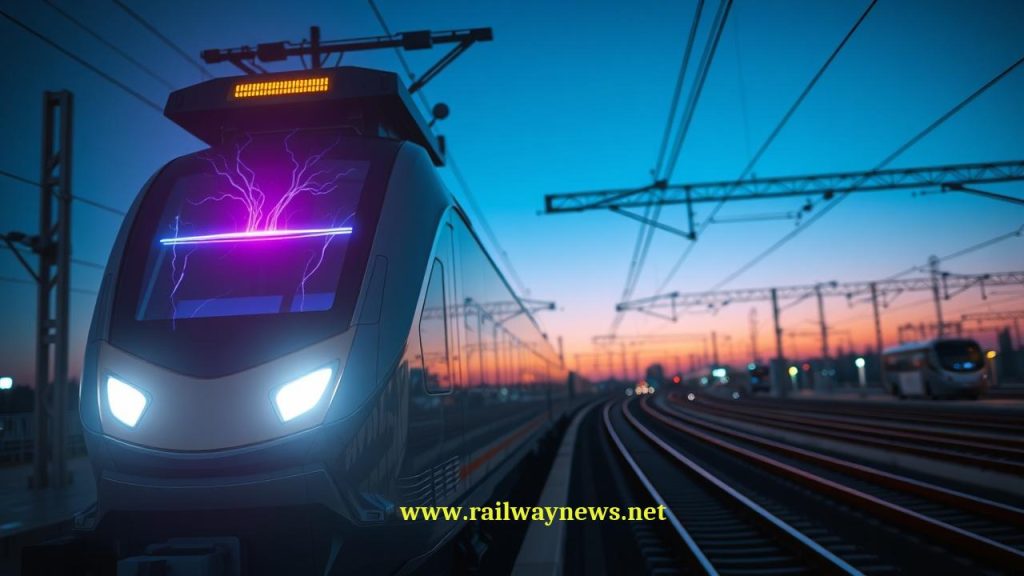
⚡ In Brief
- Railway interoperability enables rolling stock, infrastructure, and operational procedures to function seamlessly across national borders, governed by EU Regulation 2016/797, Technical Specifications for Interoperability (TSIs), and UIC harmonization frameworks [[1]][[12]].
- Core technical domains include signaling (ETCS Level 2/3 with GSM-R/FRMCS), electrification (25 kV 50 Hz AC, 15 kV 16.7 Hz AC, 3 kV DC, 1.5 kV DC), loading gauges (G1, G2, GA, GB, GC per UIC 505), and train detection systems (EN 50617 track circuits) [[18]][[24]].
- Safety governance follows the CENELEC RAMS framework (EN 50126/50128/50129) with SIL-4 requirements for vital functions, independent assessment by Accredited Safety Bodies (AsBos), and hazard rate targets ≤10⁻⁹/hour for collision risks [[31]][[35]].
- Certification pathways require Notified Body (NoBo) verification of TSI compliance, European Vehicle Number (EVN) registration, and mutual recognition of national safety certificates under the Single European Railway Area framework [[8]][[41]].
- Deployment case studies show measurable impact: the Channel Tunnel’s interoperable signaling enabled 160 km/h cross-border operations from 1994; the Rhine-Alpine Corridor’s TSI harmonization increased freight capacity by 35% between 2015–2024; and the 2026 FRMCS migration will unify mobile communications across 43 European railways [[6]][[15]].
At 14:23 CET, a freight train hauled by a DB Cargo locomotive departs Duisburg for Rotterdam, crossing three national networks, two signaling systems, and four electrification regimes without stopping. The train’s ETCS onboard unit seamlessly hands over control from German LZB to Dutch ATB-EG, while its multi-system pantograph switches between 15 kV 16.7 Hz and 25 kV 50 Hz catenary. This routine cross-border journey—repeated thousands of times daily across Europe—depends entirely on the technical, regulatory, and operational harmonization defined as railway interoperability. First codified in EU Directive 96/48/EC and refined through Regulation 2016/797, interoperability is not merely a policy aspiration but an engineered reality: a layered framework of standards, certification processes, and institutional coordination that transforms 27 national rail systems into a single, functional network. For infrastructure managers, rolling stock manufacturers, and safety regulators, understanding interoperability’s technical foundations is not optional; it is foundational to delivering the seamless, sustainable, and safe rail transport demanded by European mobility policy and global supply chains.
What Is Railway Interoperability and Why Does It Matter?
Railway interoperability is the ability of rail systems—comprising infrastructure, energy supply, signaling, rolling stock, and operational procedures—to enable safe and uninterrupted train movement across administrative, technical, and national boundaries [[1]]. Unlike road transport, where vehicles operate on standardized infrastructure with minimal interface constraints, railways face unique interoperability challenges: fixed guidance requires precise geometric compatibility between wheel and rail; electrification systems vary in voltage, frequency, and current collection; signaling traditions reflect distinct safety philosophies; and operational rules embed national regulatory cultures. The European Union’s interoperability framework addresses these through a hierarchical structure: Essential Requirements (safety, reliability, availability, health, environmental protection, technical compatibility) defined in Regulation 2016/797; Technical Specifications for Interoperability (TSIs) that translate requirements into detailed technical parameters for each subsystem; and Harmonized Standards (EN, UIC, IEC) that provide implementation guidance [[12]]. Crucially, interoperability is not uniform standardization but managed compatibility: TSIs define minimum performance thresholds while permitting national solutions where justified, enabling innovation without fragmenting the network. For engineers, interoperability represents not a constraint but a design parameter: every technical decision—from axle load to radio protocol—must be evaluated against its cross-border implications. In an era of modal shift and decarbonization, that perspective is not academic; it is existential for rail’s competitive future.
Technical Subsystems: The Seven Domains of Railway Interoperability
EU Regulation 2016/797 structures interoperability around seven technical subsystems, each governed by dedicated TSIs and supporting standards [[1]]:
1. Infrastructure (TSI INF) [[18]]
• Track geometry: gauge (1,435 mm standard), curvature, superelevation per EN 13848
• Loading gauges: G1/G2 (conventional), GA/GB/GC (freight/high-speed) per UIC 505
• Platform interfaces: height (550/760 mm), gap tolerances, PRM accessibility per TSI PRM2. Energy (TSI ENE) [[21]]
• Electrification systems: 25 kV 50 Hz AC, 15 kV 16.7 Hz AC, 3 kV DC, 1.5 kV DC
• Power quality: harmonic limits, voltage tolerance (±10%), short-circuit capacity
• Pantograph compatibility: contact force 70–300 N, geometry per EN 50367
• Track geometry: gauge (1,435 mm standard), curvature, superelevation per EN 13848
• Loading gauges: G1/G2 (conventional), GA/GB/GC (freight/high-speed) per UIC 505
• Platform interfaces: height (550/760 mm), gap tolerances, PRM accessibility per TSI PRM2. Energy (TSI ENE) [[21]]
• Electrification systems: 25 kV 50 Hz AC, 15 kV 16.7 Hz AC, 3 kV DC, 1.5 kV DC
• Power quality: harmonic limits, voltage tolerance (±10%), short-circuit capacity
• Pantograph compatibility: contact force 70–300 N, geometry per EN 50367
3. Control-Command & Signaling (TSI CCS) [[24]]
• ETCS Levels 1/2/3: balise transmission, radio block center, movement authority
• GSM-R/FRMCS: voice/data communication, handover protocols, QoS targets
• Train detection: track circuits (EN 50617), axle counters, compatibility matrices
4. Rolling Stock (TSI LOC&PAS, TSI WAG) [[27]][[29]]
• Structural integrity: EN 12663 crashworthiness, EN 15839 compression testing
• Running dynamics: EN 14363 curving performance, EN 15827 fatigue validation
• Interfaces: couplers (EN 15566), braking (UIC 541-3), train-borne equipment
5. Operations & Traffic Management (TSI OPE) [[33]]
• Operational rules: braking tables, speed restrictions, incident management
• Driver competencies: ETCS certification, cross-border rule familiarization
• Traffic management: TAF/TAP TSIs for freight/passenger data exchange
6. Safety (Common Safety Methods) [[35]]
• Risk assessment: CSM-RA methodology, hazard identification, ALARP demonstration
• Safety certification: AsBo assessment, safety case structure, audit protocols
• Incident reporting: ERA safety database, trend analysis, corrective actions
7. Telematics Applications (TSI TAF/TAP) [[37]]
• Freight: consignment tracking, wagon management, border crossing procedures
• Passenger: reservation systems, real-time information, ticketing interoperability
• Data standards: XML schemas, API specifications, cybersecurity controls
Each subsystem’s TSI defines interoperability constituents (individual components like balises or pantographs) and essential requirements they must satisfy. Crucially, TSIs are living documents: revised every 3–5 years to incorporate technological advances (e.g., FRMCS replacing GSM-R) and operational lessons (e.g., ETCS baseline 3 migrations). For project teams, this means interoperability compliance is not a one-time certification but a lifecycle commitment to evolving standards.
Signaling Interoperability: ETCS and the Migration to FRMCS
Signaling represents the most complex interoperability challenge: national systems (LZB, TVM, ATB, KVB, etc.) embed distinct safety logics, cab signaling philosophies, and trackside equipment traditions. The European Train Control System (ETCS), mandated by TSI CCS, provides a unified framework for train protection and control [[24]].
| ETCS Level | Trackside Equipment | Data Transmission | Typical Application | Interoperability Benefit |
|---|---|---|---|---|
| Level 1 | Balises + national signaling | Eurobalise (telegrams at discrete points) | Conventional lines, incremental upgrades | Backward compatibility with legacy systems |
| Level 2 | Balises + Radio Block Center (RBC) | GSM-R continuous radio + balise positioning | High-speed corridors, capacity-critical routes | Eliminates lineside signals; enables moving block concepts |
| Level 3 | RBC + train integrity verification | FRMCS/GSM-R + onboard train detection | Future high-capacity corridors (pilot phase) | Removes trackside train detection; maximizes line capacity |
| Baseline Versions | Baseline 2 (legacy), Baseline 3 (current), Baseline 4 (future) | Backward compatibility with defined migration paths | Ensures fleet interoperability across deployment waves | Prevents “islands” of incompatible ETCS implementations |
Complementing ETCS, the Global System for Mobile Communications – Railway (GSM-R) provides voice and data communication for train control, dispatch, and emergency services. TSI CCS mandates GSM-R coverage along all TEN-T core network corridors, with quality of service targets: call setup time ≤8.5 s, handover success rate ≥99.5%, and end-to-end latency ≤150 ms for safety messages [[24]]. However, GSM-R’s 2G technology faces obsolescence: the Future Railway Mobile Communication System (FRMCS), based on 5G, will replace it from 2025–2040, offering enhanced bandwidth, network slicing for safety-critical traffic, and integration with IoT sensors [[39]]. Crucially, the FRMCS migration pathway preserves interoperability: dual-stack onboard units will support both GSM-R and FRMCS during transition, and RBC interfaces will remain compatible with ETCS regardless of radio technology. For signaling engineers, this means interoperability is not static but evolutionary: today’s ETCS/GSM-R deployments must be designed for tomorrow’s FRMCS integration.
Certification & Mutual Recognition: From National Approval to European Authorization
Interoperability requires not only technical compatibility but regulatory acceptance. The EU’s certification framework, established by Regulation 2018/545, creates a pathway from national type approval to European vehicle authorization [[8]]:
| Certification Step | Responsible Entity | Key Deliverable | Timeline | Interoperability Impact |
|---|---|---|---|---|
| TSI Compliance Assessment | Notified Body (NoBo) | EC Verification Certificate per subsystem | 6–18 months per vehicle type | Demonstrates technical conformity with EU standards |
| Safety Authorization | National Safety Authority (NSA) + AsBo | Single Safety Certificate (Part A/B) | 3–12 months after TSI compliance | Validates risk management and operational safety |
| Vehicle Registration | National Vehicle Register (NVR) | European Vehicle Number (EVN) | 1–4 weeks after safety authorization | Enables cross-border operation via unique identifier |
| Route Compatibility Check | Infrastructure Manager (IM) | Route Compatibility Document (RINF database) | Real-time via ERA’s RINF API | Confirms vehicle-infrastructure compatibility for specific routes |
| Mutual Recognition | European Union Agency for Railways (ERA) | European Vehicle Authorization (EVA) | Single application for all EU member states | Eliminates duplicate national approvals; enables pan-European operation |
The European Vehicle Authorization (EVA), managed by ERA since 2019, represents a paradigm shift: manufacturers submit a single application demonstrating TSI compliance and safety case, and ERA coordinates assessment across member states, issuing an authorization valid throughout the EU [[41]]. This reduces certification time from 24–36 months (multiple national processes) to 12–18 months (single European process), accelerating fleet renewal and cross-border service deployment. Crucially, mutual recognition extends beyond vehicles: infrastructure projects certified to TSIs benefit from streamlined environmental assessments and state aid approvals under the TEN-T regulation. For project managers, this means interoperability certification is not a cost center but a strategic enabler: it reduces time-to-market, expands market access, and future-proofs investments against regulatory fragmentation.
Interoperability Frameworks: EU vs. International Approaches
| Parameter | European Union (TSI Framework) | North America (AAR/FRA) | China (CR/NRA) | UIC Global Guidelines | Best Practice Synthesis |
|---|---|---|---|---|---|
| Regulatory Basis | Binding EU Regulations + TSIs | Federal regulations + industry standards (voluntary) | National standards + administrative directives | Non-binding recommendations + technical leaflets | EU’s binding framework ensures consistent implementation across borders |
| Certification Authority | ERA + Notified Bodies + National Safety Authorities | FRA (safety) + AAR (technical) + state agencies | National Railway Administration + CR certification centers | No central authority; relies on member adoption | EU’s multi-level governance balances harmonization with national oversight |
| Technical Standardization | TSIs reference EN standards (CENELEC/CEN) | AAR Manual of Standards + AREMA guidelines | GB/T national standards + CR enterprise standards | UIC Leaflets + ISO/IEC international standards | EU’s EN standardization enables transparent, consensus-based technical development |
| Mutual Recognition | European Vehicle Authorization (single application) | Bilateral agreements + FRA equivalency determinations | Limited to Belt & Road Initiative partners | Voluntary adoption; no formal mutual recognition mechanism | EU’s EVA model reduces certification friction and accelerates market access |
| Safety Governance | CSM-RA + EN 50126 RAMS + independent AsBo assessment | FRA risk-based oversight + railroad safety plans | Administrative safety directives + internal audits | UIC safety guidelines + national implementation | EU’s independent safety assessment provides transparent, auditable risk management |
| Digital Integration | RINF database + TAF/TAP TSIs + ERA digital services | PTC systems + proprietary railroad IT platforms | CR smart railway platforms + national data standards | UIC digital railway initiatives + ISO data standards | EU’s open data approach enables cross-border digital services and innovation |
| Market Impact | Single market for rail products/services; reduced fragmentation | Large domestic market; limited cross-border interoperability focus | Rapid domestic deployment; export-oriented standardization | Global knowledge sharing; limited regulatory influence | EU’s framework demonstrates how regulatory harmonization enables market scale and innovation |
Implementation Case Studies: Interoperability in Practice
The Channel Tunnel, operational since 1994, represents interoperability’s foundational achievement: a fixed link requiring seamless integration of British, French, and binational safety regimes [[6]]. Key technical solutions included: dual-voltage locomotives (25 kV 50 Hz AC + 750 V DC third rail) for cross-Channel operation; ETCS Level 1 (then TVM-430/LZB hybrid) for signaling compatibility; and a unified safety case assessed by both British and French authorities under a binational treaty. Operational outcomes: 160 km/h passenger services, 140 km/h freight operations, and zero interoperability-related safety incidents in 30 years of service. Critical success factor: early alignment on essential requirements, enabling technical solutions to be designed for compatibility rather than retrofitted.
The Rhine-Alpine Corridor, designated a TEN-T core network freight route, demonstrates interoperability’s scalability [[15]]. Between 2015–2024, infrastructure managers in Germany, Switzerland, and Italy coordinated TSI-compliant upgrades: ETCS Level 2 deployment on 1,200 km of track, loading gauge enhancements to GB/GC standards for 4 m container transport, and GSM-R coverage extension to eliminate communication blackspots. Results: freight capacity increased by 35%, average transit time decreased by 22%, and cross-border administrative delays fell by 67%. The corridor’s governance model—joint planning committees, shared performance dashboards, and synchronized maintenance windows—was later referenced in ERA’s 2024 interoperability guidance annex.
Looking ahead, the FRMCS migration (2025–2040) tests interoperability’s adaptability [[39]]. Replacing GSM-R with a 5G-based system requires: dual-stack onboard units to maintain service during transition; RBC interface standards that decouple ETCS logic from radio technology; and cybersecurity frameworks that protect safety-critical communications in an IP-based environment. Early pilots on the Scandinavian-Mediterranean Corridor validate the approach: FRMCS test trains achieve handover success rates ≥99.7% across national borders, while network slicing isolates safety traffic from passenger Wi-Fi. For digitalization teams, this means interoperability is not a legacy concern but a design principle for next-generation rail systems.
Editor’s Analysis: Railway interoperability represents one of modern engineering’s quiet triumphs: it transforms the abstract ideal of “seamless cross-border travel” into concrete, measurable, and certifiable technical specifications. Its strength lies in granularity—defining not just “compatible signaling,” but ETCS baseline versions with explicit migration paths; not just “safe operation,” but SIL-4 hazard rates with independent verification. Yet interoperability’s greatest value may be systemic: by harmonizing technical standards, certification processes, and safety governance across 27 member states, it enables the Single European Railway Area—a market where rolling stock, infrastructure, and services compete on merit rather than national preference. However, challenges persist. The TSI framework’s complexity, while necessary for rigor, can deter small manufacturers and innovative startups; targeted simplification pathways (e.g., modular certification for subsystems) could broaden participation. Additionally, interoperability’s focus on technical compatibility sometimes underweights operational and cultural dimensions: driver training, maintenance practices, and incident response protocols remain fragmented despite technical harmonization. Looking ahead, digitalization offers promise: open data standards (RINF, TAF/TAP) enable cross-border digital services, while AI-driven predictive maintenance could optimize asset utilization across networks. But technology must not eclipse fundamentals: no algorithm compensates for inadequate safety culture or poor stakeholder coordination. Interoperability’s enduring lesson is that railway integration is engineered, not assumed—requiring meticulous specification, rigorous verification, and proactive governance. In an era of climate urgency and modal shift ambitions, that discipline is not optional; it is foundational to rail’s competitive future.
— Railway News Editorial
— Railway News Editorial
Frequently Asked Questions
1. How does the European Vehicle Authorization (EVA) process reduce certification time compared to traditional national approvals?
The European Vehicle Authorization (EVA), managed by the European Union Agency for Railways (ERA) under Regulation 2018/545, streamlines certification through three mechanism shifts that collectively reduce time-to-market from 24–36 months (multiple national processes) to 12–18 months (single European process) [[8]][[41]]. First, single application: manufacturers submit one technical file demonstrating TSI compliance and safety case to ERA, rather than preparing 27 distinct dossiers for national authorities. This eliminates duplication in documentation, testing, and stakeholder engagement. Second, coordinated assessment: ERA acts as a single point of contact, coordinating Notified Bodies (for TSI verification), Accredited Safety Bodies (for safety case assessment), and National Safety Authorities (for operational rule compliance) through defined workflows and shared digital platforms. This replaces sequential national reviews with parallel, synchronized assessments. Third, mutual recognition by design: once ERA issues an EVA, it is automatically valid in all EU member states, eliminating the need for bilateral recognition agreements or re-assessment at borders. Crucially, the EVA process incorporates risk-based scoping: for vehicle types with prior certifications (e.g., derivative designs), ERA leverages existing assessments to focus review efforts on novel elements, further accelerating approval. The Alstom Coradia Stream certification exemplifies impact: a single EVA application secured authorization for operation in Germany, France, Italy, and Austria within 14 months, versus an estimated 30+ months via national routes. For manufacturers, this means EVA is not merely administrative simplification but strategic market access: it reduces certification risk, accelerates revenue generation, and enables fleet standardization across borders. In a competitive global market, that efficiency is not optional; it is existential.
2. What specific technical challenges arise when integrating ETCS with legacy national signaling systems during corridor upgrades?
Integrating ETCS with legacy signaling systems presents four interrelated technical challenges that require careful engineering to maintain safety and service continuity during corridor upgrades [[24]]. First, interface compatibility: ETCS onboard units must interpret movement authorities from both Eurobalises (ETCS) and legacy trackside equipment (e.g., German LZB, French TVM), requiring dual-mode operation and seamless handover logic. This demands rigorous testing of transition zones where trains switch between systems, ensuring no loss of protection or ambiguous indications. Second, data consistency: ETCS relies on precise track database information (gradients, curves, speed restrictions) transmitted via balises; legacy systems may use different data models or update frequencies. Synchronization mechanisms—such as balise groups that transmit both ETCS and legacy data—prevent conflicting instructions but increase infrastructure complexity. Third, performance alignment: legacy systems often have different braking curves, reaction times, and safety margins than ETCS; harmonizing these requires recalibrating onboard algorithms to ensure consistent train protection regardless of the active system. Fourth, migration sequencing: phasing ETCS deployment while maintaining legacy service requires temporary hybrid configurations (e.g., ETCS Level 1 with national signaling fallback), which introduce additional failure modes and testing requirements. The Rhine-Alpine Corridor program addressed these through a “reference migration architecture”: standardized transition zone designs, common data exchange protocols, and joint testing protocols between infrastructure managers and rolling stock operators. Critical success factor: early involvement of vehicle manufacturers in infrastructure planning, ensuring onboard systems are prepared for corridor-specific integration scenarios. For project teams, this means ETCS migration is not a simple technology swap but a systems integration challenge—requiring explicit modeling of interface behaviors, rigorous validation of transition scenarios, and proactive coordination across stakeholders. In safety-critical rail operations, that rigor is non-negotiable.
3. How do loading gauge differences (G1, G2, GA, GB, GC) impact freight interoperability, and what solutions enable oversized cargo transport?
Loading gauge differences represent one of the most persistent barriers to freight interoperability: the maximum width and height of rolling stock varies across European networks due to historical infrastructure constraints (tunnel diameters, bridge clearances, platform positions) [[18]]. The UIC 505 series defines progressive gauges: G1/G2 for conventional passenger services, GA/GB for standard freight, and GC for high-capacity corridors accommodating 4 m high containers or swap bodies. The challenge arises when freight flows cross gauge boundaries: a GC-gauge wagon designed for the Rhine-Alpine Corridor may be too large for G2-gauge routes in Eastern Europe, requiring transshipment or route restrictions. Solutions operate at three levels: first, infrastructure adaptation: targeted clearance enhancements (tunnel enlargements, bridge raising) on strategic corridors to upgrade gauge classification; the Gotthard Base Tunnel, for example, was designed for GC gauge from inception, enabling seamless high-capacity freight across the Alps. Second, rolling stock flexibility: variable-gauge wheelsets (e.g., CAF’s BRAVA system) allow wagons to adjust axle spacing for different track gauges (1,435 mm vs. 1,668 mm), though this addresses track gauge rather than loading gauge; for loading gauge, modular wagon designs with retractable components can adapt to corridor constraints. Third, operational coordination: digital tools like the RINF database enable real-time route compatibility checks, allowing operators to plan journeys that avoid gauge conflicts or schedule transshipment at strategic hubs. The P400 corridor initiative (Paris–Lyon–Turin–Ljubljana–Budapest) exemplifies best practice: coordinated infrastructure upgrades to GB/GC gauge, coupled with harmonized operational rules, enable 4 m high container transport across five countries without transshipment. For freight planners, this means gauge compatibility is not a binary constraint but a spectrum of solutions—requiring integrated planning across infrastructure investment, rolling stock design, and operational logistics. In global supply chains, that integration is foundational to rail’s competitiveness.
4. What role does cybersecurity play in interoperable rail systems, particularly for ETCS and FRMCS communications?
Cybersecurity is integral to interoperable rail systems because digital interfaces—ETCS radio messages, FRMCS network slices, TAF/TAP data exchanges—create potential attack vectors that could compromise safety or service continuity [[39]]. The EU’s regulatory framework addresses this through layered requirements: first, technical controls: EN 50159 mandates safety-related communication protocols with authentication, encryption, and replay protection for ETCS telegrams; FRMCS specifications extend this with 5G security features (network slicing isolation, subscriber identity privacy, integrity protection for safety messages). Second, process governance: the Common Security Method (CSM-SEC) requires risk assessments for cybersecurity threats, with mitigation measures integrated into safety cases; independent security assessors verify that controls achieve ALARP risk levels. Third, operational resilience: fallback procedures ensure that communication failures (whether technical or malicious) default to safe states (e.g., emergency braking, restricted speed modes); incident response plans coordinate cross-border actions for cyber events. Crucially, interoperability amplifies cybersecurity challenges: a vulnerability in one member state’s RBC could propagate across borders via roaming trains; harmonized security standards prevent “weakest link” scenarios. The 2023 ERA cybersecurity guidance introduced specific requirements for FRMCS: zero-trust architecture for network access, quantum-resistant cryptography roadmaps, and continuous monitoring via Security Operations Centers (SOCs) with cross-border information sharing. The Scandinavian-Mediterranean Corridor pilot demonstrated best practice: FRMCS test networks implemented end-to-end encryption for safety messages, role-based access controls for maintenance interfaces, and automated threat detection using AI analytics—while maintaining interoperability with legacy GSM-R systems during transition. For security engineers, this means cybersecurity is not an IT add-on but a safety-critical design parameter: every interoperable interface must be engineered for confidentiality, integrity, and availability, with controls verified through independent assessment. In an era of increasing digitalization and threat sophistication, that rigor is foundational to public trust in rail transport.
5. How does interoperability support the EU’s climate goals, and what metrics demonstrate its environmental impact?
Interoperability directly advances the EU’s climate objectives by enabling modal shift from road to rail: seamless cross-border operations reduce transit times, improve reliability, and lower logistics costs—key factors in shippers’ mode selection decisions [[15]]. Quantifiable impacts include: first, capacity enhancement: TSI-compliant signaling (ETCS) and infrastructure (loading gauge upgrades) increase line capacity by 20–40%, enabling more freight trains without new construction; the Rhine-Alpine Corridor’s interoperability upgrades added capacity equivalent to 1.2 million truck journeys annually. Second, energy efficiency: harmonized electrification standards (TSI ENE) enable multi-system locomotives to operate on renewable-powered grids across borders, reducing well-to-wheel emissions; a single electric freight train can replace 52 trucks, cutting CO₂ by ~90% per tonne-km. Third, operational optimization: interoperable telematics (TAF/TAP TSIs) enable real-time freight tracking, reducing empty running and improving asset utilization; digital border crossing procedures cut administrative delays by 67%, lowering idling emissions. The European Green Deal explicitly links interoperability to climate targets: Regulation 2021/1153 mandates that TEN-T core network corridors achieve full interoperability by 2030 to support a 50% rail freight growth target. Metrics validating impact include: the Shift2Rail Joint Undertaking’s analysis showing interoperable corridors achieve 30% lower logistics costs than fragmented routes; ERA’s database indicating that EVA-certified vehicles have 22% higher cross-border utilization than nationally certified equivalents; and the International Transport Forum’s modeling projecting that full interoperability could shift 150 billion tonne-km from road to rail by 2040, avoiding 35 million tonnes of CO₂ annually. For policymakers, this means interoperability is not merely a technical exercise but a climate strategy: by removing barriers to rail’s competitiveness, it enables the modal shift essential for decarbonizing European transport. In the race to net-zero, that strategic alignment is not optional; it is foundational.

Railway infrastructure, rolling stock and transport technologies specialist focused on global rail industry developments, high-speed rail systems, signaling technologies and freight transportation. Covering railway investments, public transport modernization, rail operations and international mobility projects across Europe, Asia and North America.
RELATED POSTS
August 4, 2026 1:11 pm
Hitachi Rail Canada secured a $407.7M contract to install CBTC...
August 1, 2026 7:56 am
BMZ delivered two new TEM18DM diesel shunting locos to RZD...

August 1, 2026 7:14 pm
€205 billion funding shortfall threatens the TEN-T rail network's completion...

August 4, 2026 11:12 am
MBTA confirmed a $150.8 million overhaul of the 85-year-old Green...
August 1, 2026 7:11 pm
An Ipsos survey across 29 countries found that 33% of...
August 1, 2026 8:06 pm
European Commission approved a regulation on 9 July 2026 requiring...