
Webuild Completes Scaletta Tunnel, Launches Letojanni Sicily
Webuild completed the 2.7-km Scaletta tunnel and launched TBM Alessia on the 3.8-km Letojanni tunnel for the Messina–Catania rail doubling project in eastern Sicily, Italy.
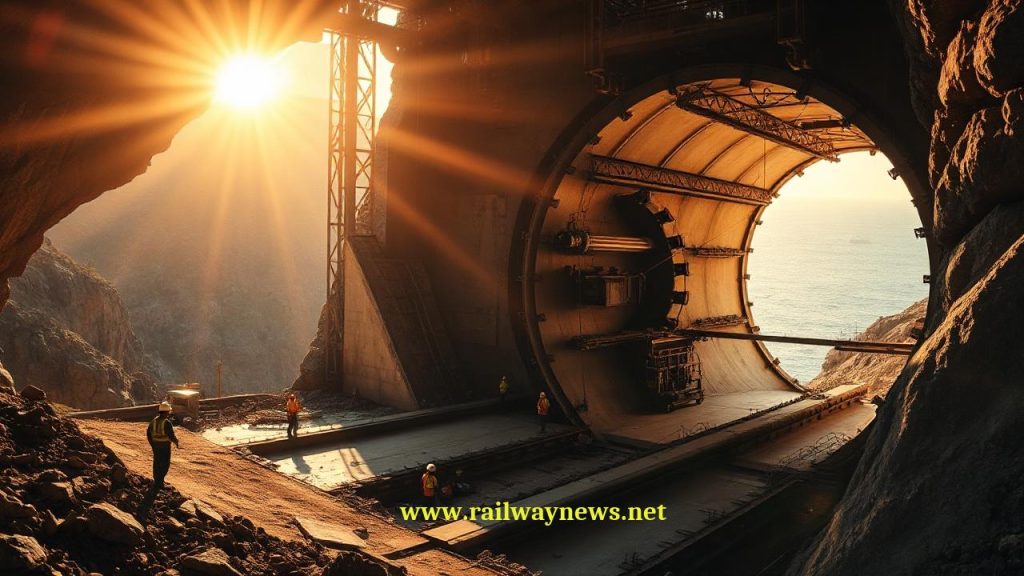
⚡ In Brief: Webuild completed the 2.7-km Scaletta tunnel and began excavation of the 3.8-km Letojanni tunnel on the Messina–Catania railway doubling project in eastern Sicily.
SICILY, ITALY – Webuild has hit two construction milestones on the Messina–Catania line-doubling project: completing boring on the 2.7-km Scaletta tunnel and simultaneously launching excavation on the new 3.8-km Letojanni tunnel. The twin operations confirm that the contractor is running two active fronts on the Ionian coastal corridor, part of a broader push to relocate roughly 43 km of track inland.
What Is the Full Scope of This Project?
The Palermo–Catania–Messina programme aims to cut travel time between Palermo and Catania by approximately 60 minutes and between Messina and Catania by roughly 30 minutes. The Giampilieri–Fiumefreddo segment alone includes large-scale viaducts, multiple tunnels, and a future underground station at Taormina designed to handle international tourist flows without surface-level urban impact. Total modernized track length across the programme reaches about 43 km, the majority routed in tunnel to navigate geologically complex terrain along the TEN-T Scandinavia–Mediterranean Corridor.
Key Project Data
| Parameter | Value |
|---|---|
| Project / Contract Name | Messina–Catania Railway Doubling — Giampilieri–Fiumefreddo Lot |
| Total Value | Not disclosed at individual lot level |
| Parties Involved | Webuild (lead contractor); supply chain of ~7,500 firms; operator RFI/FS Italiane |
| Timeline / Completion | Scaletta Tunnel completed; Letojanni Tunnel excavation begun; overall programme completion date not publicly confirmed |
| Country / Corridor | Italy / TEN-T Scandinavia–Mediterranean Corridor (eastern Sicily, Ionian axis) |
How Does This Compare to Similar Projects?
No directly comparable contract value for a similar rail tunnel lot in southern Italy was available in the 2024–2025 period at time of publication. However, the roughly 43-km route relocation and tunnelling programme mirrors the scale of other TEN-T corridor interventions on the Italian peninsula, such as the Terzo Valico dei Giovi high-speed/high-capacity line (approximately 53 km of new alignment, much in tunnel), where total investment exceeded €8 billion. (Source: Italian Ministry of Infrastructure and Transport, 2023)
Webuild’s concurrent operation of two TBMs—”Letterìa” on Scaletta and now “Alessia” on Letojanni—follows a production model the contractor has deployed elsewhere. On the Terzo Valico, Webuild (then Salini Impregilo) ran multiple TBMs simultaneously to accelerate excavation in fractured rock formations. The Sicily project, however, adds a distinct logistical challenge: TBM “Alessia” was relocated and recommissioned from a previous section, a practice that reduces mobilisation cost but requires careful geological recalibration. By contrast, competitor tunnel projects in the Alps, such as the Brenner Base Tunnel, have relied on purpose-built TBMs for each lot, accepting higher upfront capital cost to optimise cutterhead design for specific lithologies. (Source: BBT SE, 2024)
Data on total contract value, detailed completion milestones, and cost-per-kilometre benchmarks for the Giampilieri–Fiumefreddo lot were not publicly available at time of publication.
Editor’s Analysis
Webuild’s progress on the Messina–Catania axis reinforces a pattern of concentrated infrastructure spend along Italy’s southern TEN-T routes at a time when EU recovery funding windows are closing. The reliance on underground solutions—over 40 km of new alignment in tunnels—reflects both geological necessity and permitting pragmatism: sub-surface routing sidesteps surface expropriation delays that have historically stalled Italian rail projects. Completion of Scaletta and the immediate shift of TBM “Alessia” to Letojanni signal that the contractor is compressing the programme timeline to stay within Next Generation EU disbursement schedules, a trend also visible on the Napoli–Bari high-speed corridor where Webuild holds multiple active lots. (Source: EU Recovery and Resilience Facility monitoring data, 2025)
FAQ
Q: How much travel time will the completed Palermo–Catania–Messina project save?
A: The project targets a reduction of approximately 60 minutes between Palermo and Catania and roughly 30 minutes between Messina and Catania compared to the existing coastal line.
Q: What tunnels are currently under construction on the Messina–Catania route?
A: The 2.7-km Scaletta Tunnel has been completed using TBM “Letterìa,” while excavation of the 3.8-km Letojanni Tunnel is now under way using TBM “Alessia.” The overall Giampilieri–Fiumefreddo segment includes additional tunnel works whose individual names and lengths have not been fully disclosed.
Q: Will the new line serve the Taormina tourist area?
A: Yes. The project includes an underground station at Taormina to serve international tourist flows. The subsurface design was selected to avoid impact on the town’s historic urban landscape. An opening date for the station has not been officially confirmed.

Railway infrastructure, rolling stock and transport technologies specialist focused on global rail industry developments, high-speed rail systems, signaling technologies and freight transportation. Covering railway investments, public transport modernization, rail operations and international mobility projects across Europe, Asia and North America.
RELATED POSTS

October 8, 2026 1:15 pm
Alstom secured a €1bn contract to build 13 automated trains,...

October 1, 2026 7:09 am
United States regulators confirmed a September 30 deadline for the...

October 8, 2026 12:18 pm
Siemens Mobility signed an agreement with VinSpeed to supply 350...

October 4, 2026 5:14 pm
Alstom secured a CA$4.7 billion order from VIA Rail Canada...

October 5, 2026 6:12 pm
AECOM and Jacobs secured a contract in September 2026 to...

October 1, 2026 12:13 am
Illinois approved $1.5 billion annually for the Northern Illinois Transit...