
Turkiye Secures USD 6.75 Billion for Istanbul North Rail Crossing
Türkiye secures $6.75B to build the 125km Istanbul North Rail Crossing. The new line will link Gebze and Halkalı via the Yavuz Sultan Selim Bridge, connecting both Istanbul airports and creating a strategic freight and passenger corridor between Asia and Europe.
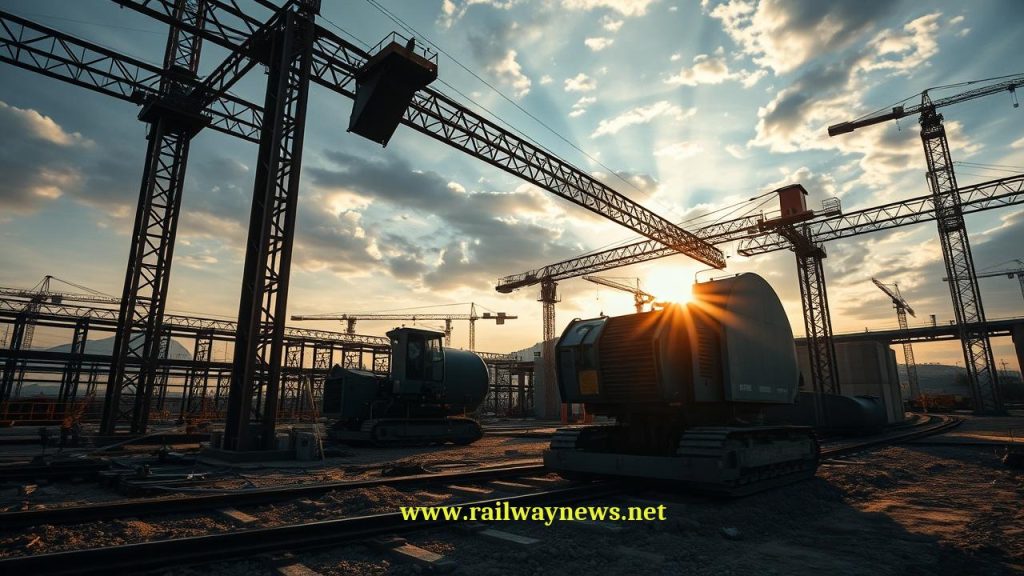
⚡ In Brief: Turkiye has secured a preliminary agreement with six international financial institutions for up to USD 6.75 billion to finance the 125 km Istanbul North Rail Crossing, a new line designed to connect the city’s main airports and logistics hubs.
ISTANBUL, TURKIYE – The Turkish government has reached a preliminary agreement for up to USD 6.75 billion in external financing to construct a new 125 km railway line across northern Istanbul. Transport and Infrastructure Minister Abdulkadir Uraloglu confirmed the plan, which aims to create a strategic freight and passenger corridor between Asia and Europe. The project’s tender process is reportedly underway, with construction slated to begin this year.
What Is the Full Scope of This Project?
The Istanbul North Rail Crossing project involves the construction of a 125 km double-track electrified railway line connecting key economic hubs on the city’s northern side. The route will run from Gebze in the east to Halkali in the west, integrating Sabiha Gokcen Airport, the Yavuz Sultan Selim Bridge, and Istanbul Airport. The project is designed to handle both high-speed passenger services and heavy freight, with a projected annual capacity of 33 million passengers and 30 million tons of cargo.
Key Project Data
| Parameter | Value |
|---|---|
| Project / Contract Name | Istanbul North Rail Crossing |
| Total Value | USD 6.75 billion (Note: A separate entity verification report cites USD 6 billion) |
| Parties Involved | Turkiye (Ministry of Transport and Infrastructure), Six undisclosed international financial institutions |
| Timeline / Completion | Tender and construction start planned for 2026. Final completion date not disclosed. |
| Country / Corridor | Turkiye / Northern Istanbul (Asia-Europe Link) |
How Does This Compare to Similar Projects?
The projected annual freight capacity of 30 million tons for the new line dramatically overshadows the performance of the existing Bosphorus rail link. The Marmaray tunnel, which currently handles all cross-strait rail traffic, transported approximately 1.7 million tons of freight over a nearly five-year period (2020-2025), demonstrating its severe limitations for cargo. The new project aims to carry more than 17 times that volume annually. In terms of cost, the project’s estimated USD 6.75 billion for 125 km equates to approximately USD 54 million per kilometre, which is a significant investment but comparable to other major European infrastructure projects involving complex engineering and land acquisition.
Editor’s Analysis
This project represents a major strategic bet on Turkiye’s future as a critical logistics hub between Europe and Asia, prioritising freight capacity far beyond existing infrastructure. While some Western urban rail systems face challenges with declining ridership (Source: Axios, 2026), Istanbul is investing heavily in new capacity for both passengers and goods, driven by economic and geopolitical strategy rather than just commuter demand. The financing by international institutions signals confidence in Turkiye’s long-term infrastructure planning, even as the global real estate market shows investment shifting heavily towards industrial and logistics assets (Source: Law360, 2026).
FAQ
Q: Why is this new railway needed if the Marmaray tunnel already exists?
A: The Marmaray tunnel has significant capacity constraints, particularly for freight, which is restricted to night-time hours. The new line will provide a dedicated, high-capacity corridor capable of moving 30 million tons of freight per year, relieving the bottleneck at Marmaray.
Q: What is the official financing amount for the project?
A: The Turkish Transport Minister announced a preliminary agreement for USD 6.75 billion. However, other verification reports have cited a figure of USD 6 billion, suggesting the final amount is subject to the conclusion of formal agreements with the six financial institutions involved.
Q: Will this line directly connect Istanbul’s two main airports?
A: Yes, a key feature of the project is creating the first direct rail link between Sabiha Gokcen Airport (SAW) on the Asian side and Istanbul Airport (IST) on the European side. The connection will be made via the rail infrastructure on the Yavuz Sultan Selim Bridge.

Transport and railway industry editor covering global rail infrastructure, sustainable mobility, urban transit systems and next-generation railway technologies with a focus on accessible and industry-focused reporting.
RELATED POSTS

October 8, 2026 12:18 pm
Siemens Mobility signed an agreement with VinSpeed to supply 350...

October 5, 2026 6:12 pm
AECOM and Jacobs secured a contract in September 2026 to...

October 4, 2026 11:08 pm
Sound Transit confirmed the September 30 opening of Seattle Pinehurst...

October 6, 2026 9:17 am
Illinois approved $1.1M in state funds to upgrade two McHenry...
October 6, 2026 2:14 am
Union Pacific launched export rail shipments with Ferromex to deliver...
October 6, 2026 12:16 am
FTA awarded $233 million in grants to eight US rail...