
TRAXX DC3: Revolutionizing Italian Rail Freight
The Bombardier TRAXX DC3: Revolutionizing freight with predictive maintenance, “Last Mile” capability, and massive cost savings. Discover how!
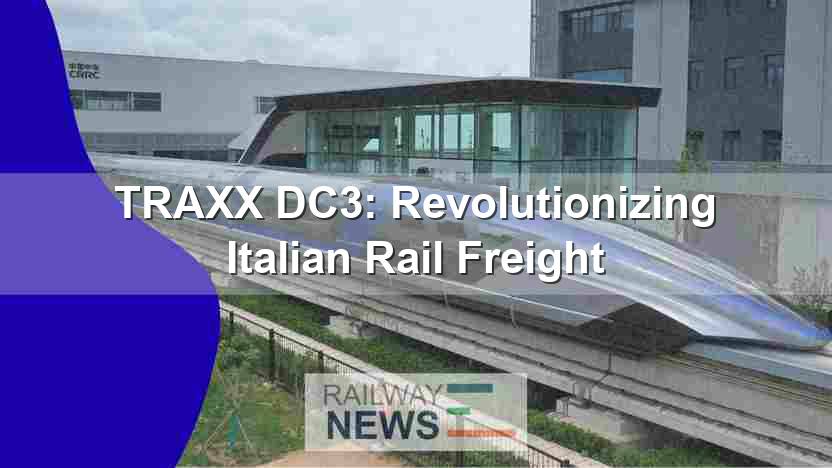
The railway industry is constantly evolving, driven by the need for increased efficiency, reduced operational costs, and enhanced sustainability. This article explores the significant advancements represented by Bombardier’s unveiling of the TRAXX DC3 locomotive, a new generation of freight locomotives designed to meet these evolving demands. The TRAXX DC3 is not merely an incremental improvement; it represents a paradigm shift in freight transportation, incorporating cutting-edge technologies to optimize performance, minimize downtime, and maximize operational flexibility. We will explore the key features of this locomotive, its impact on the freight industry, and the broader implications for the future of railway technology. The analysis will encompass the locomotive’s technological advancements, its economic benefits, its environmental impact, and its contribution to the overall efficiency of freight operations. We will consider how this innovative design addresses the challenges faced by freight operators and sets a new standard for future locomotive development.
Technological Advancements in the TRAXX DC3
The TRAXX DC3 boasts several significant technological advancements that contribute to its superior performance and efficiency. Its design incorporates the latest digital maintenance platforms, enabling predictive maintenance through real-time monitoring. This Conditional Based Maintenance (CBM) system, leveraging big data and Internet of Things (IoT) technology, allows operators to anticipate maintenance needs, minimizing costly downtime and maximizing vehicle availability. A crucial feature is the “Last Mile” function, equipping the locomotive to operate on non-electrified track sections commonly found in ports and freight terminals. This significantly expands operational flexibility, enabling seamless integration into complex logistical networks and reducing the need for switching locomotives. The enhanced traction capacity and optimized energy consumption further contribute to cost savings and operational efficiency.
Economic Impact and Cost Reduction
The TRAXX DC3’s economic benefits are substantial. Its predictive maintenance capabilities reduce operational costs associated with unplanned downtime and reactive maintenance. The “Last Mile” function eliminates the need for time-consuming and costly switching operations at the boundaries of electrified and non-electrified tracks. Improved energy efficiency directly translates into lower fuel consumption, leading to significant savings in operating expenses. Additionally, the increased load capacity and traction capability allow for greater efficiency in transporting freight, contributing to a better overall return on investment for railway operators.
Operational Flexibility and Logistical Advantages
The TRAXX DC3’s design prioritizes operational flexibility, a critical aspect for modern freight transportation. The “Last Mile” function dramatically increases the locomotive’s versatility, enabling access to a wider range of destinations and facilitating seamless integration into diverse logistical networks. This expanded operational reach enables freight operators to serve a broader customer base and access new market opportunities. The locomotive’s compatibility with various digital platforms streamlines operations and facilitates better communication and data exchange within the overall supply chain. This integrated approach maximizes efficiency and reduces logistical complexities.
Market Adoption and Future Implications
Early adoption by major Italian rail operators, such as Mercitalia Rail, Captrain Italy, and GTS, demonstrates the TRAXX DC3’s appeal and market viability. The initial order of 190 units, with an additional 50 currently under production, underscores the significant market demand for this innovative locomotive. The success of the TRAXX DC3 is likely to influence future locomotive development, with other manufacturers seeking to incorporate similar technological advancements to enhance efficiency, reduce costs, and improve operational flexibility. The TRAXX DC3’s focus on digitalization, predictive maintenance, and expanded operational capabilities sets a new benchmark for the freight transportation industry. This technological leap not only benefits individual operators but contributes to the overall efficiency and competitiveness of the railway sector.
Conclusions
Bombardier’s TRAXX DC3 locomotive represents a significant advancement in freight transportation technology. Its innovative features, including the “Last Mile” function, predictive maintenance capabilities, and optimized energy consumption, address key challenges faced by the industry. The economic benefits are substantial, encompassing reduced operational costs, improved efficiency, and increased revenue potential. The locomotive’s flexibility enhances logistical capabilities, enabling operators to access a broader range of markets and improve overall supply chain efficiency. The early adoption by leading Italian rail operators signifies the TRAXX DC3’s market viability and its potential to reshape the future of freight transportation. The success of this locomotive underlines the growing importance of technological innovation, predictive maintenance, and operational flexibility in the railway sector. As the industry continues to evolve, locomotives like the TRAXX DC3 will likely play a crucial role in enhancing efficiency, sustainability, and overall competitiveness. The integration of digital technologies, data analytics, and advanced engineering principles demonstrated in this locomotive heralds a new era of intelligent and efficient freight transport, offering substantial benefits to both operators and the wider economy. The TRAXX DC3 serves not only as a technological advancement but also as a roadmap for future locomotive development, emphasizing the importance of continuous innovation in addressing the ongoing challenges and evolving needs of the global freight transportation landscape.

Railway infrastructure, rolling stock and transport technologies specialist focused on global rail industry developments, high-speed rail systems, signaling technologies and freight transportation. Covering railway investments, public transport modernization, rail operations and international mobility projects across Europe, Asia and North America.
RELATED POSTS

October 8, 2026 1:15 pm
Alstom secured a €1bn contract to build 13 automated trains,...

October 1, 2026 7:09 am
United States regulators confirmed a September 30 deadline for the...

October 8, 2026 12:18 pm
Siemens Mobility signed an agreement with VinSpeed to supply 350...

October 4, 2026 5:14 pm
Alstom secured a CA$4.7 billion order from VIA Rail Canada...

October 5, 2026 6:12 pm
AECOM and Jacobs secured a contract in September 2026 to...

October 4, 2026 11:08 pm
Sound Transit confirmed the September 30 opening of Seattle Pinehurst...