
Transpennine Route Upgrade Awards £1B to Local Suppliers
Network Rail awarded over £1 billion to local UK suppliers for track, viaduct, and line electrification works on the Transpennine Route Upgrade by early 2025.
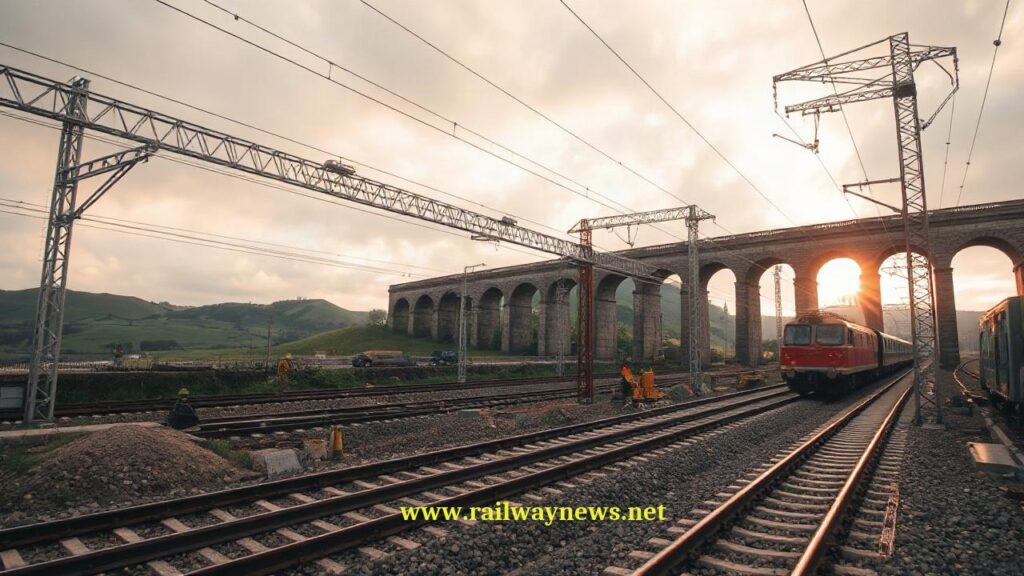
⚡ In Brief: The Transpennine Route Upgrade surpassed £1 billion in local supply chain spending across northern England, directing contracts to regional suppliers like COWAP to support electrification and line capacity works.
MANCHESTER, United Kingdom – The Transpennine Route Upgrade (TRU) has surpassed £1 billion ($1.27 billion) in local supply chain expenditures across the North of England as of early 2025. Programme operator Network Rail and its delivery partners have directed this funding to regional businesses to support track realignment, station modifications, and overhead line electrification between Manchester, Leeds, and York. Local fabrication specialist COWAP recorded a 50 percent increase in project-related turnover between 2020 and 2025 under the initiative.
What Is the Full Scope of This Project?
The Transpennine Route Upgrade entails full route electrification, capacity expansion, and civil engineering renewals across the 70-mile corridor connecting Manchester, Huddersfield, Leeds, and York. TRU mandates that at least 25 percent of all supply chain expenditure be awarded to firms situated within 25 miles of the rail route, alongside a requirement that 33 percent of tier-one supplier spend be directed to small and medium-sized enterprises. Civil engineering deliverables under this local procurement envelope include the fabrication and erection of overhead line electrification structures, boundary fencing, and structural renewals on key civil assets such as the Huddersfield viaduct. The broader workforce programme targets the creation of up to 8,000 project jobs and 590 technical apprenticeships across the northern corridor over its delivery lifecycle.
Key Project Data
| Parameter | Value |
|---|---|
| Project / Contract Name | Transpennine Route Upgrade (TRU) Local Procurement Programme |
| Total Value | Over £1 billion local spend (Total overall TRU programme budget not disclosed in announcement) |
| Parties Involved | Network Rail, TRU Alliance, COWAP, West & North Yorkshire Chamber of Commerce |
| Timeline / Completion | Multi-year delivery through the mid-2030s; local spend milestone achieved by 2025 |
| Country / Corridor | United Kingdom / Manchester–Huddersfield–Leeds–York line |
How Does This Compare to Similar Projects?
Infrastructure supply chain localisation on this scale reflects a broader European shift toward regionalised capital allocation, though procurement execution speeds vary widely across international corridors. For comparison, Hungarian state railway upgrades saw an Austrian-owned contractor secure nearly HUF 80 billion (approximately €200 million) in civil rail construction frameworks across a condensed four-month procurement window (Source: Central European Affairs, 2026). In Ireland, capital fleet expansion and infrastructure maintenance under the National Transport Authority met operational delivery baselines during 2024 and 2025, but network operators faced persistent performance penalties caused by timetable revisions and temporary speed restrictions rather than supply-chain volume bottlenecks (Source: National Transport Authority, 2026). Note: Independent verification of the final, all-inclusive capital cost for the entire Transpennine Route Upgrade programme was not available at time of publication.
Editor’s Analysis
Mandating that one-third of tier-one procurement flow to small and medium enterprises establishes a structural defence against tier-one contractor insolvency, which historically stalled UK rail upgrades. By anchoring component manufacturing within a 25-mile perimeter, TRU mitigates intermodal freight delays that continue to affect global rolling stock deliveries, where top-five suppliers control 21.7 percent of international market volume (Source: Spherical Insights, 2026). Long-term route reliability will ultimately depend on whether regional sub-contractors can scale their technical workforce fast enough to prevent project delivery bottlenecks as overhead catenary installation expands.
FAQ
Q: What local spending targets has the Transpennine Route Upgrade committed to?
A: TRU has committed to allocating at least 25 percent of project supply chain spending to companies within 25 miles of the route and at least 33 percent to small and medium-sized enterprises. These policies have already channelled more than £1 billion into regional businesses across northern England.
Q: What specific infrastructure is supplier COWAP delivering for the corridor?
A: COWAP manufactures and installs overhead line equipment, trackside boundary fencing, and structural components for civil railway infrastructure. Their primary recent delivery location includes structural works on the Huddersfield viaduct.
Q: When will the entire Transpennine Route Upgrade be fully operational?
A: This has not been officially confirmed. The programme involves staged delivery phases throughout the late 2020s and early 2030s to minimise operational route closures across northern passenger lines.

Railway infrastructure, rolling stock and transport technologies specialist focused on global rail industry developments, high-speed rail systems, signaling technologies and freight transportation. Covering railway investments, public transport modernization, rail operations and international mobility projects across Europe, Asia and North America.
RELATED POSTS
November 2, 2026 5:15 pm
WSP secured an advisory contract from Transport for London in...
November 2, 2026 9:11 pm
Wabtec secured a $390 million deal with South Africa's Transnet...
November 1, 2026 6:16 am
CPKC signed a five-year labor contract with BLET covering 250...
November 3, 2026 5:14 pm
Conrail confirmed 28-year rail veteran John Wright as president and...
November 1, 2026 7:12 am
Metra launched its draft rail plan across an 11-line Chicago...
November 2, 2026 8:15 pm
Network Rail confirmed the installation of a new Church Fenton...