
Talgo & AOI: Modernizing Egypt’s Rail Network
The strategic partnership between Talgo and the Arab Organization for Industrialization (AOI) in Egypt aims to enhance the country’s railway infrastructure through joint manufacturing of rolling stock, fostering local industrial growth and reducing dependency on imported technology.
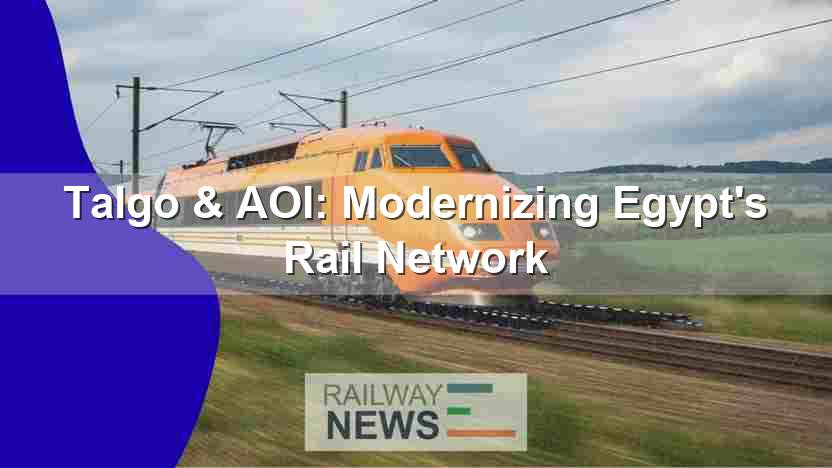
This article examines the strategic partnership between Talgo, a leading Spanish rolling stock manufacturer, and the Arab Organization for Industrialization (AOI) in Egypt. This collaboration focuses on enhancing Egypt’s railway infrastructure through joint ventures in rolling stock manufacturing and maintenance. The agreement signifies a significant step towards modernizing Egypt’s rail network, improving passenger services, and boosting the nation’s industrial capabilities. The partnership’s impact extends beyond immediate economic benefits; it contributes to Egypt’s long-term development goals by improving transportation efficiency and bolstering its industrial sector. This analysis will explore the details of the agreement, its implications for the Egyptian railway system (ENR – Egyptian National Railways), and the broader context of international railway development collaborations.
A Strategic Alliance for Egyptian Rail Modernization
The framework agreement between Talgo and AOI represents a pivotal moment in the modernization of Egypt’s railway infrastructure. This collaboration leverages Talgo’s expertise in designing and manufacturing high-performance rolling stock with AOI’s established industrial capabilities and local market knowledge. The partnership aims to address the need for improved rolling stock across various rail segments in Egypt, from long-distance intercity services to potentially higher-speed rail lines in the future. This joint manufacturing approach not only provides Egypt with access to advanced train technology but also fosters local industrial growth and job creation through technology transfer and skills development. The partnership significantly reduces reliance on solely importing rolling stock, promoting self-sufficiency in the rail sector.
Joint Manufacturing and Technology Transfer
The core of the Talgo-AOI agreement centers on joint manufacturing of rolling stock. Through collaboration with Semaf, AOI’s railway equipment subsidiary, Talgo intends to facilitate the local production of various rolling stock components and potentially even complete trainsets. This technology transfer initiative is crucial for building sustainable capacity within Egypt. The transfer of technical expertise, manufacturing processes, and quality control standards from Talgo to Semaf ensures a long-term benefit, empowering Egypt to maintain and upgrade its rail infrastructure independently. This strategy aligns with Egypt’s broader economic diversification and industrial development plans.
Expanding Rail Services and Passenger Experience
The immediate impact of the partnership is visible through the delivery of six Talgo intercity trainsets under a €158 million contract awarded to Talgo by ENR. These trainsets, comprising diesel-electric locomotives, power cars, and passenger cars, will significantly enhance services on the main Cairo-Alexandria-Aswan route. The inclusion of an eight-year minimum integral maintenance contract underscores the commitment to long-term operational efficiency and reliability. The improved passenger experience – resulting from modern, comfortable trains and reliable schedules – will stimulate economic activity and contribute to improved regional connectivity.
Broader Implications and Future Prospects
The Talgo-AOI partnership transcends the immediate project of supplying intercity trains. It provides a blueprint for future rail development projects in Egypt and potentially across the region. The successful collaboration could attract further investment in Egypt’s rail sector, stimulating innovation and competitiveness. Additionally, this model of public-private partnerships (PPPs) and technology transfer could serve as a template for other developing nations seeking to modernize their railway infrastructure. The experience gained in this collaboration could pave the way for future high-speed rail projects in Egypt, drawing on Talgo’s experience with high-speed lines such as the Haramain Railway in Saudi Arabia.
Conclusion
The partnership between Talgo and AOI marks a substantial advancement in Egypt’s railway modernization efforts. The agreement goes beyond simply providing new rolling stock; it represents a strategic investment in technological advancement, industrial development, and enhanced passenger services. The joint manufacturing initiative, coupled with the technology transfer, will foster long-term self-sufficiency in the rail sector, empowering Egypt to independently manage and expand its rail network. The successful delivery and operation of the Talgo intercity trainsets will provide a tangible demonstration of the partnership’s effectiveness. The improved passenger experience and enhanced operational efficiency will undoubtedly stimulate economic activity and foster regional development. The collaborative approach, combining international expertise with local industrial capacity, establishes a model for future infrastructure development projects in Egypt and potentially across North Africa. This strategy not only addresses immediate transportation needs but also contributes significantly to Egypt’s broader economic and industrial growth goals, setting a precedent for sustainable railway modernization in emerging markets globally. The long-term implications are substantial, suggesting a significant positive impact on Egypt’s economy and its position in regional and global rail infrastructure development.

Railway infrastructure, rolling stock and transport technologies specialist focused on global rail industry developments, high-speed rail systems, signaling technologies and freight transportation. Covering railway investments, public transport modernization, rail operations and international mobility projects across Europe, Asia and North America.
RELATED POSTS

October 8, 2026 1:15 pm
Alstom secured a €1bn contract to build 13 automated trains,...

October 1, 2026 7:09 am
United States regulators confirmed a September 30 deadline for the...

October 8, 2026 12:18 pm
Siemens Mobility signed an agreement with VinSpeed to supply 350...

October 4, 2026 5:14 pm
Alstom secured a CA$4.7 billion order from VIA Rail Canada...

October 5, 2026 6:12 pm
AECOM and Jacobs secured a contract in September 2026 to...

October 4, 2026 11:08 pm
Sound Transit confirmed the September 30 opening of Seattle Pinehurst...