
Stockholm Metro Expansion: EIB Boosts Sustainable Urban Growth
Stockholm Metro Expansion Receives Major Financial Boost from European Investment Bank, with EUR 400 million investment supporting new lines and stations to accommodate a growing population while reducing environmental impact.
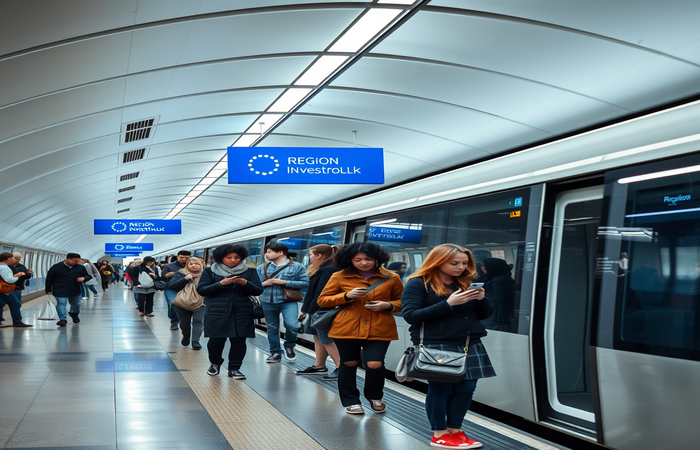
Stockholm Metro Expansion Receives Major Financial Boost from European Investment Bank
The European Investment Bank (EIB) has announced a substantial financial commitment to bolster the ongoing expansion of Stockholm’s metro system, a project of significant scale within Europe’s urban infrastructure landscape. This additional investment of EUR 400 million (equivalent to approximately SEK 4.5 billion) underscores the EIB’s dedication to sustainable urban mobility and regional development. The funding is crucial for advancing the construction of new lines, stations, and associated infrastructure, designed to accommodate a burgeoning population while simultaneously mitigating the environmental impact of urban transportation. This article will delve into the specifics of this financial infusion, its strategic implications, and the broader context of Stockholm’s commitment to sustainable urban planning and its ambitious climate goals, highlighting the project’s alignment with the Paris Agreement and Sweden’s target of carbon neutrality by 2045. The expansion, involving multiple municipalities, exemplifies a holistic approach to urban development, integrating housing and transportation to foster sustainable growth.
A Strategic Investment in Urban Mobility
The EIB’s allocation of EUR 400 million will be distributed between the Region of Stockholm and the City of Stockholm, with SEK 2.5 billion going to the region and SEK 2 billion to the city. This commitment elevates the EIB’s cumulative investment in the metro expansion to over SEK 12 billion (equivalent to more than EUR 1 billion). This substantial financial support is earmarked for the construction of three new lines, totaling 30 kilometers, with 20 kilometers comprising double-track tunnels, along with the addition of 18 new stations and the expansion of an existing depot. The project’s impact will be felt across four municipalities: Stockholm, Nacka, Solna, and Järfälla. The expansion is projected to facilitate the development of 130,500 new residential units along these new metro lines, effectively integrating housing and public transportation to promote sustainable urban growth and reduce reliance on private vehicles.
Enhancing Sustainability and Reducing Emissions
The expansion of the Stockholm metro is pivotal to the Region of Stockholm’s efforts to manage a growing population while achieving its climate objectives. Public transport currently serves approximately 730,000 daily users across the county, with the metro expansion set to increase capacity and efficiency. The project is aligned with the region’s goal to annually decrease greenhouse gas emissions by 12% in accordance with the Paris Agreement, and supports Sweden’s broader objective of achieving carbon neutrality by 2045. The reduction of greenhouse gas emissions is a core objective, with the expansion designed to encourage the adoption of public transportation, thereby lowering the region’s carbon footprint. By investing in an efficient and sustainable public transport system, the Region of Stockholm is actively contributing to environmental protection and improving the quality of life for its residents.
Sustainability and Quality Assurance
The Stockholm metro expansion has undergone an independent audit by Ceequal, a premier certification system for civil engineering projects. The project has garnered a top “Excellent” rating for several of its components, illustrating its high sustainability ambitions and efforts to surpass legal and industry standards. This recognition underscores the project’s commitment to environmental stewardship and sustainable construction practices. The Ceequal assessment covers a wide range of environmental and social impacts, from material selection and waste management to community engagement and biodiversity considerations, ensuring that the expansion is developed in a responsible and sustainable manner. The project’s focus on sustainability goes beyond simply reducing emissions; it encompasses a holistic approach to minimizing environmental impact and promoting long-term resilience within the urban environment.
Conclusion
To summarize, the additional EUR 400 million investment from the European Investment Bank marks a significant endorsement of the Stockholm metro expansion project, reinforcing its critical role in promoting sustainable urban mobility and regional development. This financial support, totaling over EUR 1 billion in EIB contributions, highlights the strategic importance of the project within the context of Stockholm’s urban development plans. The expansion of the metro system is not just about increasing transportation capacity; it is a detailed strategy to accommodate a growing population while actively addressing climate targets. The initiative is pivotal to the Region of Stockholm’s commitment to reduce greenhouse gas emissions, aligning with the Paris Agreement and Sweden’s broader carbon neutrality goals. The Ceequal certification, with “Excellent” ratings for various components, underscores the project’s commitment to environmental sustainability and its efforts to exceed industry standards. The collaboration between the EIB, the Region of Stockholm, and the City of Stockholm showcases a unified approach to urban planning, integrating public transport with housing and broader environmental goals. This project serves as a model for other European cities, demonstrating how strategic investments in public transport can drive sustainable growth, reduce environmental impact, and improve the quality of life for residents. The continued investment in public transport is an effective way of reducing greenhouse gas emissions in the region. It is a positive step towards creating a more sustainable and livable urban environment for generations to come.
Summary about companies
- European Investment Bank (EIB): The EIB is the lending arm of the European Union, providing financing and expertise for sound and sustainable investment projects within the EU and beyond. The EIB’s role in this project is to provide substantial financial support to the Stockholm metro expansion, aligning with its goals of promoting sustainable urban mobility and regional development.
- Region of Stockholm: Responsible for regional planning, public transport, healthcare, and cultural activities within the Stockholm County. The region is the primary recipient of EIB funding for the metro expansion.
- City of Stockholm: The capital city of Sweden and a key participant in the metro expansion project, working in close collaboration with the Region of Stockholm on the development of the new metro lines and stations.
- Ceequal: A leading sustainability assessment and certification scheme for civil engineering projects. Ceequal’s independent audit of the Stockholm metro expansion ensures that the project meets high standards of sustainability.

Railway infrastructure, rolling stock and transport technologies specialist focused on global rail industry developments, high-speed rail systems, signaling technologies and freight transportation. Covering railway investments, public transport modernization, rail operations and international mobility projects across Europe, Asia and North America.
RELATED POSTS

October 8, 2026 1:15 pm
Alstom secured a €1bn contract to build 13 automated trains,...

October 1, 2026 7:09 am
United States regulators confirmed a September 30 deadline for the...

October 8, 2026 12:18 pm
Siemens Mobility signed an agreement with VinSpeed to supply 350...

October 4, 2026 5:14 pm
Alstom secured a CA$4.7 billion order from VIA Rail Canada...

October 5, 2026 6:12 pm
AECOM and Jacobs secured a contract in September 2026 to...

October 4, 2026 11:08 pm
Sound Transit confirmed the September 30 opening of Seattle Pinehurst...