
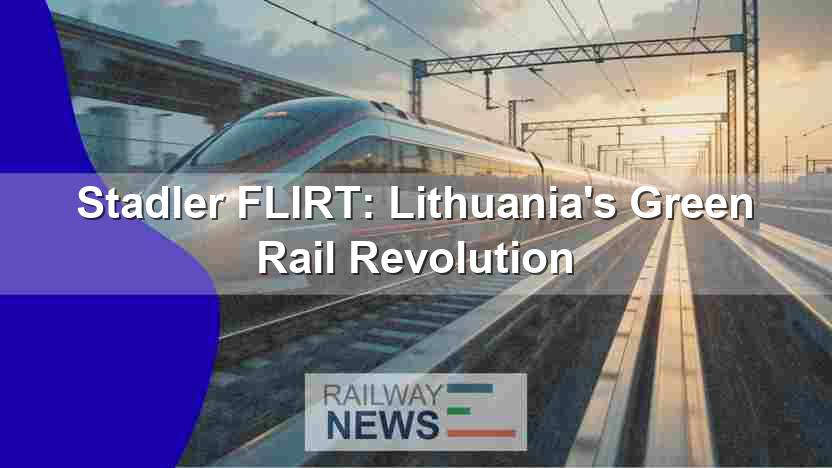
Stadler FLIRT: Lithuania’s Green Rail Revolution
The recent contract between Stadler and Lithuania’s LTG Link for 15 FLIRT multiple units represents a significant investment in sustainable rail technology, expanding Stadler’s presence in the Baltic region and demonstrating the platform’s adaptability to Lithuanian operational needs.
Introduction
This article explores the significant expansion of Stadler’s FLIRT (Fast Light Intercity and Regional Train) fleet into Lithuania, marking a key development in the Baltic region’s railway modernization. The recent order from LTG Link, the Lithuanian railway operator, for 15 FLIRT multiple units—comprising nine electric and six battery-electric variants—represents a substantial investment in sustainable and efficient passenger transport. This contract signifies not only Stadler’s continued success in the Baltic States, building on previous successes in Estonia and Finland, but also highlights the growing global adoption of FLIRT technology for its versatility and adaptability to diverse operational needs. The following sections will delve into the specifics of this order, its implications for Lithuanian rail infrastructure, and the broader context of Stadler’s global FLIRT program and the increasing trend towards environmentally friendly rail solutions. We will also examine the technological advancements showcased by the battery-electric FLIRT units, specifically tailored for Lithuanian conditions, and the long-term benefits of this partnership between Stadler and LTG Link.
Stadler’s FLIRT Success in the Baltics
Stadler’s FLIRT trains have gained considerable traction in the Baltic region, starting with the delivery of 38 units to Elron, the Estonian railway operator, between 2012 and 2014. This success has paved the way for the current Lithuanian order, demonstrating the proven reliability and suitability of the FLIRT platform for the specific operational demands of this geographical area. The Lithuanian contract further solidifies Stadler’s position as a leading supplier of modern rolling stock in the Baltics, contributing to the region’s ongoing efforts to enhance its rail infrastructure and improve passenger transport efficiency. The contract also extends to a potential further 37 units, showcasing the confidence LTG Link has in Stadler’s products and commitment to future expansion. This continued success underscores the adaptability of the modular FLIRT design, capable of meeting the varied requirements of different operators and networks, from electric to battery-electric configurations.
The Lithuanian FLIRT Order: Specifications and Innovations
The LTG Link order encompasses a mix of electric and battery-electric FLIRT trains, highlighting the versatility of the platform and its capacity to address diverse operational challenges. The nine electric FLIRT Intercity units, each measuring 93 meters long and capable of accommodating up to 200 passengers, will serve intercity routes. The six battery-electric FLIRT units, approximately 65 meters long, are particularly noteworthy. These units, designed to operate on non-electrified lines, represent a significant advancement in battery-electric rail technology, specifically adapted for operation in Lithuania’s climate and on its wide-gauge railway network. This is a pioneering step in European rail, showcasing the potential of battery power for decarbonizing regional rail networks.
Technological Advancements and Sustainability
The inclusion of battery-electric FLIRTs in the Lithuanian order underscores the global shift toward sustainable and environmentally friendly rail solutions. The battery-electric units effectively replace older diesel trains, reducing carbon emissions and promoting a greener transportation sector. The design specifically accounts for harsh climate conditions, demonstrating the robustness and adaptability of the technology. The integration of features catering to passengers with reduced mobility, such as lifts for wheelchair access from low platforms, showcases Stadler’s commitment to inclusive design. The long-term technical support and spare parts provision further demonstrates the commitment to dependable, cost-effective, and long-lasting operation.
Conclusion
The Stadler FLIRT order from LTG Link marks a pivotal moment in Lithuanian railway modernization and underlines Stadler’s expanding influence within the Baltic rail market. The order’s composition—nine electric and six battery-electric multiple units—highlights the versatility of the FLIRT platform and its capacity to meet diverse operational needs, effectively addressing both electrified and non-electrified routes. The deployment of battery-electric FLIRTs represents a significant technological advancement, tailored to Lithuania’s specific climatic and infrastructural challenges and pioneering the use of such technology in Europe. This represents a major step towards sustainable rail transport in the region. Stadler’s proven success in Estonia, coupled with the substantial Lithuanian order and potential for further expansion, solidifies its position as a leading provider of modern rolling stock in the Baltics. This collaborative effort between Stadler and LTG Link not only enhances passenger transport efficiency and comfort but also significantly contributes to a greener, more environmentally responsible rail system in Lithuania, setting a precedent for other European nations considering similar modernization strategies. The long-term technical support underscores a commitment to operational reliability and efficiency, fostering a sustainable partnership for years to come.

Railway infrastructure, rolling stock and transport technologies specialist focused on global rail industry developments, high-speed rail systems, signaling technologies and freight transportation. Covering railway investments, public transport modernization, rail operations and international mobility projects across Europe, Asia and North America.
RELATED POSTS

October 8, 2026 1:15 pm
Alstom secured a €1bn contract to build 13 automated trains,...

October 1, 2026 7:09 am
United States regulators confirmed a September 30 deadline for the...

October 8, 2026 12:18 pm
Siemens Mobility signed an agreement with VinSpeed to supply 350...

October 4, 2026 5:14 pm
Alstom secured a CA$4.7 billion order from VIA Rail Canada...

October 5, 2026 6:12 pm
AECOM and Jacobs secured a contract in September 2026 to...

October 4, 2026 11:08 pm
Sound Transit confirmed the September 30 opening of Seattle Pinehurst...