
Spain Invests €735M in Public Transport, Boosts Green Strategy
Spain invests €735 million in public transport for 2025, slashing fares and boosting green mobility, accelerating its decarbonisation strategy.
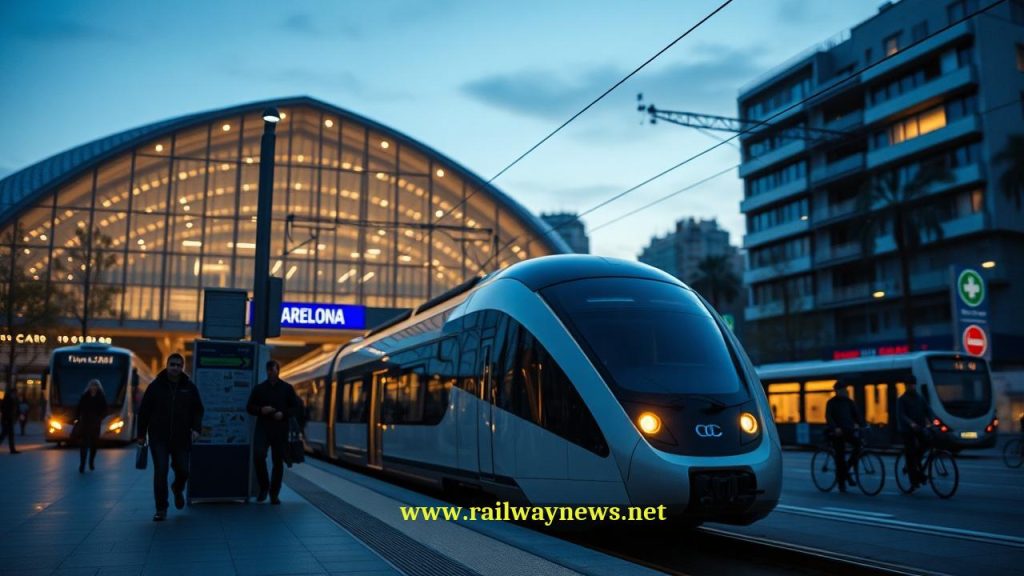
Madrid, Spain – The Spanish Ministry of Transport and Sustainable Mobility has confirmed a landmark investment of €735 million into the nation’s public transport system for the year 2025, a move designed to enhance affordability and accelerate the shift away from private vehicles. This significant transport funding was announced on 5 January 2026 and complements a parallel €355 million program launched in 2025 to boost domestic manufacturing of renewable energy technologies, underscoring a detailed national commitment to a green transition.
| Category | Details |
|---|---|
| Total 2025 Funding | EUR 735 Million |
| Fare Reduction & Subsidies | EUR 355 Million (for children, youth, and multi-journey tickets) |
| Metropolitan Area Support | EUR 363.7 Million (Madrid, Barcelona, Valencia, Canary Islands) |
| Island-Specific Aid | EUR 183 Million (Canary Islands & Balearic Islands) |
| Announcement Date | 5 January 2026 |
The Ministry’s detailed financial support package for 2025 was distributed across various lines aimed at both autonomous communities and local entities. A cornerstone of the initiative was a €355 million allocation to dramatically lower the cost barrier for passengers. This fund financed free public transport for children up to 14 years old, a 50% discount on youth passes, and a minimum 40% reduction on other multi-journey tickets, co-financed with the beneficiary regions. To ensure immediate impact, the Ministry disbursed an advance payment of €201 million in December 2025 to 75 of the 135 total beneficiaries.
This transport-focused investment does not operate in isolation but is a key pillar of Spain’s broader climate agenda. In the same year, the government launched a separate €355 million program to build up its renewable energy manufacturing capacity. This strategic initiative targets critical sectors including solar, wind, batteries, green hydrogen, and power grid components. By pairing massive public transport subsidies with a push for energy self-sufficiency, Spain is creating a synergistic strategy where green mobility is increasingly powered by domestically produced clean energy, tackling both transport emissions and energy security simultaneously.
The funding extends beyond fare subsidies to include direct infrastructure and operational support for key urban and regional networks. A specific €363.7 million was allocated to finance regular public transport in major metropolitan areas, benefiting the transport authorities of Madrid, Barcelona, and Valencia, as well as the Canary Islands. Additionally, a new €51 million grant program supported urban transport in 93 municipalities, with significant allocations for cities like Zaragoza (€7 million+) and Sevilla (€4.8 million). The government also launched an innovative €10 million subsidy to promote public bicycle-sharing services, further encouraging a multi-modal shift away from private car dependency.
Key Takeaways
- Massive Financial Commitment: Spain allocated €735 million in 2025 to make public transport cheaper and more accessible, directly targeting affordability as a driver for modal shift.
- Multi-pronged Approach: The funding strategy combined nationwide fare reductions, targeted support for major metropolitan hubs, and special aid for island communities to ensure detailed coverage.
- Integrated Green Strategy: The transport investment runs parallel to a major €355 million push in renewable energy manufacturing, positioning Spain’s mobility decarbonisation within a wider industrial and energy transition plan.
Editor’s Analysis
Spain’s dual-pronged investment in both public transport accessibility and renewable energy manufacturing presents a powerful and replicable model for the global railway and mobility sectors. While many nations focus on either infrastructure upgrades or fare subsidies, Madrid’s strategy explicitly links the demand side (making transport cheaper) with the supply side (building a domestic green energy industry to power it). This holistic approach addresses the entire value chain of sustainable mobility. For the international rail market, this signals a maturing policy landscape where transport is no longer viewed in a silo but as an integral component of national energy security and industrial strategy. This integrated model could become a benchmark for achieving meaningful and resilient decarbonisation goals worldwide.
Frequently Asked Questions
- What was the total public transport funding announced by Spain for 2025?
- The Spanish Ministry of Transport and Sustainable Mobility announced a total of EUR 735 million in funding for public transport for the year 2025.
- What were the main objectives of this funding initiative?
- The primary goals were to create a more accessible, affordable, safe, and sustainable public transport system, aiming to decarbonise mobility by encouraging a significant modal shift from private vehicles to public and shared transport.
- How did the funding support Spain’s island territories?
- A special line of support was created for the Canary Islands and the Balearic Islands to finance a 100% discount on public transport passes and multi-journey tickets. The Canary Islands received €120 million and the Balearic Islands received €63 million for this purpose.

Railway infrastructure, rolling stock and transport technologies specialist focused on global rail industry developments, high-speed rail systems, signaling technologies and freight transportation. Covering railway investments, public transport modernization, rail operations and international mobility projects across Europe, Asia and North America.
RELATED POSTS

October 8, 2026 1:15 pm
Alstom secured a €1bn contract to build 13 automated trains,...

October 1, 2026 7:09 am
United States regulators confirmed a September 30 deadline for the...

October 8, 2026 12:18 pm
Siemens Mobility signed an agreement with VinSpeed to supply 350...

October 4, 2026 5:14 pm
Alstom secured a CA$4.7 billion order from VIA Rail Canada...

October 5, 2026 6:12 pm
AECOM and Jacobs secured a contract in September 2026 to...

October 6, 2026 12:16 am
FTA awarded $233 million in grants to eight US rail...