
SEPTA Launches $55 Million Bridgeport Viaduct Rehabilitation
SEPTA’s $55M rehabilitation of the 113-year-old, 3,525-ft Bridgeport Viaduct on the M Line begins March 29, 2026, with bus substitutions until May 9. J.D. Eckman is the contractor.
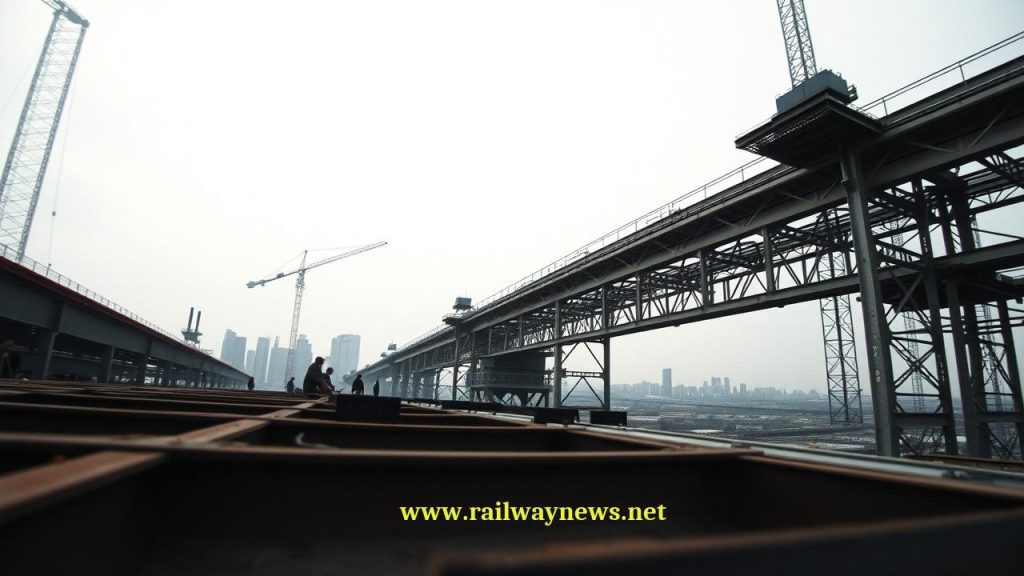
⚡ In Brief: The Southeastern Pennsylvania Transportation Authority (SEPTA) has started a $55 million rehabilitation of the 3,525-foot Bridgeport viaduct in Pennsylvania to repair the 113-year-old structure, impacting M Line light-rail service with bus substitutions through May 9.
PHILADELPHIA, USA – The Southeastern Pennsylvania Transportation Authority (SEPTA) has commenced a $55 million rehabilitation project on the historic Bridgeport viaduct. The 3,525-foot-long structure, built in 1911, carries the M Line light-rail service across the Schuylkill River. The project necessitates shuttle bus replacements for a portion of the line through an initial phase ending May 9 to facilitate major structural repairs.
What Is the Full Scope of This Project?
The project encompasses detailed structural and concrete repairs designed to extend the service life of the century-old viaduct. Third-party contractor J.D. Eckman will perform repairs to the structural steel, abutments, and piers, along with replacing bearings, the concrete deck, and a maintenance catwalk. The scope also includes replacing a stairway at the Norristown Transit Center and repainting the entire bridge structure.
Key Project Data
| Parameter | Value |
|---|---|
| Project / Contract Name | Bridgeport Viaduct Rehabilitation |
| Total Value | $55 million |
| Parties Involved | SEPTA (client), J.D. Eckman (contractor) |
| Timeline / Completion | Initial service impact through May 9; overall project completion date not disclosed. |
| Country / Corridor | USA / Philadelphia (M Line / Norristown High Speed Line) |
How Does This Compare to Similar Projects?
The $55 million cost for rehabilitating the 113-year-old Bridgeport viaduct highlights the significant investment required for maintaining legacy transit infrastructure in the United States. While not a direct comparison, this state-of-good-repair project contrasts sharply in scale and purpose with new-build initiatives like the California High-Speed Rail project, which faces escalating costs for its multi-billion-dollar new corridor (Source: Newsweek, NY Post). The SEPTA project focuses on asset preservation, a common challenge for older US transit agencies, whereas California’s investment is aimed at network expansion, reflecting a different set of strategic priorities and financial challenges. A potential start date of March 26, 2026 was noted in one verification source, but could not be reconciled with the primary project timeline.
Editor’s Analysis
This project is emblematic of a wider trend across North American legacy transit systems: prioritizing capital investment in state-of-good-repair to address aging infrastructure before it fails. The $55 million price tag for a single, 3,525-foot viaduct underscores the immense, long-term financial burden these agencies face in maintaining assets built over a century ago. This focus on preservation often competes for funding with system expansion projects, a key tension in US transportation policy (Source: Construction Dive).
FAQ
Q: Which part of the SEPTA M Line is affected by the construction?
A: Service is impacted between Bridgeport Station and Norristown Transit Center in Montgomery County. Shuttle buses are replacing M Line trains along this segment during the initial phase.
Q: What is the total length and age of the Bridgeport viaduct?
A: The viaduct is 3,525 feet long and was originally built in 1911, making it over 113 years old at the time of the rehabilitation project.
Q: Why is this $55 million project necessary?
A: The project is required to perform major structural repairs on the century-old bridge to extend its service life and ensure safety for the nearly 1,900 weekday train crossings it facilitates.

Transport and railway industry editor covering global rail infrastructure, sustainable mobility, urban transit systems and next-generation railway technologies with a focus on accessible and industry-focused reporting.
RELATED POSTS

October 1, 2026 7:09 am
United States regulators confirmed a September 30 deadline for the...

October 1, 2026 12:13 am
Illinois approved $1.5 billion annually for the Northern Illinois Transit...

October 4, 2026 5:14 pm
Alstom secured a CA$4.7 billion order from VIA Rail Canada...

October 1, 2026 6:10 am
Amtrak approved a System Expansion Committee on July 30 to...

October 1, 2026 3:12 am
Greenbrier confirmed Brian Comstock as new president and CEO effective...

October 6, 2026 2:14 am
Union Pacific launched export rail shipments with Ferromex to deliver...