
SBB Expands Schaffhausen S-Bahn with New Depot by 2032
SBB will construct a new S-Bahn depot in Schaffhausen, Switzerland, with three 150-meter maintenance lines by 2032.
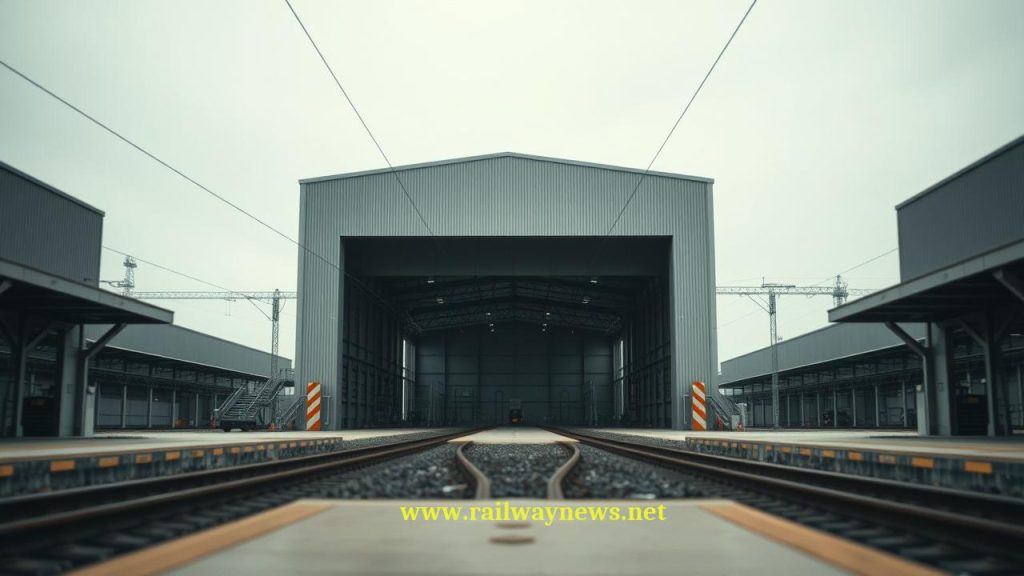
⚡ In Brief: Swiss Federal Railways will build a new S-Bahn maintenance depot in Schaffhausen, Zurich, creating approximately 60 jobs and featuring three 150-meter maintenance lines, with commissioning scheduled for 2032 to support growing network capacity.
SCHAFFHAUSEN, SWITZERLAND – Swiss Federal Railways (SBB) has announced plans to construct a new service and maintenance facility for Zurich’s S-Bahn network in Schaffhausen. The project, which will create approximately 60 jobs, is designed to reduce empty runs on the heavily used network. Commissioning of the new depot is planned for 2032.
What Is the Full Scope of This Project?
The project involves constructing a 220-meter by 40-meter facility near the Schaffhausen freight station to support the S-Bahn Zürich network, which serves over 500,000 passengers daily. The depot will house three 150-meter maintenance tracks and is part of a long-term plan that includes a potential second depot in Hinwil West around 2050. A key feature is the integration with urban planning, as SBB will transfer building rights to the city of Schaffhausen, allowing for future construction over the depot site.
Key Project Data
| Parameter | Value |
|---|---|
| Project / Contract Name | SBB S-Bahn Depot Schaffhausen |
| Total Value | Not disclosed |
| Parties Involved | SBB, City of Schaffhausen, Cantonal authorities |
| Timeline / Completion | Permitting begins ~2027; Commissioning scheduled for 2032 |
| Country / Corridor | Switzerland / Zurich S-Bahn Network |
How Does This Compare to Similar Projects?
The total investment for the SBB depot has not been disclosed, preventing a direct financial comparison with other maintenance facilities. However, the project is part of a global trend of urban rail investment to meet rising passenger demand. While different in scope, major projects like the Los Angeles Metro’s K Line extension, estimated to cost between $11 billion and $15 billion, demonstrate the high capital expenditure required to expand metropolitan rail capacity (Source: Los Angeles Times, 2024). SBB’s project, though focused on maintenance infrastructure, addresses the same core challenge of network congestion and future growth.
Editor’s Analysis
SBB’s decision to locate the depot in Schaffhausen reflects a dual-pronged strategy: optimizing operational efficiency and unlocking long-term real estate value. By reducing empty train movements and co-planning for future urban development, SBB is leveraging its land assets beyond pure railway operations, a growing trend among national rail operators seeking alternative revenue streams. This approach of integrating transport infrastructure with urban planning is becoming a key model for maximizing the utility of state-owned land assets in constrained urban environments.
FAQ
Q: Why was Schaffhausen chosen for the new depot location?
A: Schaffhausen was selected as the most suitable option operationally and economically because it serves as the terminus for several Zurich S-Bahn lines. This location significantly reduces empty train runs on the congested network compared to other sites that were analyzed.
Q: What is the total investment cost for the Schaffhausen depot?
A: The total cost of the project has not been publicly disclosed by SBB in the initial announcement. The design phase is set to begin later this year, with more financial details likely to emerge during the permitting process, which is expected to start in approximately two years.
Q: How will this project affect future urban development in the area?
A: The depot is being built to allow for construction above it in the future, and SBB will transfer the building rights for the entire site to the city. This enables Schaffhausen to manage a large-scale urban development project on the former freight yard land through sub-concession mechanisms.

Railway infrastructure, rolling stock and transport technologies specialist focused on global rail industry developments, high-speed rail systems, signaling technologies and freight transportation. Covering railway investments, public transport modernization, rail operations and international mobility projects across Europe, Asia and North America.
RELATED POSTS

October 8, 2026 1:15 pm
Alstom secured a €1bn contract to build 13 automated trains,...

October 1, 2026 7:09 am
United States regulators confirmed a September 30 deadline for the...

October 8, 2026 12:18 pm
Siemens Mobility signed an agreement with VinSpeed to supply 350...

October 4, 2026 5:14 pm
Alstom secured a CA$4.7 billion order from VIA Rail Canada...

October 5, 2026 6:12 pm
AECOM and Jacobs secured a contract in September 2026 to...

October 1, 2026 12:13 am
Illinois approved $1.5 billion annually for the Northern Illinois Transit...