
Rail Baltica Lithuania: €235M Boosts Infrastructure, EU Connectivity
Rail Baltica expansion in Lithuania speeds up with €235M contract awards. New railway lines connecting to EU network.
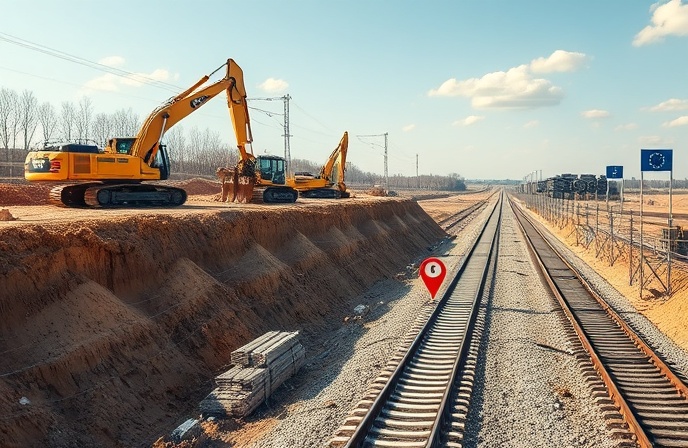
Rail Baltica Expansion in Lithuania Accelerates with €235 Million Contract Awards
The Rail Baltica project, a crucial link in the European railway network, is gaining significant momentum in Lithuania. On August 6, 2025, LTG Infra, the infrastructure arm of LTG Group, announced the finalization of three contracts valued at €235 million ($271.9 million). These contracts, which encompass the installation of 10 kilometers of rail and the construction of an extensive embankment, mark a substantial advancement in connecting Lithuania to the broader European standard-gauge rail system. This article will delve into the specifics of these contracts, the key players involved, the technical aspects of the construction, and the broader implications for Lithuania’s rail infrastructure and its integration within the Rail Baltica initiative. These investments, funded by both the European Union and the Lithuanian state budget, underscore the project’s strategic importance and the commitment to enhancing Lithuania’s connectivity with Europe.
Key Contracts and Scope of Work
The newly awarded contracts cover critical sections of the Rail Baltica route, specifically the Kaunas (Palemonas) to Sveicarija segment. The primary focus involves the installation of 10 kilometers of railway track between Sveicarija and Zeimiai and the construction of an 18.9-kilometer embankment from Kaunas to Sveicarija. To manage the complexity of the Kaunas (Palemonas) to Sveicarija section, the project has been divided into two separate contracts. The first, valued at €97.8 million, has been awarded to AB HISK and includes the construction of an 8.5-kilometer embankment and associated engineering structures. Completion is anticipated by the first quarter of 2028. The second contract, valued at €123.5 million, has been awarded to a consortium of UAB Fegda and UAB Tilsta and involves the construction of a 10.4-kilometer section, also slated for completion by the first quarter of 2028. Additionally, a €13.9 million contract for track laying has been signed, with the majority of this work, encompassing an 8.8-kilometer stretch, expected to be finished by the end of 2025. These strategic divisions allow for a streamlined approach, allowing each partner to focus on its area of expertise.
Partnerships and Technical Implementation
The rail installation work will be undertaken by a joint venture (JV) comprising Leonhard Weiss International from Germany and Leonhard Weiss OU from Estonia, highlighting the international collaboration underpinning this project. LTG Infra has already secured essential materials to support construction, including crushed stone, sleepers, and rails, ensuring the project progresses according to schedule. The project’s technical implementation will adhere to European standards. Embankment construction will require careful geotechnical engineering to ensure long-term stability and performance. Track laying will involve precision alignment and ballast placement, crucial for smooth and efficient railway operations. The implementation of these projects relies heavily on advanced construction techniques, stringent quality control, and effective coordination between various contractors.
Strategic Significance and Future Developments
These contract awards represent a significant leap forward in realizing Rail Baltica’s objectives within Lithuania. With these new additions, the contracts signed for the main railway line in Lithuania now cover a total of 77 kilometers. Looking ahead, LTG Infra plans to establish further contracts by the end of this year and commence preparatory and construction activities on an additional 114-kilometer stretch. The ambitious timelines, with the majority of sections scheduled for completion by early 2028, signal a strong commitment to keeping the Rail Baltica project on track. The project directly aligns with the goals of European Union infrastructure policy, seeking to establish efficient and environmentally friendly transport corridors throughout the continent. Additionally, Lithuanian Transport and Communications Minister Eugenijus Sabutis emphasized that the European standard-gauge track symbolizes progress.
Conclusion
The recent contract awards for the Rail Baltica project in Lithuania represent a pivotal step in enhancing the country’s railway infrastructure and integrating it more closely with the European rail network. With €235 million in investments, the project is not only advancing the construction of new railway lines but also improving Lithuania’s connection with the broader European railway grid. The active involvement of international contractors like Leonhard Weiss and the detailed approach to sourcing materials demonstrate the project’s large scale and multifaceted nature. The acceleration of work between Kaunas and Sveicarija, alongside the upcoming contracts for additional sections, highlight the project’s rapid progress and strategic importance. For the Lithuanian railway sector, this progress indicates the expansion of existing infrastructure. The long-term benefits, including improved transport connectivity, increased economic efficiency, and contribution to a more sustainable transport system, are substantial. The successful completion of the Rail Baltica project will be a testament to the European Union’s investment in transport infrastructure and will drive economic growth for the Baltic states, connecting them with the rest of Europe and beyond.
Company Summary
LTG Group is the parent company of LTG Infra, a major player in the Lithuanian transport infrastructure sector, specializing in railway infrastructure. Focused on railway-related operations, LTG Infra manages and develops railway infrastructure across Lithuania, playing a crucial role in Rail Baltica. Their responsibility includes planning, design, construction, and maintenance of railway lines. The company’s commitment to infrastructure development is essential for the Rail Baltica project, promoting sustainability, efficiency, and connectivity within Lithuania and with the wider European Union.

Railway infrastructure, rolling stock and transport technologies specialist focused on global rail industry developments, high-speed rail systems, signaling technologies and freight transportation. Covering railway investments, public transport modernization, rail operations and international mobility projects across Europe, Asia and North America.
RELATED POSTS

October 1, 2026 7:09 am
United States regulators confirmed a September 30 deadline for the...

October 8, 2026 1:15 pm
Alstom secured a €1bn contract to build 13 automated trains,...

October 4, 2026 5:14 pm
Alstom secured a CA$4.7 billion order from VIA Rail Canada...

October 1, 2026 12:13 am
Illinois approved $1.5 billion annually for the Northern Illinois Transit...

October 6, 2026 2:14 am
Union Pacific launched export rail shipments with Ferromex to deliver...

October 1, 2026 6:10 am
Amtrak approved a System Expansion Committee on July 30 to...