
Progress Rail Delivers ERTMS Level 2 on Merano–Malles Line Italy
Progress Rail delivered ERTMS Level 2 digital train control on Italy’s Merano–Malles line, replacing traditional physical signalling infrastructure.
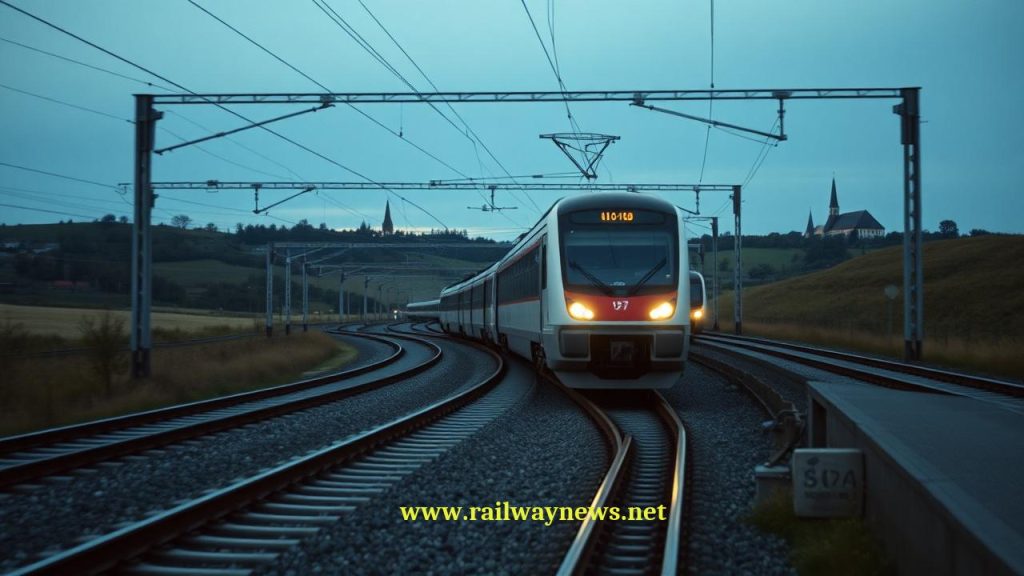
⚡ In Brief: Progress Rail has implemented an European Railway Traffic Management System (ERTMS) Level 2 upgrade on the Merano–Malles regional line in South Tyrol, Italy, replacing traditional lineside signals with continuous digital train control and supervision.
BOLZANO, ITALY – Progress Rail, in partnership with local transport authority Strutture Trasporto Alto Adige (STA), has delivered a major technology upgrade for the Merano–Malles railway. The project implements ERTMS Level 2 to modernize train control systems on the regional line in South Tyrol. The upgrade is designed to improve service regularity and traffic coordination by replacing physical signalling infrastructure.
What Are the Technical Specifications?
The core of the project is the implementation of ERTMS Level 2, which uses radio-based communication for continuous data exchange between the train and a central control centre. The system scope includes a centralized track management system for command and control, a continuous train detection system for real-time positioning, and a traffic management system to optimize service. However, it is important to note that conflicting reports from the project’s early stages attributed the technology contract to Siemens Mobility, specifying an ETCS Level 1 wayside signalling system.
Key Technical Data
| Parameter | Value |
|---|---|
| Technology / System Name | European Railway Traffic Management System (ERTMS) Level 2 |
| Total Value | Not disclosed |
| Parties Involved | Progress Rail, Strutture Trasporto Alto Adige (STA) (Note: Siemens Mobility was cited in other reports) |
| Timeline / Completion | Not disclosed |
| Country / Corridor | Italy / Merano–Malles line |
Where Does This Technology Stand in the Market?
The ERTMS Level 2 system implemented here represents a significant advancement over legacy systems and even ERTMS Level 1. Unlike Level 1, which relies on physical trackside balises to transmit data intermittently, Level 2 uses GSM-R or FRMCS radio networks for continuous communication, allowing for the removal of most lineside signals and enabling more dynamic train management. Competing systems include Alstom’s Atlas and Thales’s SelTrac CBTC, which offer similar capabilities and are widely deployed on high-speed and metro lines globally. While this project focuses on a specific regional line, other technology-driven efficiency projects are proceeding at a much larger scale; for instance, Indian Railways recently secured a deal for 12,000 real-time train information system devices using satellite communications to monitor its vast network (Source: Developing Telecoms, 2024).
Editor’s Analysis
This deployment on the Merano–Malles line is indicative of a wider trend across Italy and Europe to modernize regional and secondary rail lines with standardized digital signalling. By adopting ERTMS, operators like STA can increase network capacity and improve safety without the cost of building new physical infrastructure. This project highlights the competitive market for signalling contracts, where global suppliers are partnering with local authorities to execute complex digital transformation initiatives, a key driver of activity in the European transport sector (Source: Consultancy.eu, 2024).
FAQ
Q: What is the main difference between ERTMS Level 2 and traditional signalling?
A: ERTMS Level 2 replaces traditional, fixed-block physical signals along the track with a system of continuous, radio-based communication. This allows a central command to have real-time speed and position data, enabling more trains to run safely and closer together.
Q: Why were there conflicting reports about the technology supplier?
A: Initial announcements for complex infrastructure projects can sometimes be fluid or involve multiple potential suppliers and subcontractors. Both Progress Rail and Siemens Mobility are leading global providers of ERTMS technology, and it is common for them to compete for such contracts across Europe.
Q: How will this upgrade affect rail service on the Merano–Malles line?
A: The primary goals of the upgrade are to improve traffic coordination, service regularity, and overall reliability for passengers. By centralizing control and having real-time train data, the operator can manage the service more efficiently and respond faster to potential disruptions.

Railway infrastructure, rolling stock and transport technologies specialist focused on global rail industry developments, high-speed rail systems, signaling technologies and freight transportation. Covering railway investments, public transport modernization, rail operations and international mobility projects across Europe, Asia and North America.
RELATED POSTS

October 8, 2026 1:15 pm
Alstom secured a €1bn contract to build 13 automated trains,...

October 1, 2026 7:09 am
United States regulators confirmed a September 30 deadline for the...

October 8, 2026 12:18 pm
Siemens Mobility signed an agreement with VinSpeed to supply 350...

October 4, 2026 5:14 pm
Alstom secured a CA$4.7 billion order from VIA Rail Canada...

October 5, 2026 6:12 pm
AECOM and Jacobs secured a contract in September 2026 to...

October 1, 2026 12:13 am
Illinois approved $1.5 billion annually for the Northern Illinois Transit...