
Port of Long Beach Awards $6.8M for Pier T Rail Upgrade
Port of Long Beach awarded $6.8 million to terminal operator TTI for Pier T redevelopment, funding zero-emission cargo units and boosting on-dock rail capacity.
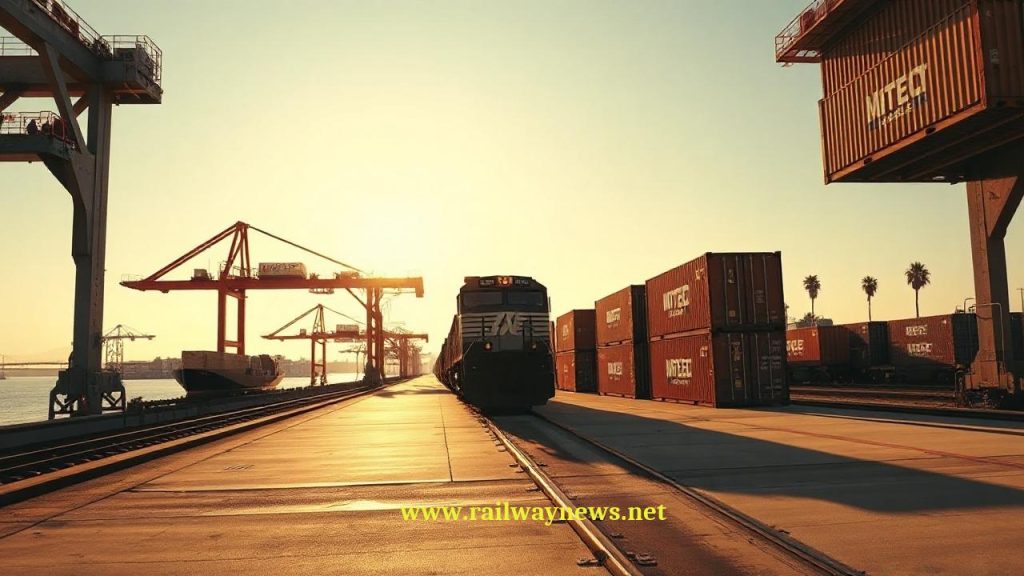
⚡ In Brief: The Port of Long Beach seeks public input on Total Terminals International’s proposal to redevelop its Pier T marine terminal, aiming to boost on-dock rail use and transition to zero‑emission technology, with $6.8 million already awarded for clean cargo‑handling equipment.
LONG BEACH, CALIFORNIA – The Port of Long Beach (POLB) is hosting public scoping meetings on July 20 and August 6 for a proposal by terminal operator Total Terminals International (TTI) to redevelop its Pier T marine terminal. TTI has already received $6.8 million through POLB’s Clean Marine Incentive Program to purchase zero‑emission cargo‑handling units. Written public comments are being accepted until August 17.
What Is the Full Scope of This Project?
The proposed redevelopment would rehabilitate Pier T’s infrastructure, transition the terminal to zero‑emission technologies, and support higher utilization of on‑dock rail. Specific capacity increases or new trackage figures were not disclosed in the announcement. POLB officials described the project as one of many upcoming port initiatives aimed at boosting sustainability, increasing capacity, and limiting environmental and community impact.
Key Project Data
| Parameter | Value |
|---|---|
| Project / Contract Name | Pier T Marine Terminal Redevelopment |
| Total Value | Not disclosed (partial grant: $6.8 million for zero‑emission equipment) |
| Parties Involved | Total Terminals International (TTI), Port of Long Beach (POLB) |
| Timeline / Completion | Not disclosed |
| Country / Corridor | United States, Port of Long Beach, California |
How Does This Compare to Similar Projects?
Comparable terminal redevelopment data for the Port of Long Beach was not available in the provided cross‑referencing material. The entity verification input contained information about a separate project at Ports of Indiana and the Port of Alaska, which are unrelated to POLB’s Pier T. Note: Independent verification of project‑level costs and on‑dock rail capacity expansion at Pier T was not possible at time of publication. Broader U.S. port capital spending is rising: state and local government transportation contract awards reached $47.8 billion through April 2025, up from $43.8 billion a year earlier (Source: ARTBA, 2025). That trend supports an environment in which multiple ports are pursuing terminal modernisation, though direct peer comparisons for this specific TTI project remain unavailable.
Editor’s Analysis
The Pier T redevelopment aligns with West Coast ports’ growing emphasis on on‑dock rail to handle rising intermodal volumes while cutting truck emissions. U.S. Class I railroads moved over 25.5 million carloads and intermodal units in 2025—approximately 385,000 more than in 2024 (Source: Trains.com, 2025)—signalling robust freight demand that terminals must absorb. At the same time, a short‑term surge in container spot rates, coupled with a projected 8–10% decline in long‑term contract rates over the next six months (Source: Xeneta via Seatrade Maritime, 2025), may push terminal operators to accelerate efficiency investments. POLB’s push for zero‑emission cargo handling through TTI’s project mirrors a broader regulatory and market shift, though the absence of a total cost or completion date leaves questions about the project’s ultimate scale.
FAQ
Q: What exactly is TTI proposing to do at Pier T?
A: TTI’s proposal includes rehabilitating the terminal’s infrastructure, switching to zero‑emission technologies, and boosting on‑dock rail utilisation. Specific engineering details and capacity targets have not yet been released.
Q: When will the Pier T redevelopment be completed?
A: No completion date was disclosed in the public notice. The scoping process will help define the project’s environmental review timeline.
Q: How will this project affect on‑dock rail operations at the Port of Long Beach?
A: The proposal aims to support higher on‑dock rail use, which typically reduces local truck traffic and speeds container transfers. The increase in rail lift capacity has not been quantified publicly.

Railway infrastructure, rolling stock and transport technologies specialist focused on global rail industry developments, high-speed rail systems, signaling technologies and freight transportation. Covering railway investments, public transport modernization, rail operations and international mobility projects across Europe, Asia and North America.
RELATED POSTS

October 1, 2026 7:09 am
United States regulators confirmed a September 30 deadline for the...

October 8, 2026 1:15 pm
Alstom secured a €1bn contract to build 13 automated trains,...

October 4, 2026 5:14 pm
Alstom secured a CA$4.7 billion order from VIA Rail Canada...

October 1, 2026 12:13 am
Illinois approved $1.5 billion annually for the Northern Illinois Transit...

October 6, 2026 2:14 am
Union Pacific launched export rail shipments with Ferromex to deliver...

October 1, 2026 6:10 am
Amtrak approved a System Expansion Committee on July 30 to...