
ÖBB to Boost Capacity: Acquires Double-Decker Trains
Austrian Federal Railways (ÖBB) has acquired 17 InterCity double-decker trains from Deutsche Bahn, highlighting its commitment to expanding long-distance capacity and addressing increasing demand through strategic investments in high-capacity rail technology.
Austria, June 14, 2024
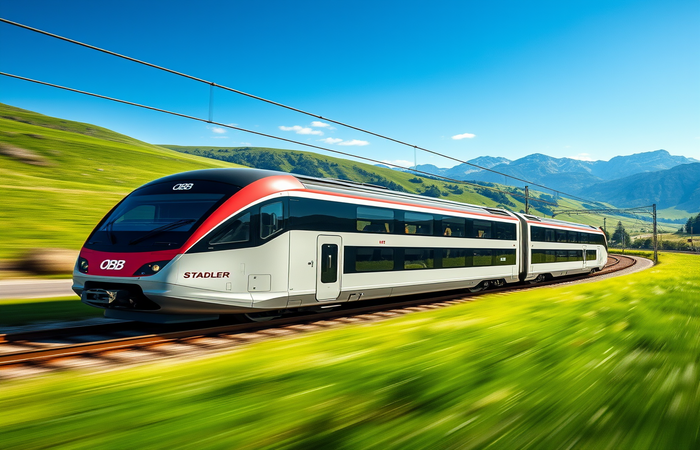
Austrian Federal Railways (ÖBB), a major player in the European rail transport landscape, has announced a strategic move to bolster its long-distance passenger capacity. This involves the acquisition of 17 InterCity (IC) double-decker trains from Deutsche Bahn (DB). This decision comes in response to increasing passenger demand and strategic network expansions planned by ÖBB. The purchase of these Stadler KISS 200 units, a proven design in high-capacity rail transport, highlights ÖBB’s commitment to providing comfortable and reliable services while preparing for future growth, including the integration of new infrastructure projects like the Koralmbahn. This article will delve into the details of this acquisition, its operational implications, and its significance for the future of rail travel in Austria.
Strategic Acquisition: Meeting Growing Demand
ÖBB’s acquisition of 17 double-decker IC trains is a direct response to the growing demand for rail travel across its network. The Stadler KISS 200 units, known for their high passenger capacity, will be integrated into ÖBB’s existing long-distance fleet. These trains are crucial to address the increasing passenger volumes, especially on key routes. The primary focus will be to augment the capacity on high-traffic routes, and ensure ÖBB can maintain its service quality. This strategic investment underscores ÖBB’s proactive approach to managing passenger demand and ensuring a positive travel experience for its customers.
Deployment and Operational Impact
The deployment of these acquired trains is planned in phases. The six-car trainsets are scheduled to begin passenger operations by autumn 2025, while the four-car formations will follow suit the subsequent year. Before entering service, the trains will undergo a light refurbishment to align them with ÖBB’s operational standards and passenger expectations. The primary operational focus will be on InterCity (IC) routes, especially on the western corridor between Vienna and Salzburg, where passenger numbers have surged in recent years. The existing Railjet fleet will continue to operate the faster Railjet Xpress (RJX) services. The integration of these double-decker trains is projected to increase seating capacity on the IC lines by approximately 20%, greatly improving passenger comfort.
Features and Passenger Amenities
The Stadler KISS 200 units are designed with passenger comfort and convenience in mind. Each six-car train offers a substantial 486 seats: 66 in First Class and 420 in Second Class. They are equipped with various amenities to enhance the passenger experience. These include barrier-free access for passengers with disabilities, air conditioning to maintain comfortable temperatures, free Wi-Fi for connectivity, power outlets at seats for charging devices, spacious luggage racks for convenient storage, and vending machines for snacks and beverages. Additionally, each train provides dedicated spaces for bicycles and wheelchairs, ensuring accessibility for all passengers.
Future Implications and Service Enhancements
This acquisition is part of ÖBB’s broader strategy to improve its rail services and prepare for future developments. The addition of these double-decker trains reinforces ÖBB’s commitment to comfort and reliability. The increased capacity will be particularly beneficial in supporting future service enhancements and accommodating the anticipated growth in passenger numbers. Moreover, this move is timed to align with the upcoming Koralmbahn project, which is expected to significantly enhance regional connectivity and stimulate demand for rail travel. This proactive approach reflects ÖBB’s vision for a modern, efficient, and customer-focused rail network.
Conclusion
To summarize, ÖBB’s strategic acquisition of 17 double-decker trains from Deutsche Bahn marks a significant step in enhancing its long-distance rail services and preparing for future growth. This move is driven by the increasing passenger demand, particularly on key routes like the Vienna-Salzburg corridor, and reflects ÖBB’s commitment to offering comfortable and reliable services. The integration of these Stadler KISS 200 units into the existing fleet will provide a substantial increase in seating capacity, improved passenger amenities, and enhanced accessibility features. The phased deployment, commencing with the six-car trainsets by autumn 2025, ensures a seamless integration process and minimal disruption to passenger services. The investment in these double-decker trains aligns with ÖBB’s broader strategy to modernize its rail network and support future service enhancements, including the upcoming Koralmbahn project. Ultimately, this acquisition underscores ÖBB’s dedication to creating a positive travel experience for its passengers and its proactive approach to meeting the evolving needs of a growing rail market. This strategic move not only addresses current demands but also positions ÖBB to capitalize on future growth opportunities and reinforces its leadership in the European rail transport sector. The features included on the new trains and the routes they will take will increase the number of passengers and increase the service quality. This acquisition is a win-win for the company and its passengers.
Company Summary:
- Austrian Federal Railways (ÖBB): The primary state-owned railway company of Austria. Provides passenger and freight transport services throughout Austria and internationally. Known for its extensive rail network and commitment to passenger comfort and service quality.
- Deutsche Bahn (DB): The primary railway operator in Germany, and one of the largest railway companies in the world. Provides a wide range of services, including passenger transport, freight transport, and infrastructure management.
- Stadler Rail: A Swiss manufacturer of railway rolling stock, including trains and trams. Known for producing a variety of rail vehicles.

Railway infrastructure, rolling stock and transport technologies specialist focused on global rail industry developments, high-speed rail systems, signaling technologies and freight transportation. Covering railway investments, public transport modernization, rail operations and international mobility projects across Europe, Asia and North America.
RELATED POSTS

October 4, 2026 5:14 pm
Alstom secured a CA$4.7 billion order from VIA Rail Canada...
October 9, 2026 3:11 pm
Wabtec secured a $700 million service deal in Guinea to...
October 1, 2026 3:12 am
Greenbrier confirmed Brian Comstock as new president and CEO effective...
October 1, 2026 8:12 am
Knorr-Bremse expanded its UK rail adhesion trial on Chiltern Railways...
October 8, 2026 8:15 pm
Siemens Mobility secured an order from NWL to supply 61...
October 9, 2026 6:15 am
Transflo launched a 40 railcar transload terminal in Petersburg, Virginia,...