
ÖBB Rail Cargo Group Tests DAC at -15°C in Austria
ÖBB Rail Cargo Group tests Digital Automatic Coupling (DAC) at -15°C in Austria, validating its reliability for European series production.
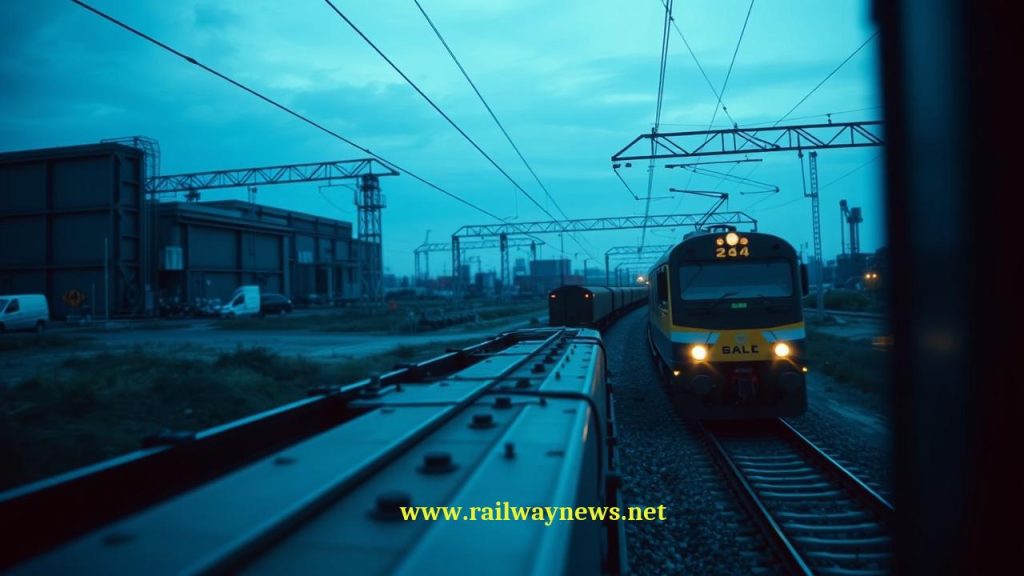
⚡ In Brief: ÖBB Rail Cargo Group is conducting winter trials in Austria for its Digital Automatic Coupling (DAC) demonstration train, testing the system’s reliability in temperatures as low as -15°C to prepare the technology for series production across Europe.
SALZBURG, AUSTRIA – ÖBB Rail Cargo Group (RCG) has initiated a three-week test phase for its Digital Automatic Coupling (DAC) demonstration train in Schwarzach-St. Veit. The trials are exposing the system to extreme winter conditions, including temperatures of -15°C, to validate its mechanical, pneumatic, and digital functions. The tests involve coupling systems from multiple, undisclosed manufacturers.
What Are the Technical Specifications?
The Digital Automatic Coupling system under trial integrates mechanical, pneumatic, power, and data connections into a single automated interface. It replaces the manual screw coupling, automating the physically demanding process and providing continuous power and data lines throughout the train. This capability is the foundation for future applications like automatic brake testing and advanced diagnostics, with current tests focusing on the reliability of electrical contacts, seals, and lubricants under freezing conditions.
Key Technical Data
| Parameter | Value |
|---|---|
| Technology / System Name | Digital Automatic Coupling (DAC) Demonstration Train |
| Total Value | Not disclosed |
| Parties Involved | ÖBB Rail Cargo Group (RCG), multiple undisclosed coupling manufacturers |
| Timeline / Completion | Three-week test phase currently underway |
| Country / Corridor | Austria (Schwarzach-St. Veit, Böckstein) |
Where Does This Technology Stand in the Market?
The DAC Type 4 “Scharfenberg” design being tested by RCG offers integrated data and power capabilities not present in other widely adopted automatic couplers. North America’s standard AAR coupler provides robust automatic mechanical coupling but requires separate, manually connected cables for power or data, limiting digital integration. Similarly, the SA3 coupler, common in CIS states, is a reliable mechanical automatic coupler but lacks the built-in digital connectivity central to the European DAC specification. The European DAC Delivery Programme (EDDP) is coordinating the continent-wide migration to this technology. (Source: European DAC Delivery Programme, 2023). The -15°C test conditions are significant, though other logistics infrastructure, such as port facilities, is often designed for even colder temperatures reaching -29°C. (Source: The Northwest Seaport Alliance, 2024).
Editor’s Analysis
RCG’s tests represent a critical step in de-risking the pan-European migration to DAC, a foundational technology for the digitalization of rail freight. This initiative aligns with Austria’s broader national strategy of investing in advanced technology, including its space sector, to enhance industrial and infrastructure capabilities. (Source: Payload Space, 2024). A successful DAC rollout is essential for rail to increase its efficiency and better compete with the increasingly automated and flexible road freight sector.
FAQ
Q: What is the main benefit of Digital Automatic Coupling?
A: The primary benefit is the full automation of the coupling process, integrating mechanical, pneumatic (brake), power, and data connections. This reduces hazardous manual labour, shortens train preparation times, and enables new digital services like real-time diagnostics.
Q: When will DAC be implemented across Europe?
A: The European DAC Delivery Programme (EDDP) is targeting the start of a full migration from 2028, with a phased rollout across the core network planned over several years. These tests are vital for finalising the design for series production.
Q: How does this technology affect rail freight safety?
A: DAC enhances safety by eliminating the dangerous manual task of coupling wagons between buffers. It also enables continuous data monitoring and automatic brake tests, providing a more reliable and constantly verified braking system for the entire train.

Railway infrastructure, rolling stock and transport technologies specialist focused on global rail industry developments, high-speed rail systems, signaling technologies and freight transportation. Covering railway investments, public transport modernization, rail operations and international mobility projects across Europe, Asia and North America.
RELATED POSTS

October 8, 2026 1:15 pm
Alstom secured a €1bn contract to build 13 automated trains,...

October 1, 2026 7:09 am
United States regulators confirmed a September 30 deadline for the...

October 8, 2026 12:18 pm
Siemens Mobility signed an agreement with VinSpeed to supply 350...

October 4, 2026 5:14 pm
Alstom secured a CA$4.7 billion order from VIA Rail Canada...

October 5, 2026 6:12 pm
AECOM and Jacobs secured a contract in September 2026 to...

October 1, 2026 12:13 am
Illinois approved $1.5 billion annually for the Northern Illinois Transit...