
Network Rail Launches Borders Railway Electrification Work Scotland
Network Rail Scotland launched partial Borders Railway electrification on the Edinburgh-Tweedbank line in Feb 2026 for electric trains by 2031.
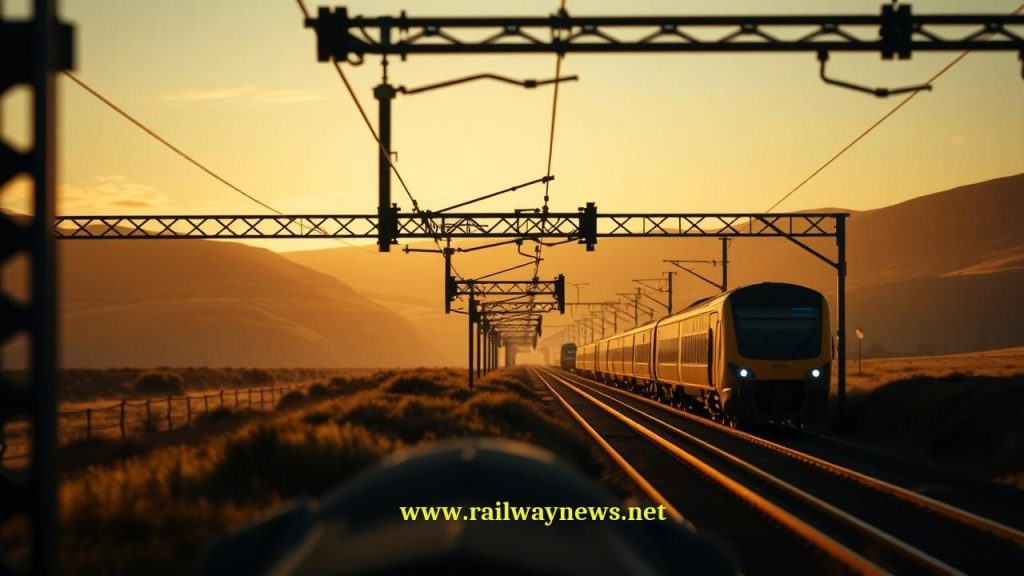
⚡ In Brief: Network Rail has commenced preparatory work for the partial electrification of Scotland’s Borders Railway, a project supporting the introduction of electric and battery-electric trains on the Edinburgh-Tweedbank line by 2031 as part of a revised national decarbonization strategy.
EDINBURGH, UK – Network Rail began preparatory engineering work on February 21 for the partial electrification of the Borders Railway line connecting Edinburgh to Tweedbank. The project is a component of a wider Scottish Government investment to decarbonize key routes, with a target to introduce new electric and battery-electric rolling stock by 2031. Since reopening in 2015, the line has supported over 13 million passenger journeys.
What Is the Full Scope of This Project?
The initial phase of work involves installing foundations for overhead line equipment on two sections of the route. This project is part of a broader decarbonization plan for routes in Fife and the Borders, which was revised in November 2025 to prioritize high-use corridors for electrification while exploring battery and hydrogen alternatives for rural lines. In parallel, Network Rail is tendering a new single-contractor framework, Scotland’s Railway Electrification Framework, to standardize and deliver electrification works between 2027 and 2032.
Key Project Data
| Parameter | Value |
|---|---|
| Project / Contract Name | Borders Railway Electrification (Partial) |
| Total Value | Not disclosed |
| Parties Involved | Network Rail Scotland, ScotRail, Scottish Government |
| Timeline / Completion | Initial works from Feb 2026; New fleet introduction by 2031 |
| Country / Corridor | Scotland / Edinburgh – Tweedbank |
How Does This Compare to Similar Projects?
The targeted electrification of the Borders line reflects a more cautious investment approach compared to larger UK rail programs. For instance, the UK government has committed up to £45 billion for the Northern Powerhouse Rail (NPR) project, a far more extensive network upgrade designed to stimulate regional economic growth (Source: Construction News, 2026). The Scottish project’s ultimate goal of fleet renewal can be contrasted with Portugal’s recent procurement strategy. In 2025, Comboios de Portugal signed a €1.03 billion contract with Alstom for 153 new trains, representing a complete national fleet overhaul rather than a route-by-route upgrade (Source: Alstom, 2025).
Editor’s Analysis
This project exemplifies Scotland’s revised, pragmatic approach to rail decarbonization, prioritizing infrastructure-ready routes to manage public funds efficiently. The decision to electrify a line “rebuilt with future electrification in mind” in 2015 avoids the high costs and complexities of retrofitting historic infrastructure, a lesson learned from cost escalations in other major UK projects like HS2. This strategy of combining targeted electrification with alternative traction (battery, hydrogen) aligns with a broader European trend of creating a multi-technology solution for network-wide decarbonization, rather than relying solely on extensive and costly overhead line installation. (Source: Automotive World, 2026).
FAQ
Q: What is the Borders Railway?
A: The Borders Railway is a 35-mile (56 km) line in Scotland that connects Edinburgh with Tweedbank. It was reopened to passengers in 2015 after being closed for 46 years and has since recorded over 13 million journeys.
Q: What is the total budget for this electrification project?
A: The specific budget for the Borders line electrification has not been publicly disclosed. The work is funded as part of a broader Scottish Government investment package for decarbonizing routes in both the Borders and Fife regions.
Q: Will passenger services be affected during the work?
A: Yes, the engineering work can only be performed when no trains are running. Network Rail has scheduled weekend line closures in March, during which train services will be replaced by buses.

Railway infrastructure, rolling stock and transport technologies specialist focused on global rail industry developments, high-speed rail systems, signaling technologies and freight transportation. Covering railway investments, public transport modernization, rail operations and international mobility projects across Europe, Asia and North America.
RELATED POSTS

October 1, 2026 7:09 am
United States regulators confirmed a September 30 deadline for the...

October 8, 2026 1:15 pm
Alstom secured a €1bn contract to build 13 automated trains,...

October 4, 2026 5:14 pm
Alstom secured a CA$4.7 billion order from VIA Rail Canada...

October 1, 2026 12:13 am
Illinois approved $1.5 billion annually for the Northern Illinois Transit...

October 6, 2026 2:14 am
Union Pacific launched export rail shipments with Ferromex to deliver...

October 1, 2026 6:10 am
Amtrak approved a System Expansion Committee on July 30 to...