
Network Rail GWR Completes 200-Space Cycle Hub Chippenham
Network Rail and GWR completed a 200-space cycle hub and multi-modal transport upgrade at Chippenham station, UK.
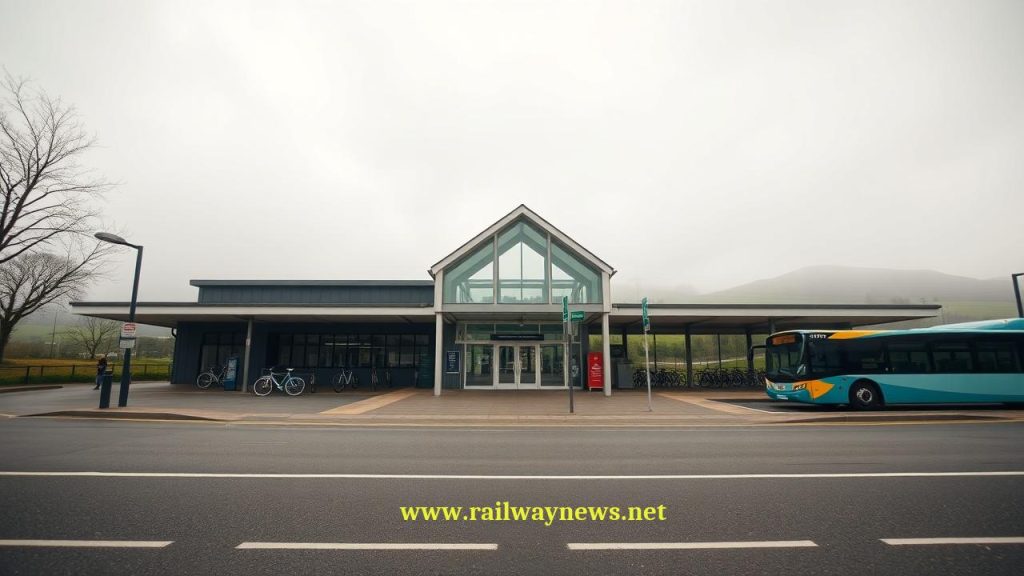
⚡ In Brief: Network Rail and Great Western Railway have completed a multi-modal transport hub upgrade at Chippenham station in Wiltshire, UK, delivering a new 200-space cycle hub, expanded bus facilities, and improved traffic flow while preserving the station’s Grade II listed status.
CHIPPENHAM, UK – Network Rail and Great Western Railway (GWR), in partnership with local authorities, have officially completed improvement works at Chippenham railway station. The project delivered a new 200-space enclosed cycle hub, expanded bus connection capacity, and a redesigned pick-up/drop-off area to improve traffic flow and accessibility. The upgrades were delivered in partnership with Wiltshire Council and the Swindon & Wiltshire Local Enterprise Partnership.
What Is the Full Scope of This Project?
The project scope focused on transforming the station’s south side forecourt into an integrated and accessible transport hub. Key deliverables included the construction of a new 200-space cycle hub to encourage sustainable travel, alongside an expansion of bus capacity to create more rail-bus connection opportunities. The work also involved creating a new taxi rank closer to the platform exit and widening the entrance to the pick-up/drop-off area to eliminate a known traffic pinch point, thereby reducing local delays.
Key Project Data
| Parameter | Value |
|---|---|
| Project / Contract Name | Chippenham Station Forecourt Improvement Project |
| Total Value | Not disclosed |
| Parties Involved | Network Rail, Great Western Railway, Wiltshire Council, Swindon & Wiltshire Local Enterprise Partnership |
| Timeline / Completion | Completed and officially unveiled |
| Country / Corridor | United Kingdom / Great Western Main Line |
How Does This Compare to Similar Projects?
The undisclosed value of the Chippenham station project positions it as a targeted, local upgrade rather than a major capital programme. For scale, its scope contrasts with large-scale public sector frameworks like the London Construction Programme, which has allocated £3 billion over five years for a wide range of works including new-build construction, retrofit, and maintenance across London and the Home Counties (Source: London Borough of Haringey, 2026). While the Chippenham project addresses specific station-level needs for multi-modal integration, the London framework represents a strategic, regional investment pipeline managed by contractors such as Galliford Try and McLaren.
Editor’s Analysis
This project at Chippenham is emblematic of a wider UK rail strategy to enhance station gateways as multi-modal hubs, encouraging shifts from private car usage for the first and last mile of journeys. The successful integration of modern facilities while respecting the station’s Grade II listed heritage is a notable achievement, as managing historic assets is a persistent challenge for UK infrastructure owners, with issues like decay and fire risk affecting historic buildings elsewhere. This focus on upgrading existing infrastructure aligns with global trends, where significant investments are being made in rail systems to support economic growth and sustainability objectives (Source: ABB, 2025).
FAQ
Q: What specific accessibility improvements were made?
A: The project created a modernised transport hub with enhanced accessibility for all users. Key changes include a redesigned pick-up/drop-off area with a widened entrance and a new taxi rank located conveniently near the platform exit.
Q: What was the total cost of the Chippenham station project?
A: The total financial investment for the improvements was not disclosed in the official announcement. The project was made possible by funding from the Swindon & Wiltshire Local Enterprise Partnership and Wiltshire County Council in partnership with the rail operators.
Q: How does this project impact train services on the Great Western Main Line?
A: The upgrades are land-side and do not directly affect train schedules or line capacity. The primary impact is on passenger experience, improving access to and from the station and facilitating smoother connections with bus, taxi, and cycling transport modes.

Railway infrastructure, rolling stock and transport technologies specialist focused on global rail industry developments, high-speed rail systems, signaling technologies and freight transportation. Covering railway investments, public transport modernization, rail operations and international mobility projects across Europe, Asia and North America.
RELATED POSTS

October 1, 2026 7:09 am
United States regulators confirmed a September 30 deadline for the...

October 8, 2026 1:15 pm
Alstom secured a €1bn contract to build 13 automated trains,...

October 4, 2026 5:14 pm
Alstom secured a CA$4.7 billion order from VIA Rail Canada...

October 1, 2026 12:13 am
Illinois approved $1.5 billion annually for the Northern Illinois Transit...
October 6, 2026 2:14 am
Union Pacific launched export rail shipments with Ferromex to deliver...

October 1, 2026 6:10 am
Amtrak approved a System Expansion Committee on July 30 to...