
MTA Signs $386M Deal With Wabtec for Hybrid Locomotives
Wabtec secures a $386M deal to supply R255 hybrid locomotives to NYC’s MTA, boosting maintenance safety and efficiency with zero-emission tunnel operation.
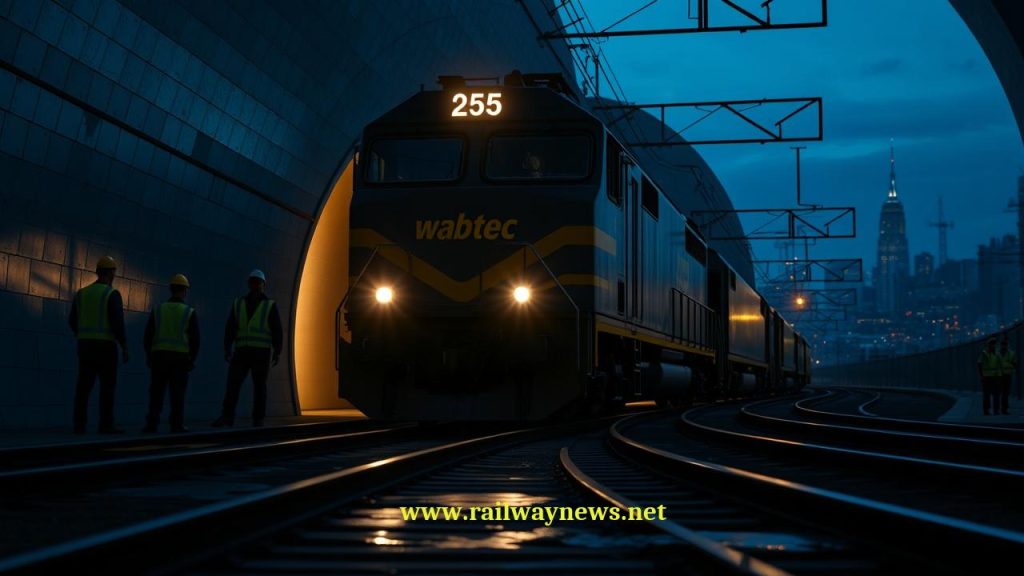
Wabtec Corporation has secured a landmark USD 386 million contract to supply its advanced R255 hybrid work locomotives to New York’s Metropolitan Transportation Authority (MTA). This significant investment in fleet modernization, aimed at enhancing maintenance safety and operational efficiency, comes as the MTA navigates financial pressures that recently led to fare increases across its network.
| Category | Details |
|---|---|
| Order Value | USD 386 Million |
| Supplier | Wabtec Corporation |
| Client | Metropolitan Transportation Authority (MTA) |
| Locomotive Model | R255 Hybrid (Diesel-Battery) |
| Key Technical Spec | ~500 kWh battery for zero-emission tunnel operation |
| Delivery Schedule | Beginning in 2027 |
Main Body:
The detailed agreement between Wabtec and the MTA includes the new fleet of R255 locomotives and associated spare parts packages, marking a deepened collaboration between the two entities. The locomotives, which will be constructed at Wabtec’s design and development hub in Erie, Pennsylvania, are slated to replace aging equipment currently used for maintenance-of-way tasks. This upgrade is a cornerstone of the MTA’s capital investment plan, designed to increase the reliability and overall efficiency of the vast New York subway system, with the first units scheduled for delivery in 2027.
Technologically, the R255 locomotive represents a significant leap forward for non-revenue fleet operations. Its primary advantage is the hybrid propulsion system, which pairs a traditional diesel engine with a powerful battery pack of approximately 500 kWh. This configuration allows the locomotive to operate for several hours in a “battery only” mode, eliminating emissions entirely. This feature is critical for work within the subway’s extensive tunnel network and enclosed areas, especially when the third-rail power is deactivated for maintenance. The zero-emission capability drastically improves working conditions for maintenance crews by reducing their exposure to harmful pollutants and excessive noise. Additionally, the locomotives are equipped with integrated video monitoring and diagnostic systems to support predictive maintenance, enhancing equipment availability and minimizing downtime.
This major capital expenditure is set against a backdrop of the MTA’s broader financial strategy to secure its operational future. The agency recently implemented a fare increase, raising the base cost of a subway or bus ride to $3.00, in a bid to offset rising costs and combat significant revenue losses from fare evasion, estimated to cost the authority around $400 million in 2025. The investment in Wabtec’s hybrid technology demonstrates the MTA’s dual focus: addressing immediate budgetary needs through revenue adjustments while simultaneously making long-term strategic investments in safer, greener, and more efficient infrastructure.
Key Takeaways
- Decarbonization of Maintenance Fleets: The order signifies a major commitment to reducing emissions in behind-the-scenes railway operations, directly improving air quality and safety for track workers in underground environments.
- Boost in Operational Efficiency: With advanced onboard diagnostics and monitoring systems, the R255 fleet will enable the MTA to adopt more predictive maintenance practices, increasing asset reliability and network uptime.
- Strategic Investment Amid Financial Scrutiny: Despite fiscal challenges that necessitated recent fare hikes, the MTA is prioritizing long-term capital projects that promise enhanced safety, environmental benefits, and long-run cost efficiencies.
Editor’s Analysis
The MTA’s USD 386 million order is more than a fleet renewal; it’s a clear signal to the global rail industry that the decarbonization focus is expanding beyond passenger rolling stock to encompass the entire operational ecosystem. Maintenance-of-way vehicles, traditionally powered by diesel, represent a significant source of emissions and a challenging environment for workers, particularly in tunnel-heavy systems. Wabtec’s success in securing this contract highlights a growing market for specialized hybrid and battery-electric solutions for non-revenue fleets. This deal sets a new benchmark for major transit authorities worldwide, demonstrating that investing in green technology for maintenance operations is not a luxury but a core component of a modern, safe, and sustainable transit strategy.
Frequently Asked Questions
- What are the Wabtec R255 locomotives?
- The R255 is a hybrid work locomotive designed by Wabtec Corporation. It is powered by both a diesel engine and a battery system, allowing it to perform maintenance and construction tasks on the railway network.
- Why is the hybrid feature important for the NYC subway?
- The hybrid system allows the R255 to operate on battery power alone, producing zero emissions and significantly less noise. This is crucial for improving air quality and safety for maintenance crews working in enclosed tunnels and underground stations.
- How much is the MTA’s order with Wabtec worth?
- The order for the R255 hybrid locomotives and spare parts is valued at USD 386 million.

Railway infrastructure, rolling stock and transport technologies specialist focused on global rail industry developments, high-speed rail systems, signaling technologies and freight transportation. Covering railway investments, public transport modernization, rail operations and international mobility projects across Europe, Asia and North America.
RELATED POSTS

October 1, 2026 7:09 am
United States regulators confirmed a September 30 deadline for the...

October 1, 2026 12:13 am
Illinois approved $1.5 billion annually for the Northern Illinois Transit...

October 4, 2026 5:14 pm
Alstom secured a CA$4.7 billion order from VIA Rail Canada...

October 1, 2026 6:10 am
Amtrak approved a System Expansion Committee on July 30 to...

October 1, 2026 3:12 am
Greenbrier confirmed Brian Comstock as new president and CEO effective...

October 6, 2026 2:14 am
Union Pacific launched export rail shipments with Ferromex to deliver...