
LA Metro’s C Line Extension: Final Approval Vote Set for Jan 22
LA Metro’s C Line Extension to Torrance nears final approval, a 4.5-mile project connecting South Bay via existing rail, boosting regional transit connectivity.
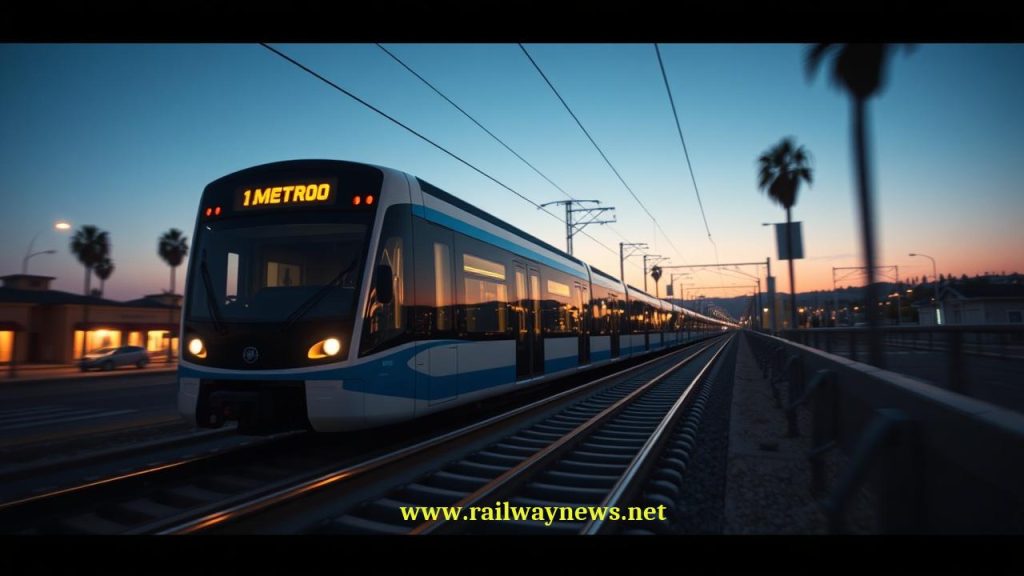
LOS ANGELES, CA – The Los Angeles County Metropolitan Transportation Authority (LA Metro) is poised to take a significant step forward on a crucial rail expansion project, with its board set to consider the final environmental approval for the C Line Extension on January 22. This 4.5-mile light-rail project aims to connect the South Bay community of Torrance to the wider regional network, marking a key milestone in LA’s ambitious transit build-out.
| Category | Details |
|---|---|
| Project Name | C Line Extension to Torrance (Future K Line service) |
| Authority | Los Angeles County Metropolitan Transportation Authority (LA Metro) |
| Project Length | 4.5 miles (7.24 km) |
| Key Milestone | Board consideration of Final Environmental Impact Report (FEIR) certification |
| Strategic Approach | Utilization of existing LA Metro-owned freight-rail corridor |
Main Body:
The LA Metro board’s upcoming meeting on January 22 will be pivotal for the future of transit in the South Bay. The agenda includes a vote on the certification of the Final Environmental Impact Report (FEIR) for the light-rail extension of the C Line from its current terminus at Redondo Beach to the city of Torrance. This certification is one of the last major administrative hurdles before the project can move towards the final design and construction phases, signaling a strong commitment to enhancing regional mobility.
The approved project plan, known as the Locally Preferred Alternative (LPA), was selected after a review of three light-rail options and a bus rapid transit alternative. The decisive factor in its selection was its strategic placement along an existing, LA Metro-owned freight-rail right-of-way. This approach is designed to significantly reduce the need for costly and complex private land acquisitions, while also minimizing construction-related disruptions to adjacent neighborhoods—a common bottleneck for major urban infrastructure projects.
Upon completion, the extension will be operationally integrated into the K Line, creating a seamless transit journey for passengers. This will forge a vital link connecting the South Bay directly with key destinations such as Downtown Los Angeles, Santa Monica, and Norwalk. This integration is a core component of LA Metro’s strategy to create a more interconnected and user-friendly network, transforming disparate rail lines into a cohesive system that offers a viable alternative to the region’s congested freeways.
Key Takeaways
- Critical Approval Pending: The LA Metro board will vote on the Final Environmental Impact Report (FEIR) on Jan. 22, a crucial step toward making the project “shovel-ready.”
- Strategic Route Selection: By utilizing an existing freight corridor, LA Metro mitigates major risks associated with land acquisition and community impact, setting a precedent for future expansions.
- Enhanced Regional Connectivity: The project will integrate with the K Line, directly connecting the South Bay to LA’s growing rail network and major economic hubs.
Editor’s Analysis
The LA Metro C Line extension exemplifies a globally significant trend in urban rail development: leveraging underutilized existing infrastructure to achieve cost-effective and politically viable network expansion. For sprawling, car-dominant cities like Los Angeles, the high cost and community opposition associated with building new transit corridors from scratch are immense barriers. By repurposing a freight right-of-way, LA Metro is not just adding 4.5 miles of track; it’s demonstrating a pragmatic and replicable model for “infill” transit development. International transit authorities are closely watching these types of projects as they seek to expand their own networks within fiscally and spatially constrained environments.
Frequently Asked Questions
- What is the C Line Extension project?
- It is a 4.5-mile light-rail extension that will run from the current C Line terminus at Redondo Beach to a new terminus in Torrance, California. It will operate as part of the K Line service upon completion.
- Why was this specific route chosen?
- The route was selected as the Locally Preferred Alternative because it runs primarily on a freight-rail corridor already owned by LA Metro. This strategy minimizes the need to acquire new land and reduces potential disruptions to local neighborhoods.
- What are the main benefits for passengers?
- The extension will provide a direct rail connection for the South Bay community to the rest of the LA Metro system, enabling easier travel to Downtown Los Angeles, Santa Monica, LAX (via K Line connection), and other key destinations without needing to drive.

Railway infrastructure, rolling stock and transport technologies specialist focused on global rail industry developments, high-speed rail systems, signaling technologies and freight transportation. Covering railway investments, public transport modernization, rail operations and international mobility projects across Europe, Asia and North America.
RELATED POSTS

October 1, 2026 7:09 am
United States regulators confirmed a September 30 deadline for the...

October 1, 2026 12:13 am
Illinois approved $1.5 billion annually for the Northern Illinois Transit...

October 5, 2026 6:12 pm
AECOM and Jacobs secured a contract in September 2026 to...

October 1, 2026 6:10 am
Amtrak approved a System Expansion Committee on July 30 to...

October 6, 2026 2:14 am
Union Pacific launched export rail shipments with Ferromex to deliver...

October 4, 2026 11:08 pm
Sound Transit confirmed the September 30 opening of Seattle Pinehurst...