
KiwiRail’s DM Class: New Zealand Rail Tech & Efficiency
KiwiRail’s new DM class locomotives are now in service, modernizing New Zealand’s rail network. The trial phase assesses capabilities across varied terrain.
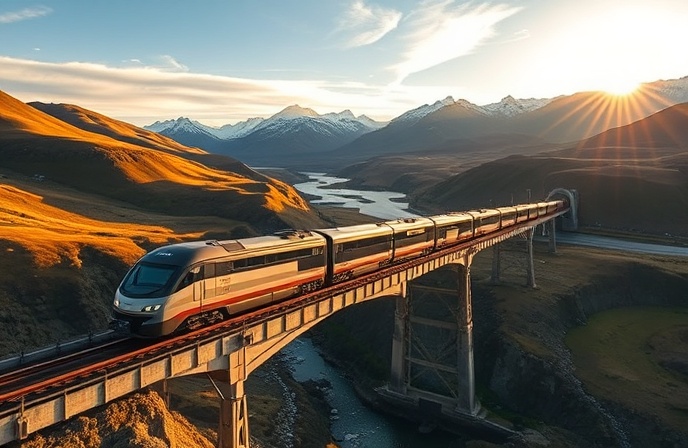
KiwiRail’s DM Class Locomotives Enter Service, Ushering in New Era for New Zealand Rail
KiwiRail, New Zealand’s state-owned railway operator, has officially launched its first DM class locomotive into revenue service, marking a significant milestone in the modernization of the South Island’s rail network. This launch, which took place on the Christchurch to Timaru route, signals the beginning of an extensive trial phase designed to assess the new locomotives’ capabilities across the varied terrain of the network. Why is this important? The introduction of these locomotives represents a substantial upgrade to KiwiRail’s rolling stock and is a vital step in enhancing operational efficiency and driver comfort. How did this happen? This article will delve into the details of this transition, exploring the rigorous testing, innovative features, and the broader implications for the future of rail transport in New Zealand.
Testing and Regulatory Compliance
The journey to operational deployment for the DM class locomotives has been meticulously planned and executed over the past seven months. KiwiRail partnered with Stadler Rail, a renowned rolling stock manufacturer based in Valencia, Spain, to conduct a detailed testing program. This testing phase was not merely a formality; it was a critical process designed to ensure the locomotives met all required safety and performance standards. Justin Young, a mechanical engineer at KiwiRail, emphasized the importance of regulatory compliance, particularly given that the DM class locomotives are new to New Zealand. This meant satisfying stringent global standards to guarantee the locomotives’ safety and suitability for the local operating environment. Rigorous trials were conducted throughout the South Island, including the notoriously challenging Otira to Arthur’s Pass route, a testament to the thoroughness of the testing regime.
Engineering Marvels: Technological Advancement
The DM class locomotives represent a leap forward in rail technology. Kyle Swainson, a Locomotive Engineer at KiwiRail, compared the transition from older locomotives to the DMs to upgrading from a 1960s car to a modern 2020 vehicle. The new locomotives offer significantly improved comfort, significantly the inclusion of air conditioning, a major enhancement for drivers accustomed to older equipment. Beyond comfort, the locomotives feature advanced computer systems, providing enhanced operational control and diagnostic capabilities. Borja Rozalén Valcuende, Project Technical Leader in Design & Development Engineering at Stadler, highlighted the collaborative effort to tailor the locomotives to KiwiRail’s specific needs and terrain, resulting in a product expected to perform exceptionally well on the New Zealand network.
Operational Efficiencies and Enhanced Driver Experience
The impact of the DM class locomotives extends beyond technological advancements. The improved driver comfort and modern operating systems are expected to lead to greater operational efficiency and improved working conditions. The enhanced climate control and ergonomic design are significant improvements over older models. These improvements are not merely cosmetic; they contribute to a safer and more productive work environment for locomotive engineers. The upgraded systems are expected to simplify maintenance and enhance the reliability of the service, contributing to a more efficient rail operation.
Conclusion
The introduction of KiwiRail’s DM class locomotives marks a pivotal moment in the modernization of New Zealand’s rail network. The rigorous testing program, the incorporation of advanced technology, and a focus on driver comfort and efficiency have all contributed to a successful launch. The trial journeys, encompassing over 5,000 kilometers across the network, will provide crucial data on the locomotives’ performance under real-world conditions. This data will inform ongoing operational adjustments and provide valuable insights into the long-term benefits of these new locomotives. The project represents a substantial investment in the future of rail transportation in New Zealand, with the potential to enhance efficiency, reduce emissions, and improve the overall passenger and freight experience. The successful integration of these modern locomotives is a clear indication of KiwiRail’s commitment to progress and innovation within the rail industry. This launch will provide a platform for further investment and improvements, paving the way for a more sustainable and efficient transportation infrastructure for New Zealand.
Company Summary:
KiwiRail is the primary state-owned rail operator in New Zealand. As a key player in the country’s freight and passenger transportation, KiwiRail manages a vast network spanning both the North and South Islands, crucial to connect industries and communities. Stadler Rail is a global manufacturer of rolling stock, serving rail operators all over the world with a strong focus on tailored solutions and innovative technologies.

Railway infrastructure, rolling stock and transport technologies specialist focused on global rail industry developments, high-speed rail systems, signaling technologies and freight transportation. Covering railway investments, public transport modernization, rail operations and international mobility projects across Europe, Asia and North America.
RELATED POSTS

October 8, 2026 1:15 pm
Alstom secured a €1bn contract to build 13 automated trains,...

October 1, 2026 7:09 am
United States regulators confirmed a September 30 deadline for the...

October 4, 2026 5:14 pm
Alstom secured a CA$4.7 billion order from VIA Rail Canada...

October 1, 2026 12:13 am
Illinois approved $1.5 billion annually for the Northern Illinois Transit...

October 5, 2026 1:13 pm
New York MTA confirmed a late 2026 DEIS release for...

October 1, 2026 6:10 am
Amtrak approved a System Expansion Committee on July 30 to...