
Izmir Metro Expansion: AIIB Funds Sustainable Growth
The €300 million Izmir Metro Line extension project secured funding from international financial institutions like AIIB and EBRD, demonstrating commitment to modernizing public transport systems in Turkey through strategic urban planning and addressing rapid transportation demands.
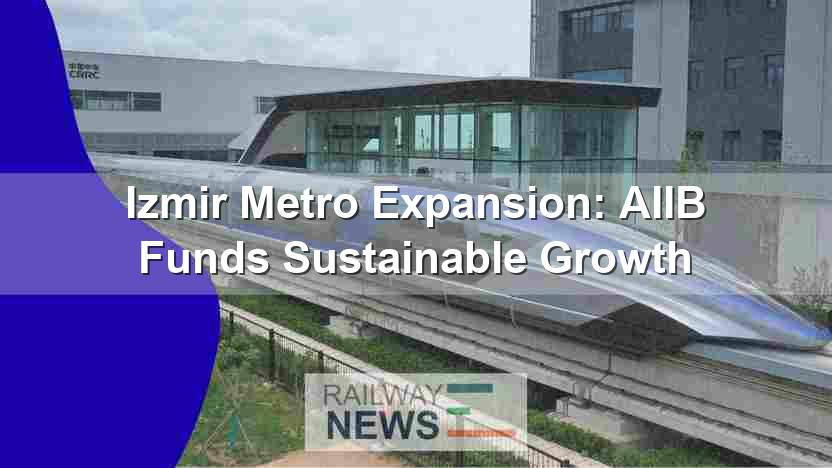
This article examines the Izmir Metro Line extension project in Turkey, focusing on the financial backing from the Asian Infrastructure Investment Bank (AIIB) and its broader significance within the context of urban development and sustainable transportation initiatives. The project represents a substantial investment in Turkey’s infrastructure, demonstrating a commitment to modernizing public transport systems and addressing the challenges posed by rapid urbanization and growing transportation demands in Izmir, the country’s third-largest city. The analysis will delve into the technical aspects of the expansion, its alignment with strategic urban planning objectives, and the wider implications for sustainable urban development in Turkey and beyond. We will also consider the role of international financial institutions in supporting such large-scale infrastructure projects and the potential impact on improving the quality of life for Izmir’s citizens. The discussion will highlight the importance of integrated transportation planning and the need for environmentally conscious approaches to address urban mobility issues in rapidly developing cities.
Financing and International Collaboration
The €300 million Izmir Metro Line extension project secured significant funding from a consortium of international financial institutions. The AIIB (Asian Infrastructure Investment Bank) contributed a €50 million loan, demonstrating its commitment to supporting infrastructure development in its member countries. This commitment is further underscored by the co-financing from the European Bank for Reconstruction and Development (EBRD), highlighting the collaborative nature of international investment in large-scale infrastructure projects. Additional funding was secured from the Black Sea Trade and Development Bank and Société Générale, further diversifying the funding sources and mitigating risk. This multilateral approach underscores the global recognition of the project’s importance and its alignment with international development goals.
Project Scope and Technical Details
The project involves a 7.2km extension of the existing Izmir Metro line, connecting the western districts of Fahrettin Altay and Narlidere Kaymakamlik to the city center. This extension will incorporate seven new stations, necessitating significant civil engineering works, including tunnel construction. The project’s scope extends beyond mere track laying to encompass the installation of detailed signaling systems, advanced telecommunications infrastructure, reliable energy supply networks, sophisticated environmental control systems within the stations, and the provision of essential passenger amenities such as elevators and escalators. The attention to detail in these specifications reflects a commitment to delivering a high-quality, safe, and user-friendly public transportation system.
Alignment with Urban Planning and Sustainable Development
The Izmir Metro Line extension is not an isolated project but a key component of the city’s broader Transport Master Plan 2030. This plan aims to meet the burgeoning demand for public transport in a rapidly growing city, addressing the environmental and infrastructural challenges associated with increasing car usage. By providing a sustainable and efficient mass transit alternative, the project directly contributes to mitigating traffic congestion, reducing greenhouse gas emissions, and improving air quality within Izmir. This alignment with long-term urban planning objectives demonstrates a holistic approach to urban development that prioritizes sustainable and integrated transportation solutions.
Impact and Future Implications
Upon completion, the Izmir Metro Line extension will significantly enhance urban mobility, improving connectivity between different parts of the city and reducing travel times for commuters. Increased accessibility to public transport will benefit a wide range of residents, particularly those in the western districts previously less well-connected to the city center. The project’s focus on sustainability aligns with global efforts to combat climate change and promote environmentally responsible urban planning. This project serves as a model for other rapidly developing cities facing similar challenges, highlighting the crucial role of strategic investment in public transportation infrastructure and the importance of international cooperation in achieving sustainable urban development goals.
Conclusions
The Izmir Metro Line extension project, supported by a consortium of international financial institutions led by the AIIB (Asian Infrastructure Investment Bank) and the EBRD (European Bank for Reconstruction and Development), represents a significant investment in Turkey’s infrastructure and a commitment to sustainable urban development. The €300 million project, encompassing a 7.2km extension with seven new stations, showcases a detailed approach to modernizing public transportation. The project is not merely about constructing a new metro line; it’s about improving connectivity, reducing travel times, enhancing urban mobility, and mitigating environmental challenges. Its integration within Izmir’s Transport Master Plan 2030 underscores the importance of long-term planning for sustainable urban growth. The success of this project will depend on meticulous execution, careful management, and effective integration with existing transport networks. The involvement of multiple international financial institutions, including the AIIB, EBRD, the Black Sea Trade and Development Bank and Société Générale, highlights the global significance of this project and the confidence placed in Turkey’s commitment to sustainable development. The project’s completion will not only alleviate traffic congestion and improve the quality of life for Izmir’s citizens but also serve as a benchmark for future sustainable transportation initiatives in rapidly growing urban centers worldwide. The success of this project is crucial, not only for Izmir, but also as a case study for sustainable urban development globally.

Railway infrastructure, rolling stock and transport technologies specialist focused on global rail industry developments, high-speed rail systems, signaling technologies and freight transportation. Covering railway investments, public transport modernization, rail operations and international mobility projects across Europe, Asia and North America.
RELATED POSTS

October 8, 2026 1:15 pm
Alstom secured a €1bn contract to build 13 automated trains,...

October 1, 2026 7:09 am
United States regulators confirmed a September 30 deadline for the...

October 4, 2026 5:14 pm
Alstom secured a CA$4.7 billion order from VIA Rail Canada...

October 8, 2026 12:18 pm
Siemens Mobility signed an agreement with VinSpeed to supply 350...

October 5, 2026 6:12 pm
AECOM and Jacobs secured a contract in September 2026 to...

October 4, 2026 11:08 pm
Sound Transit confirmed the September 30 opening of Seattle Pinehurst...