
Italy’s Santomarco Tunnel: Webuild’s High-Speed Rail Project
A Webuild-led consortium has been awarded a €1.6 billion contract for the Santomarco Tunnel as part of the Paola-Cosenza doubling section on the Salerno-Reggio Calabria high-speed railway line in Italy.
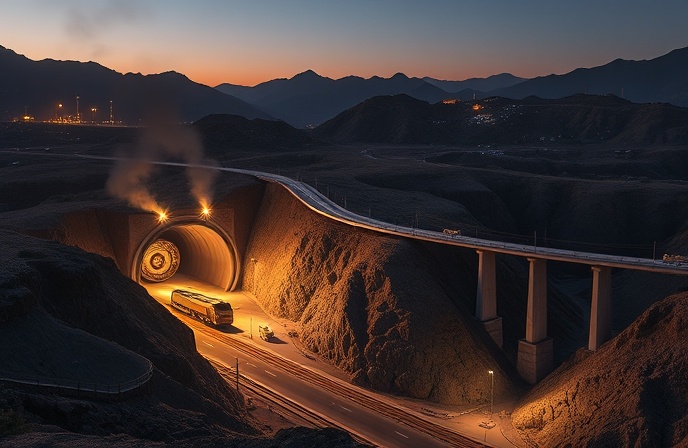
⚡ In Brief: Santomarco Tunnel & Paola-Cosenza High-Speed Rail
- Scope: 15.8 km twin-bore, single-track tunnel (four TBMs) forming the core of the €1.6 bn Paola-Cosenza doubling section on Italy’s Salerno-Reggio Calabria HSR corridor; includes 9 bridges, 2 viaducts, and Montalto Uffugo station.
- Technical specs: Standard gauge (1,435 mm), 25 kV AC electrification, ETCS Level 2 signaling (SIL-4), design speed 200 km/h passenger / 120 km/h freight; TBMs include the 13.46 m-diameter “Partenope”—Webuild’s largest in Europe [[4]].
- Geology & risk: Calabrian Apennines with mixed flysch, karst limestone, and high seismicity (PGA up to 0.25 g); tunnel alignment maintains ≥100 m clearance from existing single-track bore to enable continuous operations during construction.
- Consortium & timeline: Webuild (60% lead) + Ghella + Pizzarotti + SELI; contract awarded August 2025 by RFI; TBM launch began Q1 2025; commissioning targeted 2030–2031 pending geotechnical validation.
- Strategic role: Critical link in the Scandinavian-Mediterranean TEN-T Core Network Corridor (11,925 km total) [[22]], enabling freight diversion from the congested Tyrrhenian coastal line and supporting Calabria’s economic integration with northern Italy and Central Europe.
When the 13.46-meter-diameter TBM Partenope began its first advance through the flysch formations near San Lucido in early 2025, it marked more than a technical milestone—it represented a generational shift in southern Italy’s rail infrastructure [[4]]. For over a century, the original Santomarco Tunnel (completed 1915) has constrained capacity on the Paola-Cosenza line to a single track, forcing freight and regional services into a bottleneck that adds 45–70 minutes to journey times and limits axle loads to 22.5 tonnes. The new twin-bore alignment, excavated approximately 100 meters parallel to the historic tunnel, is designed to eliminate that constraint permanently. Yet the challenge extends beyond length: Calabria’s complex geology—characterized by alternating sandstone-marl sequences, localized karst voids, and seismic zones classified as Zone 1 per Italian NTC 2018—demands a tunneling strategy that balances advance rate with ground support adaptability. For Webuild and its consortium partners, the Santomarco project is both an engineering test and a strategic commitment to completing Italy’s missing high-speed link between the Tyrrhenian coast and the Ionian freight corridor.
What Is the Santomarco Tunnel Project?
The Santomarco Tunnel is a 15.8 km twin-bore, single-track railway tunnel under construction in Calabria, southern Italy, forming the centerpiece of the Paola-Cosenza doubling section on the Salerno-Reggio Calabria high-speed/high-capacity (HS/HC) railway line [[1]]. Commissioned by Rete Ferroviaria Italiana (RFI) and executed by a consortium led by Webuild (60% share) with Ghella, Pizzarotti, and SELI (Webuild’s tunnelling subsidiary), the project involves excavating two parallel bores using four earth-pressure-balance (EPB) tunnel boring machines, constructing nine railway bridges and two major viaducts (350 m over the A2 motorway; 205 m over the Settimo stream), and delivering a new passenger station at Montalto Uffugo [[3]]. Upon completion, the new tunnel will replace the existing 1915-era single-track bore, which will be decommissioned after traffic transfer. Technically, the tunnel is designed for mixed passenger-freight operations at speeds up to 200 km/h for EMUs and 120 km/h for freight, with 25 kV AC overhead electrification, ETCS Level 2 signaling with GSM-R radio backup, and a concrete segmental lining system rated for 100-year design life under seismic loading per Eurocode 8 and Italian NTC 2018 provisions.
TBM Strategy: Adapting to Calabrian Geology
The Calabrian Apennines present a heterogeneous geological profile: the northern approach (Paola side) traverses Miocene flysch (alternating sandstone and claystone), while the central section encounters Cretaceous limestone with localized karst conduits, and the southern approach (Cosenza side) re-enters flysch with higher clay content and elevated groundwater pressures. To manage this variability, the consortium deployed four EPB-TBMs with interchangeable cutterheads: disc cutters for rock-dominant sections and scraper tools for mixed-face conditions. Each TBM features a 13.46 m excavation diameter (the largest Webuild has operated in Italy) to accommodate a 5.0 m internal clearance for UIC GC loading gauge, with a precast concrete segmental lining (35 cm thick, C40/50 concrete, 7+1 segment configuration) installed immediately behind the shield [[4]]. Ground support is adaptive: in stable flysch, standard bolted segments suffice; in karst zones, probe drilling ahead of the face identifies voids, which are then grouted with microfine cement before advance; in high-water-pressure zones (>3 bar), the EPB chamber maintains controlled face pressure to prevent inflow. Seismic resilience is embedded in the lining design: segments incorporate ductile reinforcement (B500B steel) and flexible gaskets (EPDM) at joints to accommodate differential ground movements up to ±15 mm without loss of water tightness—a requirement derived from probabilistic seismic hazard analysis (PSHA) for the corridor (PGA = 0.22–0.25 g, 475-year return period).
| Parameter | Santomarco Tunnel | Design Rationale |
|---|---|---|
| Bore Configuration | Twin single-track bores | Enables bidirectional operations; isolates maintenance without full closure |
| Excavation Diameter | 13.46 m (EPB-TBM) | Accommodates UIC GC gauge + safety margins + segment thickness + utilities |
| Lining System | 35 cm precast concrete segments (7+1), EPDM gaskets | Balances structural capacity, water tightness (≤0.1 L/m²/h), and rapid installation |
| Seismic Design | NTC 2018 Zone 1; PGA 0.25 g; ductile joints | Ensures post-earthquake operability; aligns with RFI resilience standards |
| Groundwater Control | EPB face pressure + probe drilling + grouting | Prevents inflow in karst/flysch; maintains face stability in high-pore-pressure zones |
| Cross-Passage Spacing | Every 333 m (per TSI Safety) | Meets EU interoperability requirements for emergency egress and ventilation |
Signaling, Electrification & Operational Integration
The Paola-Cosenza section is designed as a fully interoperable high-capacity corridor compliant with EU Technical Specifications for Interoperability (TSIs). Signaling implements ETCS Level 2 (Baseline 3) with GSM-R radio coverage throughout the tunnel, enabling continuous train-to-wayside communication and moving-block-like capacity without trackside signals [[11]]. Vital functions (interlocking, ATP) are certified to SIL-4 per EN 50129, with redundant Eurobalises at 200 m intervals for position referencing and fallback to ETCS Level 1 if GSM-R is interrupted. Electrification follows the Italian HS standard: 25 kV AC, 50 Hz, overhead catenary with auto-tensioning to accommodate thermal expansion in the tunnel environment; neutral sections are positioned outside tunnel portals to avoid arcing risks. Operational planning assumes a mixed-traffic timetable: 12 passenger paths/hour (regional EMUs at 160 km/h, intercity at 200 km/h) and 8 freight paths/hour (120 km/h, 22.5 t axle load), enabled by the twin-bore configuration eliminating single-track bottlenecks. The new Montalto Uffugo station features platform lengths of 400 m (accommodating 16-car freight consists) and is designed for future integration with regional bus networks. Crucially, the project includes a “soft cutover” strategy: once the new twin bores are commissioned, traffic will be transferred sequentially (first one bore, then the second), allowing the historic 1915 tunnel to be decommissioned and repurposed for emergency egress or utility routing—preserving heritage while enabling modernization.
Comparative Context: Italian Rail Tunnel Projects
| Project | Length (km) | Bore Type | Geology | TBM Count | Status (2026) | Key Challenge |
|---|---|---|---|---|---|---|
| Santomarco (Calabria) | 15.8 | Twin single-track | Flysch, karst limestone | 4 EPB-TBMs | Excavation ongoing | Karst void detection, seismic resilience |
| Brenner Base Tunnel (IT/AT) | 55 (64 w/ junctions) | Twin single-track + pilot | Metamorphic, fault zones | 6+ TBMs | 91% complete (Italian side) | High in-situ stress, water inflow |
| Mont Cenis Base (IT/FR) | 57.5 | Twin single-track | Carboniferous schist | 4 TBMs | Italian section awarded 2023 | Cross-border coordination, ventilation |
| Giovi Third Pass (Liguria) | 27 (Valico tunnel) | Twin single-track | Squeezing clay, gas | 10 m EPB-TBMs | 87% complete (end-2023) | Asbestos management, ground squeezing |
| Hirpinia Tunnel (Campania) | 27 | Twin single-track | Clay, methane, seismic | 4 TBMs (planned) | TBM launch 2024–2025 | Methane mitigation, swelling clay |
| Alia Tunnel (Sicily) | 20 | Twin single-track | Evaporites, gypsum | 10 m TBM | Excavation started 2024 | Gypsum dissolution, water inflow |
Strategic Role: TEN-T Integration and Freight Optimization
The Santomarco Tunnel is not an isolated infrastructure project but a critical node in the European Union’s Scandinavian-Mediterranean Core Network Corridor, which spans 11,925 km from Helsinki to Valletta [[22]]. Within this framework, the Salerno-Reggio Calabria HS/HC line serves three strategic functions: (1) Capacity relief: diverting freight from the congested, curvature-constrained Tyrrhenian coastal line (minimum radius 300 m) to a modern alignment (minimum radius 2,200 m), enabling longer trains and higher axle loads; (2) Intermodal connectivity: linking the Port of Gioia Tauro (Europe’s 7th-largest container hub) and the Bari-Taranto industrial zone to northern European markets via the Brenner and Mont Cenis base tunnels; (3) Resilience enhancement: providing a seismically robust, twin-bore alternative to the single-point-of-failure historic tunnel, reducing vulnerability to disruptions from landslides or seismic events. RFI’s business case projects that doubling the Paola-Cosenza section will increase corridor capacity by 180% (from 45 to 126 train paths/day) and reduce freight transit time between Calabria and Lombardy by 3.2 hours—critical for time-sensitive agricultural exports (citrus, olives) and automotive components. The project also aligns with Italy’s National Recovery and Resilience Plan (PNRR), which allocates €24.3 billion to rail modernization, with Calabria prioritized for cohesion policy funding to reduce the north-south infrastructure gap.
Editor’s Analysis: The Santomarco Tunnel exemplifies a maturing paradigm in European rail infrastructure: the shift from “greenfield megaprojects” to “strategic bottleneck elimination.” At 15.8 km, it is not Italy’s longest tunnel, but its impact per kilometer is exceptional—unlocking a century-old constraint on a corridor that connects two EU freight gateways (Gioia Tauro, Bari) to the continental core. Technically, the project demonstrates sophisticated risk management: adaptive TBM tooling for heterogeneous geology, seismic-resilient lining design, and ETCS Level 2 integration from day one. Yet its true significance lies in governance: the Webuild-led consortium model, with clear equity shares (60/40) and SELI’s specialized tunnelling role, creates accountability without fragmenting execution. For policymakers, three lessons emerge: (1) prioritize “missing links” over symbolic new lines; (2) embed interoperability (ETCS, UIC gauge) at design stage to avoid costly retrofits; (3) treat heritage infrastructure not as obsolete but as a potential asset (e.g., repurposing the 1915 bore for emergency egress). As Europe accelerates rail freight modal shift to meet 2050 climate goals, projects like Santomarco—modest in scale, maximal in leverage—will define the next decade of infrastructure investment.
— Railway News Editorial
— Railway News Editorial
Frequently Asked Questions
Q1: Why use four TBMs for a 15.8 km tunnel instead of two?
Deploying four TBMs—two per bore, advancing from opposite portals—enables a “meet-in-the-middle” strategy that halves excavation time and provides redundancy against geological surprises. In Calabria’s heterogeneous flysch-karst profile, encountering an unexpected water-bearing fault or karst conduit could halt a single TBM for weeks while ground treatment is designed. With two machines per bore, if one encounters difficult ground, the other can continue advance from the opposite end, maintaining overall progress. Additionally, the 13.46 m diameter of the Partenope-class TBMs limits advance rates in mixed-face conditions (typically 8–12 m/day in flysch vs. 20+ m/day in homogeneous rock); four machines ensure the 15.8 km length can be excavated within the 36–40 month window required to meet the 2030 commissioning target. This approach also distributes risk: if one TBM requires major cutterhead replacement, the other three maintain momentum. Finally, the consortium’s access to SELI’s TBM fleet and maintenance hubs in northern Italy enables rapid parts logistics—a critical factor when operating four large-diameter machines simultaneously in a region with limited heavy-industry support infrastructure.
Q2: How does the tunnel’s seismic design differ from non-seismic European tunnels?
Italian tunnels in Zone 1 (highest seismicity) must comply with NTC 2018 and Eurocode 8 provisions that go beyond standard structural safety to ensure post-earthquake operability. Key differentiators include: (1) Ductile segment joints: EPDM gaskets and flexible bolt connections allow ±15 mm joint rotation without leakage, whereas non-seismic tunnels prioritize rigid water tightness; (2) Enhanced ground-lining interaction modeling: 3D dynamic finite-element analyses simulate soil-structure interaction under PGA = 0.25 g loading, informing segment reinforcement ratios (typically 1.2–1.5× higher than non-seismic designs); (3) Redundant emergency systems: cross-passages every 333 m (vs. 500 m in lower-risk zones) with fire-rated doors and independent ventilation, ensuring egress even if one bore is compromised; (4) Instrumentation density: fiber-optic strain sensors embedded in segments at 50 m intervals provide real-time deformation monitoring, triggering automatic speed restrictions if thresholds are exceeded. These measures increase capital cost by ~8–12% but are non-negotiable for RFI certification in Calabria. Crucially, the design adopts a “performance-based” approach: rather than preventing all damage, it ensures that residual capacity after a design-basis earthquake allows safe evacuation and rapid inspection—aligning with EU TSI Safety requirements for high-risk infrastructure.
Q3: What happens to the original 1915 Santomarco Tunnel after the new bores open?
RFI’s decommissioning strategy follows a “preserve-adapt-repurpose” framework. First, a detailed condition assessment (laser scanning, ground-penetrating radar, structural monitoring) will document the historic tunnel’s geometry and lining integrity. Second, selective adaptation: the tunnel will be cleaned, drainage upgraded, and minimal structural repairs made to ensure stability, but not upgraded to modern operational standards. Third, repurposing options under evaluation include: (a) Emergency egress corridor: connecting to the new bores via cross-passages, providing a third evacuation route; (b) Utility conduit: housing fiber-optic cables, power feeders, or water mains for the railway, leveraging the existing right-of-way without new excavation; (c) Heritage interpretation: limited public access for educational tours (modeled on the Simplon Tunnel heritage route), showcasing early 20th-century tunneling techniques. Critically, the 100 m lateral separation between old and new bores ensures that construction vibrations or future maintenance on the historic tunnel will not impact operational safety of the HS/HC line. This approach balances infrastructure modernization with cultural heritage stewardship—a growing priority in EU-funded projects under the “New European Bauhaus” initiative.
Q4: How does ETCS Level 2 implementation in tunnels differ from open-air sections?
While ETCS Level 2 functionality is consistent across environments, tunnel deployment introduces three technical adaptations: (1) GSM-R coverage continuity: tunnels require leaky-feeder cables or distributed antenna systems (DAS) to maintain radio coverage; the Santomarco design specifies leaky feeders mounted on tunnel walls at 30 m intervals, with repeaters every 1.2 km to ensure <95 dBm signal strength throughout. (2) Balise positioning precision: in tunnels, GPS is unavailable, so Eurobalises must provide absolute position references; they are installed at 200 m intervals (vs. 300–500 m open-air) with sub-meter survey accuracy to support precise train positioning for moving-block-like capacity. (3) Electromagnetic compatibility (EMC): the concrete lining and metallic segments can cause signal reflections; pre-commissioning EMC testing verifies that balise telegrams and GSM-R signals meet EN 50121-3-2 limits for immunity to interference from traction return currents. Additionally, tunnel-specific ETCS variables (e.g., Q_EMERGENCYSTOP, D_TRACKCOND) are configured to trigger automatic speed restrictions if ventilation or lighting systems fail. RFI’s experience on the Rome-Naples HS line showed that these adaptations add ~5–7% to signaling costs but are essential for achieving the 3-minute headway target in mixed-traffic tunnels. For Santomarco, the consortium is using digital twin modeling to simulate ETCS performance under fault scenarios before physical installation—a practice increasingly mandated for complex tunnel projects.
Q5: What are the biggest risks to the 2030 commissioning timeline, and how are they mitigated?
Three primary risks could impact the 2030 target: (1) Geotechnical surprises: undetected karst conduits or high-pressure water inflows could halt TBM advance. Mitigation: detailed pre-excavation probing (30 m ahead of face) using directional drilling and ground-penetrating radar, with contingency budgets for grouting and ground freezing. (2) Supply-chain delays: specialized components (EPDM gaskets, SIL-4 signaling hardware) face long lead times. Mitigation: framework agreements with pre-qualified suppliers and strategic stockpiling of critical items at the Valencia logistics hub. (3) Regulatory approval bottlenecks: RFI’s safety certification process for new ETCS deployments can take 6–9 months. Mitigation: early engagement with the National Safety Authority (ANSFISA) via a “parallel review” process, where design documentation is submitted incrementally rather than at project end. Additionally, the consortium has built a 4–6 month schedule buffer into the critical path and adopted modular commissioning: testing signaling and electrification on completed tunnel sections while excavation continues elsewhere. Historical precedent is encouraging: the nearby Gambatesa Tunnel (12.1 km, similar geology) was commissioned 3 months ahead of schedule in 2022 using comparable risk-management protocols. Ultimately, the project’s success hinges not on avoiding delays but on maintaining the capacity to absorb and recover from them—a capability embedded in the consortium’s integrated project delivery model.

Railway infrastructure, rolling stock and transport technologies specialist focused on global rail industry developments, high-speed rail systems, signaling technologies and freight transportation. Covering railway investments, public transport modernization, rail operations and international mobility projects across Europe, Asia and North America.
RELATED POSTS

October 4, 2026 5:14 pm
Alstom secured a CA$4.7 billion order from VIA Rail Canada...

October 5, 2026 6:12 pm
AECOM and Jacobs secured a contract in September 2026 to...

October 4, 2026 11:08 pm
Sound Transit confirmed the September 30 opening of Seattle Pinehurst...
October 6, 2026 9:17 am
Illinois approved $1.1M in state funds to upgrade two McHenry...
October 6, 2026 12:16 am
FTA awarded $233 million in grants to eight US rail...
October 5, 2026 3:13 pm
DART launched a 90-day fare enforcement pilot across 5 light-rail...