
Intramotev Secures TugVolt Deployment R. J. Corman Memphis Line
Intramotev secured autonomous TugVolt rail car deployment for industrial switching operations, involving two companies, on R. J. Corman’s Memphis Line.
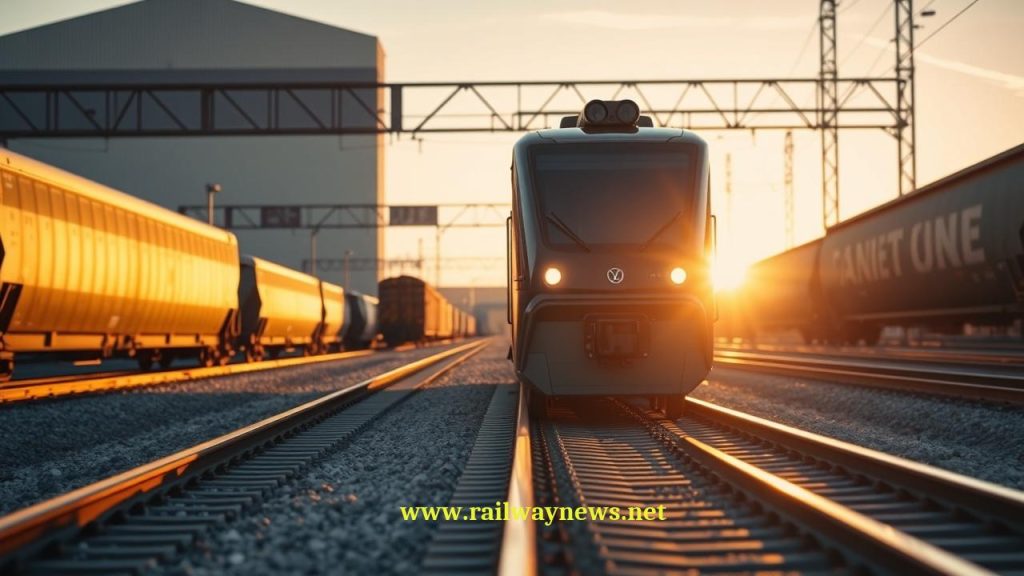
⚡ In Brief: Technology firm Intramotev will deploy its autonomous TugVolt rail cars for industrial switching operations on R. J. Corman Railroad Co.’s Memphis Line under a new commercial agreement of undisclosed value.
MEMPHIS, USA – Autonomous rail technology company Intramotev has entered into a commercial agreement with R. J. Corman Railroad Co., a major short-line operator. The deal will see Intramotev’s TugVolt self-propelled rail cars used in industrial switching operations along R. J. Corman’s Memphis Line. The financial terms and specific number of units involved in the agreement were not disclosed.
What Are the Technical Specifications?
The agreement covers the deployment of Intramotev’s TugVolt technology, which consists of battery-electric, autonomous rail cars designed for short-haul and yard movements. These units are engineered to move themselves and other rail cars without a conventional locomotive, targeting “first and last mile” logistics within industrial facilities. While specific performance data like payload capacity and battery range were not released, the system is designed to automate complex shunting and spotting tasks, reducing reliance on traditional switcher locomotives and crews.
Key Technical Data
| Parameter | Value |
|---|---|
| Technology / System Name | Intramotev TugVolt Autonomous Rail Car |
| Total Value | Not disclosed |
| Parties Involved | Intramotev, R. J. Corman Railroad Co. |
| Timeline / Completion | Not disclosed |
| Country / Corridor | USA / R. J. Corman Memphis Line |
Where Does This Technology Stand in the Market?
Intramotev’s TugVolt occupies a niche focused on automating yard and industrial switching, a different application from mainline locomotive innovations. A key market competitor in rail electrification is Wabtec, whose FLXdrive battery-electric locomotive is designed for heavy-haul, long-distance routes to supplement diesel power and reduce emissions. In contrast, TugVolt is a smaller, self-contained unit for moving individual cars or small consists autonomously over short distances, directly competing with traditional diesel switcher locomotives and their associated crew requirements. Another competitor, Progress Rail (a Caterpillar company), also offers battery-electric switcher locomotives like the EMD Joule, which provides zero-emission yard operations but still requires a human operator, unlike the autonomous TugVolt. (Source: Wabtec Corporation, 2023).
Editor’s Analysis
This agreement marks a practical application of automation in the often-overlooked but critical “first and last mile” segment of the rail freight supply chain. While major manufacturers focus on decarbonizing mainline locomotives, Intramotev is targeting operational efficiency and labor costs within captive industrial environments. The success of this deployment with a significant short-line operator like R. J. Corman could validate the business case for decentralized, autonomous shunting and create a new sub-market for specialized rail robotics. This aligns with the broader rail industry trend of leveraging technology to improve asset utilization and service reliability. (Source: Association of American Railroads, 2024).
FAQ
Q: What is an autonomous rail car?
A: An autonomous rail car, like the Intramotev TugVolt, is a self-propelled, battery-electric vehicle. It is designed to move itself and other rail cars without a traditional locomotive or an onboard operator, primarily for short-distance yard and industrial movements.
Q: What is “industrial switching”?
A: Industrial switching refers to the process of moving rail cars within a specific facility, such as a factory, port, or large warehouse complex. The goal is to position cars for loading, unloading, or assembly into a larger train for mainline transit.
Q: How does this impact R. J. Corman’s operations?
A: The deployment of TugVolt aims to increase the efficiency, safety, and flexibility of switching operations on the Memphis Line. By automating movements, R. J. Corman could potentially reduce crew costs, shorten car turnaround times, and offer more responsive service to its industrial customers.

Railway infrastructure, rolling stock and transport technologies specialist focused on global rail industry developments, high-speed rail systems, signaling technologies and freight transportation. Covering railway investments, public transport modernization, rail operations and international mobility projects across Europe, Asia and North America.
RELATED POSTS

October 8, 2026 1:15 pm
Alstom secured a €1bn contract to build 13 automated trains,...

October 1, 2026 7:09 am
United States regulators confirmed a September 30 deadline for the...

October 8, 2026 12:18 pm
Siemens Mobility signed an agreement with VinSpeed to supply 350...

October 4, 2026 5:14 pm
Alstom secured a CA$4.7 billion order from VIA Rail Canada...

October 5, 2026 6:12 pm
AECOM and Jacobs secured a contract in September 2026 to...

October 1, 2026 12:13 am
Illinois approved $1.5 billion annually for the Northern Illinois Transit...