
Illinois ICC Approves $1.6M Roberts Crossing Upgrades
Illinois ICC approved about USD 1.6 million from the state Grade Crossing Protection Fund for safety upgrades at three rail crossings near Roberts in Illinois.
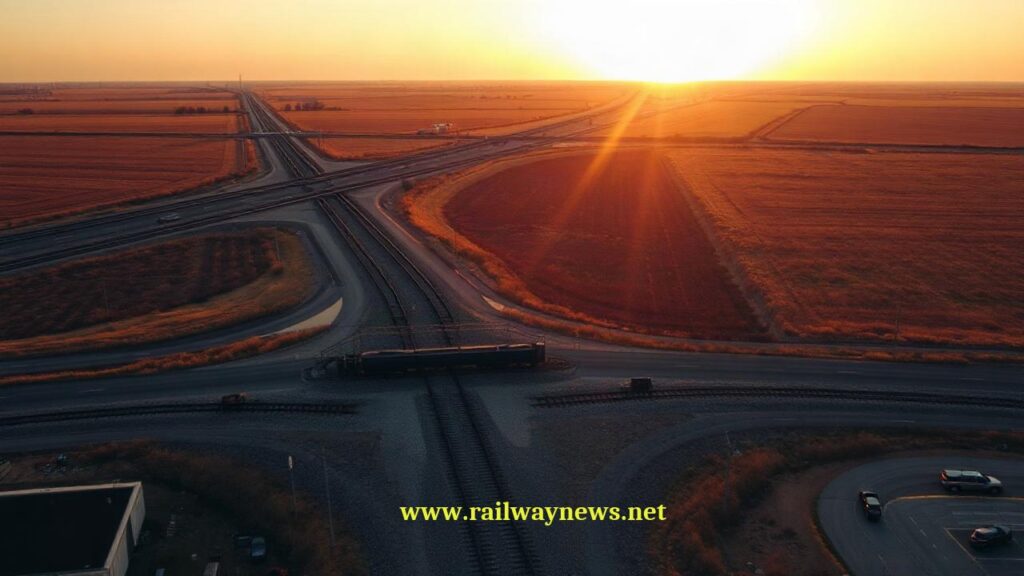
⚡ In Brief: The Illinois Commerce Commission approved nearly $1.6 million from the state’s Grade Crossing Protection Fund to cover most of the cost of safety upgrades at three highway-rail grade crossings near Roberts, Illinois.
ROBERTS, Illinois, United States – The Illinois Commerce Commission approved nearly $1.6 million from the Grade Crossing Protection Fund (GCPF) to cover most of the cost of safety upgrades at three highway-rail grade crossings near Roberts. The state allocation leaves a residual share for the local road authority and the owning railroad, a split the ICC did not quantify in the approval. A separate ICC action approved roughly $1 million for highway-rail crossing upgrades distributed across several Illinois counties, a decision the agency treated independently of the Roberts package.
How Is the Funding Structured?
The Roberts package is a state grant-in-aid allocation rather than a railroad capital commitment, drawing on a fund financed by a dedicated portion of Illinois motor fuel tax revenue. Three crossings share nearly $1.6 million, implying an average of about $533,000 per crossing for warning device and surface work. The GCPF model is designed so the state carries the majority share of installation cost, with the local highway authority and the railroad owner funding the remainder — the precise percentage split for Roberts was not disclosed. Combined with the separate approximately $1 million approval for crossings in several other Illinois counties, the ICC committed close to $2.6 million in crossing safety money across two distinct decisions.
Key Funding Data
| Parameter | Value |
|---|---|
| Fund / Programme Name | Illinois Grade Crossing Protection Fund (GCPF) — Roberts crossing package |
| Total Value | Nearly USD 1.6 million (≈USD 533,000 per crossing across three sites) |
| Parties Involved | Illinois Commerce Commission (approving authority); local highway authority and owning railroad (not named in the approval) |
| Timeline / Completion | Not disclosed |
| Country / Corridor | United States — Illinois, crossings in the vicinity of Roberts |
Note: Independent verification of the per-crossing cost split, the specific crossing identifiers, and the owning railroad for the Roberts sites was not available at time of publication.
How Does This Compare to Similar Funding Programs?
At roughly USD 533,000 per crossing, the Roberts allocation sits in the normal band for North American warning-device retrofits, but it is orders of magnitude smaller than corridor-scale rail funding elsewhere — the Nagari–Tindivanam rail link in Tamil Nadu carries a total estimated cost of Rs 3,631.34 crore, with Rs 825 crore already spent as of December 31, 2024, against a 2024-25 budget allocation cut from Rs 350 crore to Rs 154 crore (Source: The New Indian Express, 2025). That reduction left the Indian project funded at roughly 4.2% of its total cost in a single budget year, whereas the GCPF structure gives Illinois crossings a dedicated revenue-backed stream that does not depend on annual capital budget votes. The 28.5 km Podatturpettai–Sholingur stretch of the Indian project is only expected to begin construction next year, contingent on fund release — a sequencing risk the Roberts programme avoids because the money is approved before work is tendered. At the global level, Asia-Pacific absorbed 63% of total rail infrastructure investment in 2025, with high-speed and freight corridor programmes dominating, meaning state-level US crossing safety budgets operate in a structurally different, much smaller funding tier (Source: Future Market Insights, 2025).
Editor’s Analysis
Grade crossing protection is the least glamorous line item in rail funding, yet it is the category where a fixed allocation converts most directly into reduced collision exposure — roughly USD 533,000 per site buys warning devices and surface renewal that no high-speed programme can substitute for. The contrast with Tamil Nadu is instructive: dedicated, revenue-linked funds like the GCPF deliver predictable multi-site delivery, while capital-budget line items such as Nagari–Tindivanam can lose more than half their annual allocation between interim and final budgets. Expect continued bundling of these retrofits with digital monitoring, given the smart railway market is projected to grow from USD 30.55 billion in 2025 to USD 75.36 billion by 2035 (Source: Market Research Future, 2025).
FAQ
Q: How much did the Illinois Commerce Commission approve for grade crossings near Roberts?
A: The ICC approved nearly $1.6 million from the Grade Crossing Protection Fund for safety upgrades at three highway-rail crossings near Roberts. The state share covers most of the project cost, with the remaining share to come from local and railroad sources.
Q: When will the Roberts crossing work start and finish?
A: No start or completion date was disclosed in the approval, and the ICC did not publish a construction schedule for the three sites. Comparable GCPF warning-device installations typically follow design and railroad coordination, but no timeline has been officially confirmed for this package.
Q: Will the upgrades disrupt road traffic or train service near Roberts?
A: Crossing signal and surface work usually requires short, scheduled road closures rather than rail service suspension, though the ICC has not stated what closures are planned here. The impact on motorists and on the owning railroad’s operations has not been officially confirmed.

Railway infrastructure, rolling stock and transport technologies specialist focused on global rail industry developments, high-speed rail systems, signaling technologies and freight transportation. Covering railway investments, public transport modernization, rail operations and international mobility projects across Europe, Asia and North America.
RELATED POSTS

October 8, 2026 1:15 pm
Alstom secured a €1bn contract to build 13 automated trains,...

October 1, 2026 7:09 am
United States regulators confirmed a September 30 deadline for the...

October 4, 2026 5:14 pm
Alstom secured a CA$4.7 billion order from VIA Rail Canada...

October 5, 2026 6:12 pm
AECOM and Jacobs secured a contract in September 2026 to...

October 1, 2026 12:13 am
Illinois approved $1.5 billion annually for the Northern Illinois Transit...

October 4, 2026 11:08 pm
Sound Transit confirmed the September 30 opening of Seattle Pinehurst...