
HS2 Launches Final TBM for 4.5-Mile Euston Tunnel London
HS2 launched its final TBM, ‘Karen’, for the 4.5-mile twin-bore Euston Tunnel in London on 16 March 2024.
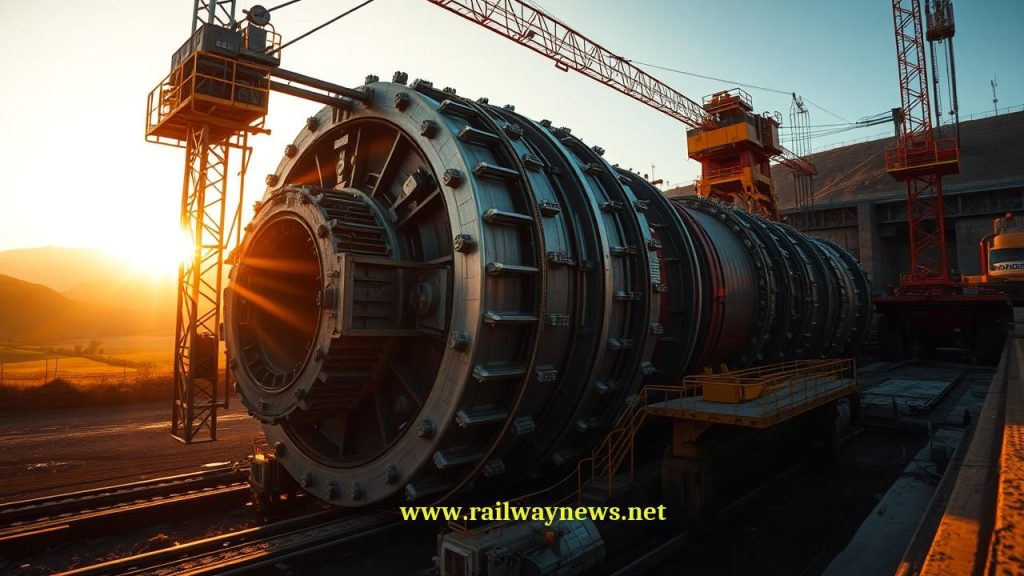
⚡ In Brief: HS2 launched its final tunnel boring machine, ‘Karen’, from Old Oak Common in London on 16 March, beginning a 4.5-mile excavation to complete the twin-bore Euston Tunnel for the UK’s high-speed rail network.
LONDON, UK – The final of 11 tunnel boring machines (TBMs) for the High Speed 2 (HS2) project began its drive in London on Monday, 16 March. The 198-metre long Herrenknecht TBM, named Karen, will excavate the second bore of the 4.5-mile Euston Tunnel from Old Oak Common station. The operation will remove 1.5 million tonnes of spoil and install 48,294 concrete segments.
What Is the Full Scope of This Project?
This project phase involves completing the twin-bore Euston Tunnel, the final bored tunnel section for the HS2 route between London and the West Midlands. The work, delivered by the Skanska Costain STRABAG joint venture, connects the new Old Oak Common station to the central London terminus at Euston. Strategically, Old Oak Common is a critical interchange within the London Infrastructure Framework, a plan identifying 51 priority projects designed to maintain London’s global competitiveness and support sustainable development. (Source: Public Sector Executive).
Key Project Data
| Parameter | Value |
|---|---|
| Project / Contract Name | HS2 Euston Tunnel Construction |
| Total Value | Not disclosed in announcement |
| Parties Involved | HS2 Ltd, Skanska Costain STRABAG JV, Herrenknecht AG, Avanti West Coast |
| Timeline / Completion | Final TBM launched 16 March 2024; completion date not specified |
| Country / Corridor | United Kingdom / Old Oak Common to Euston, London |
How Does This Compare to Similar Projects?
The capital-intensive nature of this single tunnelling drive contrasts sharply with other recent UK and international rail infrastructure investments. While this HS2 section involves immense civil engineering, the Mayor of the North East recently approved a £53.6 million package for a range of smaller transport improvements across the region. (Source: Public Sector Executive). For further scale comparison, a 2024 contract for structural design services across India’s East Central Railway network was valued at approximately £710,000 (Rs. 7.51 crore), demonstrating the significantly lower cost of design and consultancy work compared to heavy construction and tunnelling. (Source: EquityBulls).
Editor’s Analysis
The launch of the final TBM provides a tangible marker of progress for HS2 as it undergoes a “detailed reset” to regain control over costs and schedules. This milestone is critical for demonstrating momentum to government stakeholders and the public. However, it occurs amid a challenging global environment for large-scale rail infrastructure, with some authorities like Sound Transit in the US exploring cuts to expansion plans due to long-term affordability concerns. (Source: KOMO News). HS2’s ability to complete the Euston connection on a revised budget will be a key test of the UK’s commitment to megaprojects in an era of fiscal tightening.
FAQ
Q: Why is the TBM named Karen?
A: The machine is named after Karen Harrison, one of the first female train drivers in the UK, in keeping with the tradition of naming tunnelling machines after prominent women. Two current female drivers from Avanti West Coast were invited to mark the launch.
Q: What happens to the 1.5 million tonnes of excavated material?
A: The spoil is transported via conveyor from the tunnel to a logistics hub and then moved by rail. This material is repurposed for construction and environmental projects in Kent, Cambridgeshire, and Warwickshire, which is projected to remove over 135,000 truck journeys from roads.
Q: What is the purpose of the HS2 “reset”?
A: The reset, led by HS2 CEO Mark Wild, is a detailed review intended to sequence construction correctly and establish greater certainty over the project’s final costs and opening dates. This follows previous criticism regarding budget overruns and timeline delays.

Railway infrastructure, rolling stock and transport technologies specialist focused on global rail industry developments, high-speed rail systems, signaling technologies and freight transportation. Covering railway investments, public transport modernization, rail operations and international mobility projects across Europe, Asia and North America.
RELATED POSTS

October 1, 2026 7:09 am
United States regulators confirmed a September 30 deadline for the...

October 4, 2026 5:14 pm
Alstom secured a CA$4.7 billion order from VIA Rail Canada...

October 6, 2026 2:14 am
Union Pacific launched export rail shipments with Ferromex to deliver...

October 1, 2026 12:13 am
Illinois approved $1.5 billion annually for the Northern Illinois Transit...

October 1, 2026 6:10 am
Amtrak approved a System Expansion Committee on July 30 to...
October 1, 2026 3:12 am
Greenbrier confirmed Brian Comstock as new president and CEO effective...