
Northern Railway Confirms Rs 3.08 Lakh Saloon Puja Charter
Northern Railway confirmed a Rs 3,08,580 private saloon car charter used for a Hindu puja ceremony on the New Delhi–Mumbai Paschim Express route in 2025.
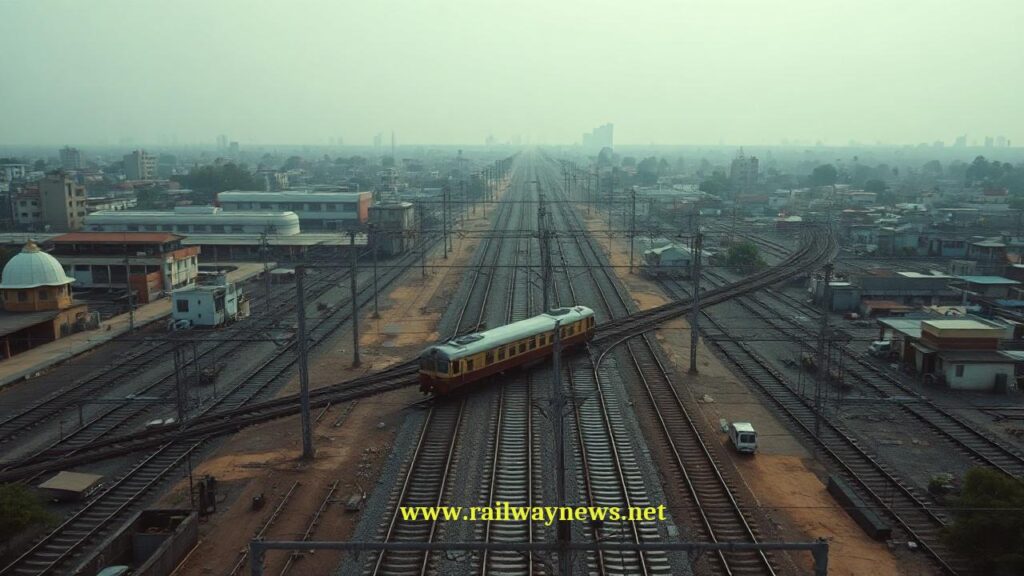
⚡ In Brief: Northern Railway confirmed a viral puja video showed a privately chartered saloon car booked through IRCTC for Rs 3,08,580 on the New Delhi–Mumbai Paschim Express route, not a regular passenger coach.
NEW DELHI, INDIA – A viral video of a Hindu puja ceremony conducted inside a moving train triggered Northern Railway to issue a formal clarification on 10 July 2025, stating the ritual occurred in a privately reserved saloon car—not a standard passenger coach. The private group paid Rs 3,08,580 (over EUR 2,800) for the one-way charter from New Delhi Station to Mumbai’s Bandra terminal, with the saloon attached to the Paschim Express.
What Does This Regulation Cover?
Indian Railways permits private commercial chartering of saloon cars—historically reserved for high-ranking officials and VIPs—through the Indian Railway Catering and Tourism Corporation (IRCTC), subject to availability and advance payment. The saloon railcar booked on 10 July includes air-conditioned sleeping quarters, a kitchen, a lounge, a dining area, and private restrooms, according to Northern Railway specifications. No standing regulation prohibits religious observances inside a fully reserved private saloon car, as the enclosed space is treated as a chartered private environment rather than a publicly accessible passenger area. Northern Railway did not disclose whether the group requested prior permission for the puja specifically, nor whether any internal review of the booking terms is underway.
Key Regulatory Data
| Parameter | Value |
|---|---|
| Regulation / Policy Name | IRCTC Commercial Saloon Car Charter Policy (Northern Railway jurisdiction) |
| Total Value | Rs 3,08,580 (approx. EUR 2,800+) for one-way New Delhi–Mumbai charter |
| Parties Involved | Northern Railway; IRCTC; undisclosed private group |
| Timeline / Completion | 10 July 2025 (one-way trip); no return or multi-trip booking disclosed |
| Country / Corridor | India — New Delhi to Mumbai (Western Railway corridor, Paschim Express route) |
How Does This Compare to Global Standards?
India’s saloon car charter model sits between two global approaches: the fully privatised luxury rail charter market in countries such as Japan, where JR Group’s “Train Suite Shiki-shima” suites sell for upwards of USD 8,000 per person for multi-day journeys, and the restricted-access government saloon systems in the United Kingdom, where Network Rail retains ministerial saloon cars that cannot be commercially chartered by private citizens (Source: JR East, 2024; Network Rail, 2023). At Rs 3,08,580 (approximately USD 3,700) for a group charter over roughly 1,400 km, India’s offering is substantially more accessible than Japan’s ultra-premium models but far less transparent than European open-access charter frameworks, where pricing and availability are published online. What remains undisclosed by Northern Railway is the total number of saloon cars available for commercial charter across the Indian Railways network, and whether demand has increased in 2025 alongside broader premiumisation trends. The Asia-Pacific region now accounts for 63% of global high-speed rail development activity, with India contributing 18% of that share through government-backed initiatives including 50 planned Namo Bharat AC trains and 100 new MEMUs announced for 2025 (Source: Business Research Insights, 2025).
Editor’s Analysis
The public backlash to the saloon car puja exposes a perception gap between Indian Railways’ commercial strategy and public understanding of its asset utilisation. While Northern Railway acted within existing IRCTC charter rules, the viral controversy signals that private use of heritage railway assets—however legally booked—can erode trust when passengers perceive inequitable access to public infrastructure. The Rs 3,08,580 transaction represents a niche premium revenue stream, yet the episode coincides with India’s broader 2025 rail investment push that includes joint ventures such as Texmaco Rail’s collaboration with RVNL and Frauscher Sensortechnik’s new Mysore manufacturing plant (Source: Fortune Business Insights, 2025). Indian Railways has not disclosed whether it will review saloon car booking transparency or require disclosure of onboard activities to pre-empt future controversies.
FAQ
Q: Can any private group book a saloon car on Indian Railways?
A: Yes, saloon cars can be commercially chartered through IRCTC by private groups, subject to availability and advance payment. The booking is not limited to government officials or VIPs, though the fleet size available for public charter has not been publicly disclosed by Indian Railways.
Q: How much does a private saloon car booking cost on Indian Railways?
A: The New Delhi–Mumbai one-way saloon car charter cost Rs 3,08,580 (over EUR 2,800) in July 2025. Pricing varies by route, distance, and specific saloon configuration, and IRCTC does not publish a standardised rate card for all corridors.
Q: Are religious ceremonies permitted inside reserved train compartments in India?
A: Inside a fully reserved private saloon car, no specific prohibition applies, as the space is treated as a chartered private environment. In regular passenger coaches accessible to the general public, Indian Railways’ conduct rules restrict activities that may disturb other passengers, though a formal policy on religious observances has not been publicly codified.

Railway infrastructure, rolling stock and transport technologies specialist focused on global rail industry developments, high-speed rail systems, signaling technologies and freight transportation. Covering railway investments, public transport modernization, rail operations and international mobility projects across Europe, Asia and North America.
RELATED POSTS

October 1, 2026 7:09 am
United States regulators confirmed a September 30 deadline for the...

October 8, 2026 1:15 pm
Alstom secured a €1bn contract to build 13 automated trains,...

October 4, 2026 5:14 pm
Alstom secured a CA$4.7 billion order from VIA Rail Canada...

October 1, 2026 12:13 am
Illinois approved $1.5 billion annually for the Northern Illinois Transit...

October 6, 2026 2:14 am
Union Pacific launched export rail shipments with Ferromex to deliver...

October 1, 2026 6:10 am
Amtrak approved a System Expansion Committee on July 30 to...