
How EN 16584-1 Boosts European Rail PRM Contrast
EN 16584-1 mandates visual contrast in railway vehicles, boosting safety and accessibility for all passengers. Learn how LRV ensures clear identification of critical features.
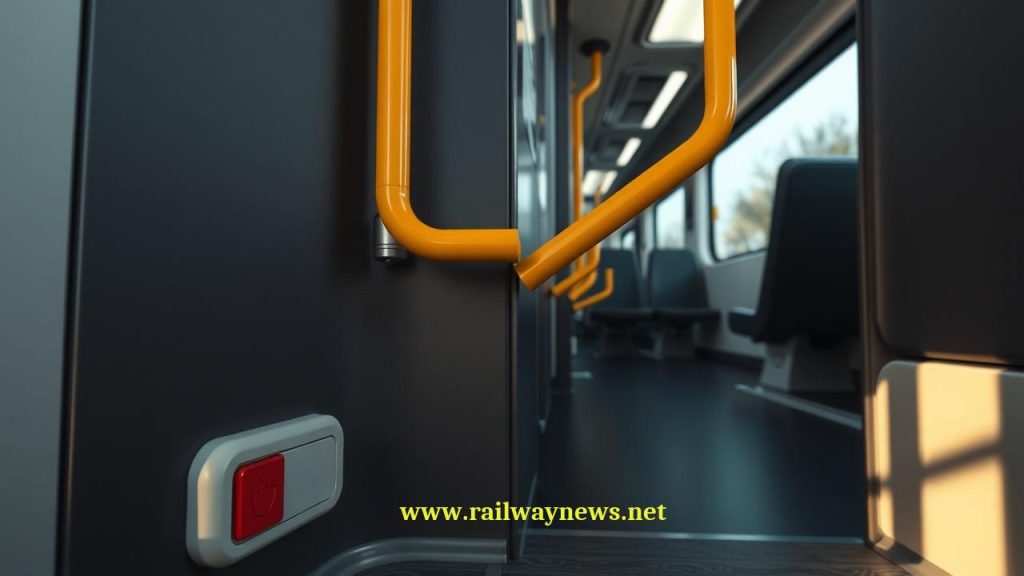
Understanding EN 16584-1: Contrast for PRM Accessibility in Rail Systems
EN 16584-1 is a European standard that forms part of the “Railway applications – Design for PRM use” series. This specific part, “Part 1: Contrast,” establishes the technical requirements for visual contrast on railway vehicles to ensure they are accessible and safe for Persons with Reduced Mobility (PRM), particularly those with visual impairments.
The core purpose of this standard is to enable passengers to easily identify and use key features within a train. By mandating specific levels of contrast between adjacent surfaces, the standard helps passengers distinguish crucial elements like doors, handrails, steps, and controls from their surroundings, thereby enhancing safety, orientation, and independent mobility.
Key Technical Principles of EN 16584-1
The standard’s requirements are built upon objective and measurable principles, primarily centered around the concept of Light Reflectance Value (LRV).
Light Reflectance Value (LRV)
Light Reflectance Value (LRV) is the fundamental metric used in EN 16584-1. It measures the proportion of visible light that is reflected by a surface when illuminated by a light source. LRV is expressed on a scale from 0 (representing a perfect absorbing black) to 100 (representing a perfect reflecting white). This value is crucial because it provides an objective way to quantify how light or dark a color appears, independent of hue.
- Measurement: LRV is measured using a spectrophotometer under standardized laboratory conditions to ensure consistency and comparability across different materials and manufacturers.
- Application: Designers and engineers use the LRV of materials (paint, textiles, plastics, flooring) to calculate the contrast between adjacent components.
Calculating and Applying Contrast
The standard does not prescribe specific colors but rather the required difference in LRV between two adjacent surfaces. This difference, often denoted as Delta LRV (ΔLRV), is what creates visual contrast. A higher ΔLRV means the two surfaces are more easily distinguishable.
The standard requires a minimum difference of 30 points of LRV for most general features. For critical safety-related elements, this requirement can be significantly higher to ensure they are exceptionally conspicuous.
Areas Where Contrast is Mandated
EN 16584-1 specifies numerous areas within a railway vehicle where contrast requirements must be met. The goal is to create a consistent and predictable environment for all users. Key areas include:
- Doors: The door frame or leaf must contrast with the adjacent vehicle wall (both interior and exterior) so that the entrance is clearly visible. Door operating controls (buttons) must also contrast with their immediate background.
- Steps and Stairs: The nosing of each step must have a contrasting band to clearly define the edge, reducing the risk of trips and falls.
- Handrails and Grab Poles: All handrails, vertical poles, and grab handles must have a strong contrast with their background surfaces to be easily located by passengers for support.
- Floors and Walls: There must be a clear contrast between the floor and the wall to help passengers with orientation and to define the usable floor space.
- Call-for-Aid Devices: Emergency and assistance buttons must be highly conspicuous, with significant contrast between the control itself, its surround, and the surface it is mounted on.
- Passenger Information Systems (PIS): While covered by other standards, the principles of contrast are essential for the legibility of text and symbols on screens.
Minimum LRV Difference Requirements: A Comparative Overview
The specific LRV difference required varies depending on the function and criticality of the component. The following table provides an illustrative comparison of typical minimum requirements as outlined in the standard.
| Component or Feature | Minimum Required LRV Difference (ΔLRV) | Rationale and Application |
|---|---|---|
| Door Controls (Buttons) vs. Surround | 30 points | Ensures that buttons for opening/closing doors are easy to locate and operate for all passengers. |
| Handrails / Grab Poles vs. Background | 30 points | Allows passengers, especially those with balance issues, to quickly find and use stability aids. |
| Step Edge Nosing vs. Tread | 30 points | Clearly defines the edge of each step to prevent missteps, particularly when ascending or descending. |
| Call-for-Aid Device vs. Mounting Surface | 30 points, and the device must not be of a metallic finish | Makes emergency or assistance controls highly visible and unambiguous in situations of need. The color should also differ. |
| Seat Headrest vs. Seat Body (Priority Seats) | 30 points | Helps to clearly demarcate designated priority seating for PRM, pregnant women, and the elderly. |
| Floor vs. Vertical Wall Surface | 30 points | Helps define the physical boundaries of the passenger space, aiding orientation and movement. |
Practical Design and Compliance Considerations
Material Selection
Compliance with EN 16584-1 goes beyond just color choice. The material’s finish—such as matte, satin, or gloss—can affect how light is reflected and may cause glare, which can reduce effective contrast for a visually impaired person. Matte and low-sheen finishes are generally preferred as they provide more consistent LRV readings under various lighting conditions.
Lighting Conditions
While LRV is measured in a lab, its real-world effectiveness depends on the ambient lighting inside the vehicle. Poor or inconsistent lighting can undermine even well-designed contrast. Therefore, the lighting design (as specified in EN 16585-2) must work in concert with the material choices to ensure the required contrasts are perceptible by passengers at all times.
Maintenance and Durability
The initial LRV of a material can degrade over time due to wear, dirt, and UV exposure. It is the responsibility of the vehicle manufacturer and operator to select durable materials and implement cleaning regimes that ensure contrast levels remain compliant throughout the vehicle’s operational life.
Conclusion: Fostering Inclusive Rail Travel
EN 16584-1 is a critical standard for the railway industry, translating the principles of universal design into concrete, measurable engineering requirements. By focusing on visual contrast, it directly addresses a key barrier to accessibility for millions of passengers. Adherence to this standard is not merely a matter of regulatory compliance; it is a fundamental step toward creating a public transport network that is safer, more intuitive, and genuinely inclusive for everyone.

Railway infrastructure, rolling stock and transport technologies specialist focused on global rail industry developments, high-speed rail systems, signaling technologies and freight transportation. Covering railway investments, public transport modernization, rail operations and international mobility projects across Europe, Asia and North America.