
Global Rail Modernization: Partnerships & Cutting-Edge Tech
Revolutionizing rail! Global partnerships and cutting-edge tech are modernizing high-speed networks. Discover how!
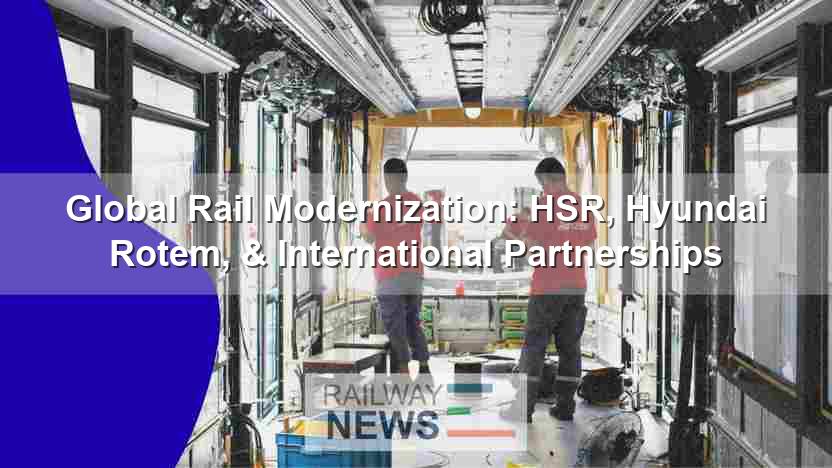
The global rail industry is undergoing a period of significant transformation, driven by technological advancements, increasing demand for sustainable transportation solutions, and the need to improve infrastructure resilience. This article explores the key aspects of this modernization, focusing on the crucial role of international partnerships and the potential impact on global freight and passenger networks. We will examine the challenges and opportunities presented by this evolution, highlighting critical factors influencing investment decisions and the integration of cutting-edge technologies. From the development of high-speed rail systems to the implementation of innovative maintenance strategies, the future of rail is marked by a dynamic interplay between technological advancements and strategic partnerships. This transformation is not simply about upgrading existing infrastructure, but about creating a more efficient, sustainable, and interconnected rail network capable of serving the demands of the 21st century.
The Rise of High-Speed Rail: Pushing Technological Boundaries
High-speed rail (HSR) is no longer a futuristic concept but a tangible reality, pushing technological boundaries to improve travel times and transport efficiencies. High-speed trainsets necessitate advanced materials, sophisticated control systems, and optimized track designs. Countries are increasingly investing in HSR networks to connect major cities and regional hubs, aiming for improved travel times, reduced carbon emissions, and increased economic connectivity. Additionally, the integration of advanced signaling and communication systems, such as GSM-R and CBTC, are critical for enhancing safety and reliability on these high-speed lines. These developments are not isolated efforts, but represent a global push towards interoperable HSR infrastructure, enabling seamless travel across international borders.
Globalization of Railway Infrastructure Projects: International Partnerships
The increasing complexity of railway infrastructure projects necessitates collaborative approaches. The involvement of international companies brings diverse expertise, technology, and financial resources. This is exemplified by the growing trend of international consortia forming to undertake large-scale projects, as exemplified by the expanding global rail partnerships that facilitate the sharing of best practices and the development of standardized solutions across different railway systems. The ongoing modernization of rail infrastructure requires significant capital investment, often driving collaborations between governments and private sector partners to access the necessary resources for large-scale projects.
The Impact of Technological Advancements on Maintenance and Safety
Technology is revolutionizing railway maintenance and safety. Predictive maintenance strategies, enabled by data analytics and sensor technology, allow for proactive interventions, minimizing downtime and preventing critical failures. Real-time monitoring systems for track conditions and train performance enhance safety by identifying potential risks early. The integration of artificial intelligence (AI) is enabling more sophisticated predictive models for maintenance schedules, leading to significant improvements in operational efficiency and service reliability. This proactive approach not only reduces maintenance costs but also improves the safety of rail operations.
The Hyundai Rotem Rail Contract in Iran: A Case Study in International Collaboration
The recent Hyundai Rotem rail contract in Iran underscores the ongoing importance of international partnerships in the rail industry. This project represents an example of how international cooperation can lead to the construction of modern rail infrastructure. This project’s success will depend not only on Hyundai Rotem’s engineering capabilities but also on the Iranian government’s commitment to implementing the project in a manner that aligns with international standards. Such collaborations demonstrate a growing recognition of the pivotal role that international alliances play in fostering modernization and sustainable development within the railway sector.
Conclusions
The rail industry is evolving rapidly, driven by technological advancements, environmental concerns, and growing global demand for efficient transportation. High-speed rail networks are expanding internationally, demanding interoperability and harmonized infrastructure standards. International collaboration, exemplified by consortia and partnerships, is crucial for financing, implementing, and sharing best practices in these complex infrastructure projects. The use of cutting-edge technologies like AI-driven predictive maintenance and real-time monitoring significantly enhances safety and efficiency. These factors are transforming railway operations, making them more resilient, sustainable, and interconnected. The Hyundai Rotem rail contract in Iran exemplifies this global trend, highlighting the potential of international partnerships to contribute to the development of modern railway systems.
Moving forward, the continued modernization of rail networks hinges on sustained investment in infrastructure upgrades, technological integration, and the fostering of international partnerships. Ultimately, the future of rail depends on a strategic approach that balances innovation with sustainability, ensuring efficient, safe, and reliable transport for years to come. The successful implementation of such strategies will be crucial for meeting the growing demand for reliable transportation systems around the world, ensuring economic growth, and reducing environmental impact.
You might be interested in:
Last April 2019, we covered South Africa’s railway modernization. Click here to read – Siemens Upgrades South Africa’s Rail Network

Railway infrastructure, rolling stock and transport technologies specialist focused on global rail industry developments, high-speed rail systems, signaling technologies and freight transportation. Covering railway investments, public transport modernization, rail operations and international mobility projects across Europe, Asia and North America.
RELATED POSTS

October 8, 2026 1:15 pm
Alstom secured a €1bn contract to build 13 automated trains,...

October 4, 2026 5:14 pm
Alstom secured a CA$4.7 billion order from VIA Rail Canada...

October 5, 2026 6:12 pm
AECOM and Jacobs secured a contract in September 2026 to...

October 1, 2026 12:13 am
Illinois approved $1.5 billion annually for the Northern Illinois Transit...

October 4, 2026 11:08 pm
Sound Transit confirmed the September 30 opening of Seattle Pinehurst...
October 5, 2026 1:13 pm
New York MTA confirmed a late 2026 DEIS release for...