
Gateway Development Commission Opens Weehawken Community Center
GDC opened a second community engagement center in Weehawken, NJ, for the $16B Hudson Tunnel Project, expanding its public outreach already to a second site.
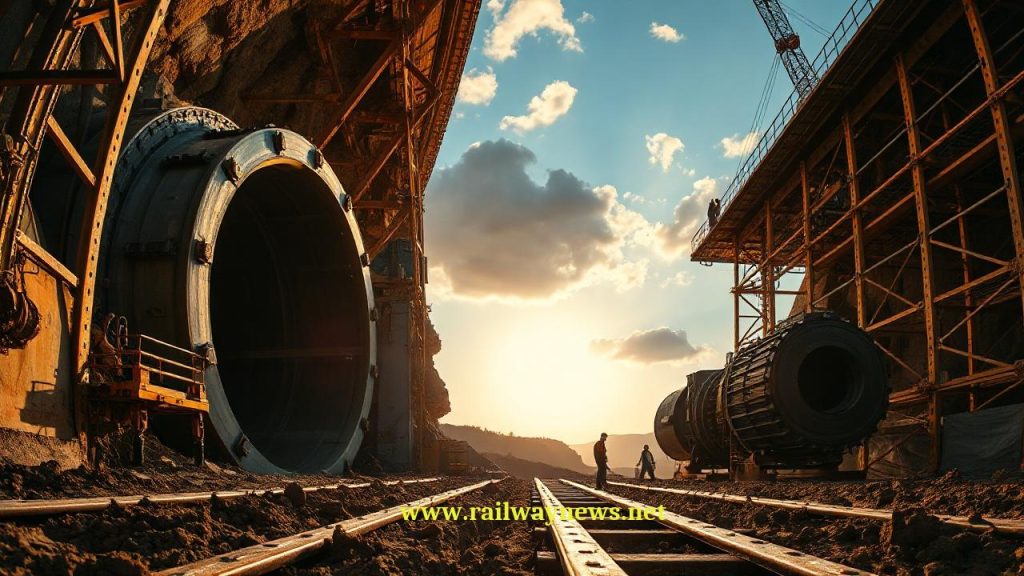
⚡ In Brief: The Gateway Development Commission opened a community engagement center in Weehawken, New Jersey, for the $16 billion Hudson Tunnel Project, adding a second public outreach hub alongside an existing New York location.
WEEHAWKEN, N.J. – The Gateway Development Commission (GDC) inaugurated its New Jersey Community Engagement Center in Weehawken, directly adjacent to active construction areas of the $16 billion Hudson Tunnel Project. The center joins an existing New York outreach hub, offering the public interactive exhibits, 3-D models, digital maps, and staff available to answer questions about the massive infrastructure undertaking.
What Is the Full Scope of This Project?
The Hudson Tunnel Project will construct a new two-track rail tunnel under the Hudson River and fully rehabilitate the century-old existing North River Tunnel, which carries Amtrak and NJ Transit passenger trains. The combined work is designed to double peak-hour rail capacity and eliminate chronic delays caused by the single, damaged tube. A critical enabling component is a comprehensive signalling and communications upgrade, aligning with global railway digitalisation trends: the worldwide railway signalling market was valued at $4.68 billion in 2025 and is projected to reach $10.14 billion by 2034, with North America holding a 38% market share (Source: Fortune Business Insights, 2025).
Key Project Data
| Parameter | Value |
|---|---|
| Project / Contract Name | Hudson Tunnel Project |
| Total Value | $16 billion (estimated) |
| Parties Involved | Gateway Development Commission, U.S. DOT, Amtrak, NJ Transit, Port Authority of NY & NJ |
| Timeline / Completion | New tunnel planned to open in 2035, rehabilitation of North River Tunnel to be completed by 2038. |
| Country / Corridor | United States, Northeast Corridor (New York–New Jersey) |
How Does This Compare to Similar Projects?
The Hudson Tunnel Project’s $16 billion price tag places it among the most expensive transit infrastructure initiatives in U.S. history. Metropolitan Transportation Authority’s East Side Access project, which brought Long Island Rail Road trains into Grand Central Madison via new tunnels, cost $11.1 billion (Source: MTA, 2023). The California High-Speed Rail program, a fully grade-separated intercity network, has an estimated total cost exceeding $100 billion (Source: California High-Speed Rail Authority, 2024). Globally, London’s Crossrail (Elizabeth Line) was delivered at £18.9 billion for a 118-km cross-city route, demonstrating comparable cost scales for major tunnel-based rail improvements (Source: Crossrail Ltd., 2022). No direct one-to-one comparison of the GDC’s twin-center community engagement model was publicly available, yet Crossrail similarly operated visitor centres and exhibition spaces throughout construction.
Editor’s Analysis
However, while GDC has publicly committed to a clear timeline—with the new tunnel planned to open in 2035 and the rehabilitation of the existing North River Tunnel to be completed by 2038—the adjacent freight rail consolidations, such as the STB’s scrutiny of the Union Pacific–Norfolk Southern merger proposal requested in May 2026, highlight the regulatory complexity facing all rail sectors .
FAQ
Q: Where exactly are the two community engagement centers?
A: One center is located in Weehawken, New Jersey, near active Hudson Tunnel Project construction sites; the other is in New York. Specific street addresses are available on the Gateway Development Commission’s official website.
Q: What is the official completion date for the new tunnel and rehabilitation?
A: The new tunnel is planned to go into service in 2035, and the full rehabilitation of the existing North River Tunnel will be completed in 2038.
Q: How will the project change service for Amtrak and NJ Transit riders?
A: The new tunnel will provide a redundant river crossing, enabling the existing tunnel to be taken out of service for full repairs without shutting down the Northeast Corridor. This will increase peak capacity and significantly reduce weather- and age-related disruptions once both tubes are operational.

Transport and railway industry editor covering global rail infrastructure, sustainable mobility, urban transit systems and next-generation railway technologies with a focus on accessible and industry-focused reporting.
RELATED POSTS

October 8, 2026 1:15 pm
Alstom secured a €1bn contract to build 13 automated trains,...

October 1, 2026 7:09 am
United States regulators confirmed a September 30 deadline for the...

October 8, 2026 12:18 pm
Siemens Mobility signed an agreement with VinSpeed to supply 350...

October 4, 2026 5:14 pm
Alstom secured a CA$4.7 billion order from VIA Rail Canada...

October 5, 2026 6:12 pm
AECOM and Jacobs secured a contract in September 2026 to...

October 1, 2026 12:13 am
Illinois approved $1.5 billion annually for the Northern Illinois Transit...