
Future of Emscher Express: Alpha Trains, VIAS Rail Leasing 14 Flirt1
Alpha Trains and VIAS Rail to modernize Emscher Express fleet, leasing 14 Flirt1 EMUs for regional service.
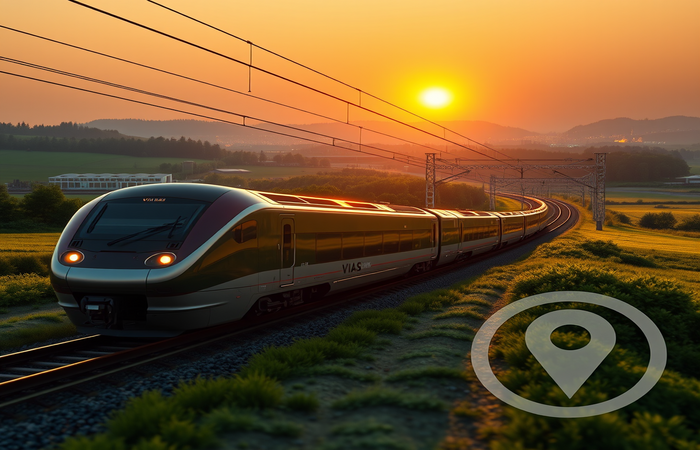
Alpha Trains and VIAS Rail to Modernize and Expand Emscher Express Fleet
In a move poised to enhance regional rail service in North Rhine-Westphalia, Alpha Trains and VIAS Rail (VIAS) have finalized a leasing agreement for 14 five-car Flirt1 electric multiple units (EMUs) manufactured by Stadler. These trains, slated to begin operations in December 2026, will serve the Emscher Express Network (ENE), a project tendered by the transport authorities Verkehrsverbund Rhein-Ruhr (VRR) and Nahverkehr Westfalen-Lippe (NWL). This agreement, encompassing both the transport contract and the leasing period, will extend until December 2030. The project’s focus lies on modernizing existing rolling stock, expanding capacity, and bolstering operational efficiency on the RE 3 and RE 41 lines. This article explores the strategic implications of this agreement, examining the planned upgrades, fleet utilization strategy, and the collaborative approach of the involved parties.
Revitalizing the Rolling Stock: A Detailed Refurbishment
Prior to their deployment, the Flirt1 EMUs will undergo a detailed refurbishment to ensure passenger comfort and operational reliability. The program includes intensive cleaning, the installation of new upholstery for passenger seats, and the replacement of interior fittings. This commitment to passenger experience signifies a key aspect of the contract. Additionally, outdated technical components will be replaced, extending the operational lifespan of the trains. These upgrades are vital for maintaining the reliability and performance of the EMUs throughout the operational period and underscore a commitment to providing a superior travel experience for passengers within the framework of the ENE concession.
Expanding Capacity and Network Coverage: Serving Multiple Lines
VIAS will deploy the modernized Flirt1 EMUs across two key regional rail lines. Initially, they will operate on the RE 3 line, the Rhine-Emscher Express, which connects Düsseldorf with Hamm, via Duisburg, Oberhausen, Gelsenkirchen, and Dortmund, a route currently serviced by the same type of rolling stock. Further expansion is planned, with the EMUs also set to be integrated onto the RE 41 line, the Vest-Ruhr-Express, a route connecting Bochum and Haltern am See via Recklinghausen. The introduction of these refurbished trains is expected to provide significantly increased seating capacity on both lines, addressing the growing demand for regional rail services and further enhancing passenger satisfaction. The dual-line strategy also fosters efficient fleet utilization, a key factor in promoting sustainable passenger transport.
Sustainable Mobility: Alpha Trains’ Commitment to Reuse and Innovation
The strategic partnership between Alpha Trains and VIAS underscores a commitment to sustainable practices. The decision to refurbish existing vehicles, rather than procuring entirely new rolling stock, aligns with broader industry goals of reducing waste and promoting cost-effectiveness. Bernhard Holzer, Managing Director of Alpha Trains Europa GmbH, highlighted this aspect, stating that the approach reflects a “valuable contribution to sustainable and cost-effective mobility in regional rail transport.” This reuse of existing assets not only reduces the environmental footprint, but also provides faster deployment of the rolling stock compared to manufacturing timelines for new units, allowing VIAS to meet the service requirements more rapidly.
Collaborative Success: VIAS’s Perspective on the Partnership
VIAS’s success in operating the Emscher Express Network will hinge significantly on the reliability of its fleet. Thomas Eßer, a member of the VIAS management board, emphasized the importance of reliable vehicles for the project’s success, lauding the partnership with Alpha Trains. “With Alpha Trains, we have a trusted partner who not only provides expert support throughout this project but also offered the ideal addition to our existing FLIRT 1 fleet,” he commented. This partnership approach highlights the crucial role of strategic alliances in ensuring operational excellence and the seamless integration of new and upgraded rolling stock into an existing network.
Conclusion
The Alpha Trains and VIAS Rail partnership for the Emscher Express Network represents a significant development in regional rail transport in North Rhine-Westphalia. The modernization of the Flirt1 EMUs, coupled with their deployment on the RE 3 and RE 41 lines, promises enhanced passenger comfort and increased operational capacity. This initiative is strategically vital, as the project exemplifies a commitment to sustainability, cost-effectiveness, and fleet efficiency within the regional rail sector. The collaboration between Alpha Trains and VIAS Rail provides a blueprint for future projects. This collaborative approach, combined with the focus on refurbishment and fleet optimization, positions VIAS strongly in an industry increasingly geared towards meeting passenger demands while minimizing environmental impact. The Emscher Express Network, therefore, represents a positive move for the railway industry.
Company Summary
Alpha Trains is a leading rolling stock leasing company that focuses on the rail sector in Europe. With a large fleet of modern trains and locomotives, the company provides financing and technical support for passenger and freight operators. Alpha Trains operates a business model focused on sustainability, and partnering with operators to extend the life of existing assets, by performing refurbishments, to keep the cost of providing service down, while improving passenger satisfaction.
VIAS Rail (VIAS) is a German railway company specializing in regional and long-distance passenger transport. With a focus on passenger services, VIAS operates routes across several regions in Germany, and has significant experience with operating FLIRT EMUs. Their commitment to passenger satisfaction and operational efficiency makes them a crucial player in the region’s public transport system.

Railway infrastructure, rolling stock and transport technologies specialist focused on global rail industry developments, high-speed rail systems, signaling technologies and freight transportation. Covering railway investments, public transport modernization, rail operations and international mobility projects across Europe, Asia and North America.
RELATED POSTS

October 8, 2026 1:15 pm
Alstom secured a €1bn contract to build 13 automated trains,...

October 1, 2026 7:09 am
United States regulators confirmed a September 30 deadline for the...

October 4, 2026 5:14 pm
Alstom secured a CA$4.7 billion order from VIA Rail Canada...

October 1, 2026 12:13 am
Illinois approved $1.5 billion annually for the Northern Illinois Transit...

October 1, 2026 6:10 am
Amtrak approved a System Expansion Committee on July 30 to...

October 5, 2026 1:13 pm
New York MTA confirmed a late 2026 DEIS release for...