
Estonian Railways: Tartu Railway Line Electrification Project
Estonian Railways is electrifying the Tartu line! This EUR 500 million project will bring faster, safer, and more sustainable rail transport by 2026.
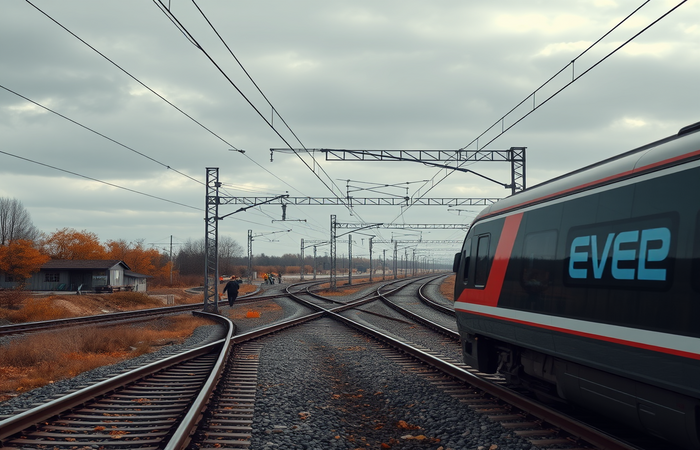
Estonia, October 26, 2023 – Estonian Railways (EVR) has announced the revised schedule for the ambitious electrification and reconstruction of the Tartu railway line. This project is a pivotal element of Estonia’s extensive investment strategy, designed to usher in a new era of faster, safer, and more sustainable rail transport. The detailed modernization efforts, with a budget of EUR 500 million, are aimed at transforming the existing infrastructure to accommodate high-speed electric trains, thereby significantly improving travel times and reducing the environmental footprint of the transport sector. This initiative is not merely a technological upgrade; it’s a strategic move aligning with Estonia’s broader goals of enhancing connectivity, boosting economic development, and contributing to the reduction of carbon emissions. The project has faced some complexities and adjustments, including accommodating diverse operational needs and ensuring optimal safety standards, which have necessitated a revised timeline. The goal is to have electric trains operating at speeds of up to 160 km/h between Tallinn and Tartu by 2026.
Transforming the Tartu Railway Line: A Detailed Overview
The core of the project lies in the complete electrification and detailed reconstruction of the Tartu railway line. This entails not only the installation of overhead lines and power supply systems but also significant upgrades to the track infrastructure, signaling systems, and stations. The project is a complex undertaking requiring meticulous planning and execution. The goal is to create a modern railway corridor that supports high-speed electric train operations. The primary objectives of the project encompass several key areas:
- Electrification: Installing a 25 kV AC overhead contact line (OCL) system to enable electric train operations.
- Track Reconstruction: Upgrading the track geometry, ballast, and drainage to accommodate higher speeds and heavier axle loads.
- Signaling and Control Systems: Modernizing the signaling and traffic management systems to ensure safety and optimize train movements.
- Station Upgrades: Enhancing passenger facilities at stations along the route, including platforms, waiting areas, and accessibility features.
The project’s scope extends beyond the immediate railway infrastructure. It is also expected to have positive impacts on the environment. The switch to electric trains will significantly reduce greenhouse gas emissions, contributing to Estonia’s climate goals.
Addressing Operational Challenges and Enhancing Safety
The project has faced challenges, leading to adjustments in the original schedule. These challenges primarily relate to integrating the construction work with ongoing railway operations, ensuring safety, and accommodating various operational requirements. These include:
- Minimizing Disruptions: Minimizing restrictions to regular train traffic to accommodate major events in southern Estonia, NATO exercises, and freight transport.
- Pedestrian Safety: Implementing construction to improve pedestrian safety and increase permitted train speeds on the Kiltsi–Rakke–Vägeva section.
- Safety Standards: Ensuring compliance with the most stringent safety standards and regulations throughout all phases of the project.
- Traffic Control Systems: Overhauling the entire railway traffic control system to accommodate electric operations.
To mitigate these challenges, Estonian Railways has adopted a phased approach to construction, carefully coordinating work schedules to minimize disruption to passengers and freight services. Robust safety protocols have been implemented at construction sites.
Financial Framework and Strategic Objectives
The EUR 500 million investment in the Tapa–Tartu upgrade is a substantial undertaking, underpinned by a multi-faceted funding structure. Key funding sources include:
- EU Funds: EUR 271 million from European Union (EU) sources, reflecting the project’s alignment with EU transport and climate objectives.
- Estonian State Budget: EUR 117 million allocated from the Estonian state budget, demonstrating the government’s commitment to railway modernization.
- Estonian Railways’ Contribution: EUR 112 million from Estonian Railways’ own resources, showcasing the company’s dedication to the project.
Beyond financial considerations, the Tapa–Tartu upgrade aligns with Estonia’s broader strategic objectives:
- Doubling Passenger Numbers: The project is a cornerstone of Estonia’s ambition to double domestic rail passenger numbers from 8 million to 20 million by 2035.
- Boosting Regional Connectivity: Enhancing connectivity between Tallinn and Tartu, fostering economic growth, and improving the quality of life for residents in the region.
- Supporting Climate Goals: Contributing to the reduction of carbon emissions from the transport sector, in line with Estonia’s commitment to environmental sustainability.
Looking Ahead: The Future of Estonian Railways
The completion of the modernized Tapa–Tartu corridor will mark a substantial leap forward for Estonia’s rail network, with positive implications for service quality and climate impact. The introduction of electric trains on the route is set to reduce travel times, enhance passenger comfort, and contribute to a cleaner environment. The project’s success will serve as a model for further railway modernization projects in Estonia. The enhanced capacity of the railway network, with faster and more frequent services, is expected to attract a growing number of passengers, leading to a shift from road to rail transport. This will, in turn, contribute to the reduction of traffic congestion and emissions, creating a more sustainable transportation system. The strategic focus on sustainability and innovation, alongside the implementation of advanced technologies, positions Estonian Railways as a leader in the modernization of rail transport infrastructure. The project will drive economic growth, create employment opportunities, and enhance Estonia’s position as a forward-thinking, environmentally conscious nation. The Estonian Railways’ commitment to this ambitious project underscores its dedication to providing a modern, efficient, and sustainable transportation network for the country.
Companies involved:
- Estonian Railways (EVR): As the primary entity responsible for the project, EVR leads the planning, implementation, and management of the railway modernization initiative.
- Various Contractors: The project involves the participation of several contractors specializing in railway construction, electrification, signaling systems, and related engineering services. These companies are responsible for delivering specific components of the project, such as track reconstruction, overhead line installation, and station upgrades.

Railway infrastructure, rolling stock and transport technologies specialist focused on global rail industry developments, high-speed rail systems, signaling technologies and freight transportation. Covering railway investments, public transport modernization, rail operations and international mobility projects across Europe, Asia and North America.
RELATED POSTS

October 8, 2026 1:15 pm
Alstom secured a €1bn contract to build 13 automated trains,...

October 1, 2026 7:09 am
United States regulators confirmed a September 30 deadline for the...

October 8, 2026 12:18 pm
Siemens Mobility signed an agreement with VinSpeed to supply 350...

October 4, 2026 5:14 pm
Alstom secured a CA$4.7 billion order from VIA Rail Canada...

October 1, 2026 12:13 am
Illinois approved $1.5 billion annually for the Northern Illinois Transit...

October 5, 2026 6:12 pm
AECOM and Jacobs secured a contract in September 2026 to...