
Delhi Metro Opens GoA4 Line 7 And EUR312M Railcars India
India’s Delhi Metro inaugurated GoA4 Line 7, now its longest driverless route, and contracted 312 new EUR312M railcars.
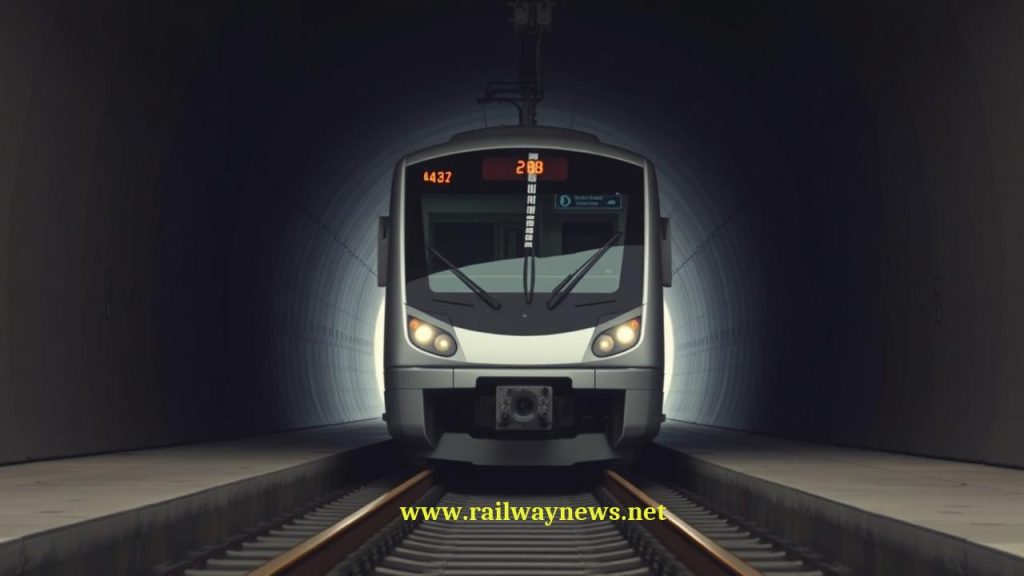
⚡ In Brief: Indian Prime Minister Narendra Modi inaugurated two extensions for the Delhi Metro’s Line 7 and Line 8, which will see Line 7 become India’s longest line with Grade of Automation 4 (GoA4) operation, supported by a EUR312 million contract for 312 new railcars.
DELHI, INDIA – On March 8, Indian Prime Minister Narendra Modi officially inaugurated two extensions of the Delhi Metro network, adding new sections to Line 7 (Pink Line) and Line 8 (Magenta Line). The projects include the delivery of 312 driverless train cars manufactured in India as part of Phase IV of the metro’s expansion. The event also saw the launch of planning for three new corridors under the network’s Phase-5A extension.
What Is the Full Scope of This Project?
The project encompasses new operational sections, rolling stock procurement, advanced signalling, and long-term maintenance. The inaugurated sections are Majlis Park–Maujpur Babarpur on Line 7 and Deepali Chowk–Majlis Park on Line 8, which creates new interchanges with the Yellow, Red, and Pink lines. A separate EUR312 million contract covers 312 metro cars, while a 10-year maintenance agreement for Lines 1 and 2 was also recently secured. The Line 7 extension has been equipped with the Urbalis Flo CBTC system to enable unattended train operation (GoA4), making it the first circular line in the network.
Key Project Data
| Parameter | Value |
|---|---|
| Project / Contract Name | Delhi Metro Phase IV Extensions (Lines 7 & 8) & Associated Contracts |
| Total Value | EUR312 Million (for 312 railcars); Total project value not disclosed |
| Parties Involved | Government of India, Delhi Metro Rail Corporation (DMRC) |
| Timeline / Completion | Inaugurated March 8; Future extension timelines not disclosed |
| Country / Corridor | India / Delhi |
How Does This Compare to Similar Projects?
Comparable public data for similar integrated metro expansion projects, including rolling stock and signalling, was not available at the time of publication. The Delhi Metro’s Phase IV, estimated at over INR 46,800 crore (approx. EUR 5.1 billion) in 2019, is one of the largest ongoing urban rail projects in the country. The scale is comparable to other major metropolitan expansions like the Mumbai Metro Line 3, which has a projected cost of over INR 33,000 crore (approx. EUR 3.6 billion). (Source: Press Information Bureau, Government of India, 2019)
Editor’s Analysis
The implementation of GoA4 driverless technology on the Pink Line is a strategic move that aligns with broader national trends in rail modernization. This project serves as a critical domestic proof-of-concept for high-automation systems at a time when the Indian railway signalling market is forecast for significant growth. The emphasis on 100% local manufacturing for the rolling stock further supports the government’s “Make in India” policy, positioning domestic firms to compete for future urban mobility contracts across the country. (Source: Market Research Reports, 2024)
FAQ
Q: What makes the newly extended Line 7 (Pink Line) significant?
A: With this commissioning, the Pink Line becomes the Delhi Metro’s first circular line. It is also set to be the longest metro line in India operating with Grade of Automation 4 (GoA4), the highest level of unattended train operation.
Q: What are the technical specifications of the new trains?
A: The 312 new cars are designed for driverless operation with a safety speed of 95 km/h and an operational speed of 85 km/h. They are manufactured entirely in India and designed for high recyclability and low energy consumption.
Q: What is the primary benefit of the Line 8 extension?
A: The current section provides critical interchange capabilities between three major lines: the Yellow Line at Badli, the Red Line at Madhuban Chowk, and the Pink Line at Majlis Park. Future extensions are planned to further connect to RK Ashram and Janakpuri.

Railway infrastructure, rolling stock and transport technologies specialist focused on global rail industry developments, high-speed rail systems, signaling technologies and freight transportation. Covering railway investments, public transport modernization, rail operations and international mobility projects across Europe, Asia and North America.
RELATED POSTS

October 1, 2026 7:09 am
United States regulators confirmed a September 30 deadline for the...

October 8, 2026 1:15 pm
Alstom secured a €1bn contract to build 13 automated trains,...

October 4, 2026 5:14 pm
Alstom secured a CA$4.7 billion order from VIA Rail Canada...

October 1, 2026 12:13 am
Illinois approved $1.5 billion annually for the Northern Illinois Transit...

October 6, 2026 2:14 am
Union Pacific launched export rail shipments with Ferromex to deliver...

October 1, 2026 6:10 am
Amtrak approved a System Expansion Committee on July 30 to...