
Croatia HŽPP Secures Six Hybrid Trains for Zagreb-Split
HŽPP secured a €57.3 million contract for six hybrid trains to modernize Croatia’s Zagreb–Split line.
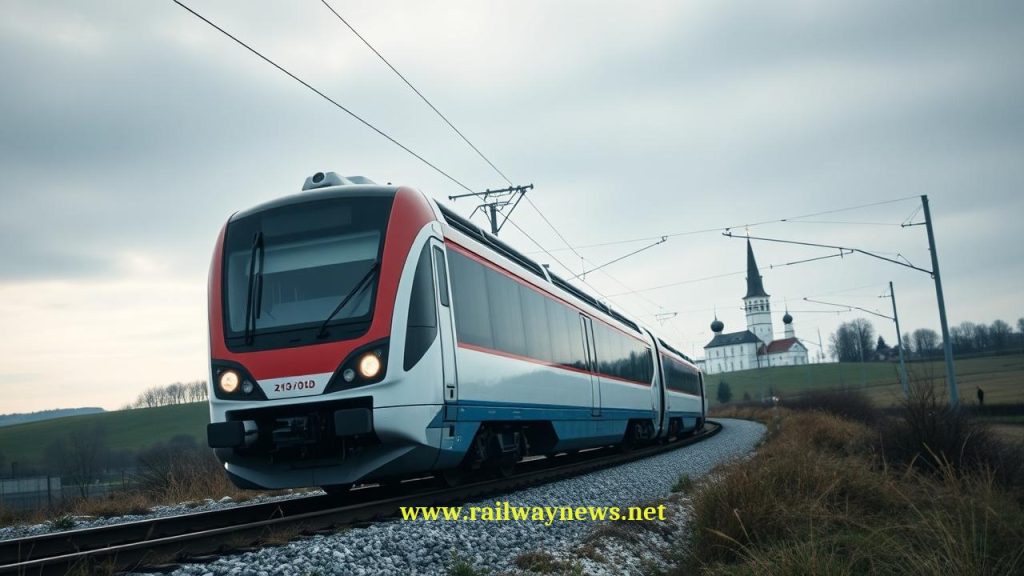
⚡ In Brief: Croatia’s national operator HŽPP has unveiled the first of six new hybrid diesel-electric multiple units from manufacturer Končar, part of a €57.3 million contract financed by the EIB to modernize services on the partially-electrified 429-km Zagreb–Split line.
ZAGREB, CROATIA – On March 16, Croatian operator HŽ Putnički prijevoz (HŽPP) presented new hybrid multiple units built by Končar Electric Vehicles for the Zagreb–Split route. The €57.3 million contract covers six diesel-electric units, with the first scheduled for delivery in July 2026. The project is financed through a European Investment Bank (EIB) loan.
What Does This Contract Cover?
The agreement covers the development, production, and delivery of six electric-diesel multiple units specifically designed for the Zagreb–Split line. This initial order is valued at €57.3 million and is part of a larger fleet renewal that includes 19 other trains currently in production for HŽPP at the Končar facility. The source material presents conflicting delivery timelines, but the most specific date provided indicates the first unit will be delivered in July 2026, with one train delivered per month thereafter. An additional five units have also been contracted for delivery in 2027 to serve routes connecting Osijek, Rijeka, and Pula.
Key Contract Data
| Parameter | Value |
|---|---|
| Contract Name | HŽPP Hybrid Multiple Unit Procurement |
| Total Value | €57.3 million (for initial six units) |
| Parties Involved | HŽPP (operator), Končar (manufacturer), European Investment Bank (financier) |
| Timeline / Completion | First unit July 2026; all six by end of 2026; five additional units in 2027 |
| Country / Corridor | Croatia / Zagreb–Split |
How Does This Compare to Similar Contracts?
The unit cost for each Končar hybrid train under this contract is approximately €9.55 million. This price point is competitive for specialized bi-mode rolling stock in Europe, which often serves as a bespoke solution for partially electrified networks. For comparison, a recent Serbian Railways contract for 18 standard electric multiple units from Stadler was valued at €112 million, or about €6.2 million per train, highlighting the price premium for dual-traction technology (Source: Stadler Rail, 2021). Larger orders, such as the UK’s Abellio East Anglia procurement of 38 Stadler FLIRT bi-mode trains, benefit from economies of scale but still represent a significant investment, demonstrating the capital-intensive nature of fleet modernization. The specific power output of the diesel and electric traction packages for the Končar units was not disclosed.
Editor’s Analysis
This procurement represents a pragmatic strategy for HŽPP, addressing the critical infrastructure gap on the Zagreb–Split corridor without waiting for the full, and costly, electrification of the mountainous 326-km Oštarije–Split section. The use of bi-mode technology is an established trend across Europe for decarbonizing services and improving operational flexibility on lines with incomplete electrification. While the operator’s goal to double passenger numbers from 250,000 to 500,000 is ambitious, the reported baseline of 250,000 passengers “daily” is likely a misstatement in the source material, with an annual figure being far more plausible for this route. The investment underscores Croatia’s use of EIB and EU-linked financing to advance its transport infrastructure in line with broader European Union objectives for sustainable mobility (Source: European Commission, Transport Policy).
FAQ
Q: Why does Croatia need hybrid trains for the Zagreb-Split line?
A: The 429-km line is only electrified for the first 103 km from Zagreb. These hybrid trains can run on electric power where available and switch to their diesel engines for the non-electrified majority of the route, enabling a seamless journey.
Q: What are the key specifications of the new trains?
A: The low-floor trains will have a maximum speed of 160 km/h and a capacity of 150 seats (18 first class, 132 second class). Onboard amenities include Wi-Fi, accessible restrooms, bicycle storage, and passenger information screens.
Q: What is the long-term plan for the Croatian rail fleet?
A: This order is part of a continuous fleet renewal program. HŽPP has received 70 new trains in recent years, has these and other units in production, and is planning to secure funding for an additional 36 trains to further modernize its passenger services.

Railway infrastructure, rolling stock and transport technologies specialist focused on global rail industry developments, high-speed rail systems, signaling technologies and freight transportation. Covering railway investments, public transport modernization, rail operations and international mobility projects across Europe, Asia and North America.
RELATED POSTS

October 8, 2026 1:15 pm
Alstom secured a €1bn contract to build 13 automated trains,...

October 1, 2026 7:09 am
United States regulators confirmed a September 30 deadline for the...

October 8, 2026 12:18 pm
Siemens Mobility signed an agreement with VinSpeed to supply 350...

October 4, 2026 5:14 pm
Alstom secured a CA$4.7 billion order from VIA Rail Canada...

October 5, 2026 6:12 pm
AECOM and Jacobs secured a contract in September 2026 to...

October 1, 2026 12:13 am
Illinois approved $1.5 billion annually for the Northern Illinois Transit...