
CN Opens C$750M Rail Transload Terminal in Prince Rupert
CN launched the C$750 million CANXPORT rail transload terminal in Prince Rupert to shift bulk goods into marine containers for direct export to Asian markets.
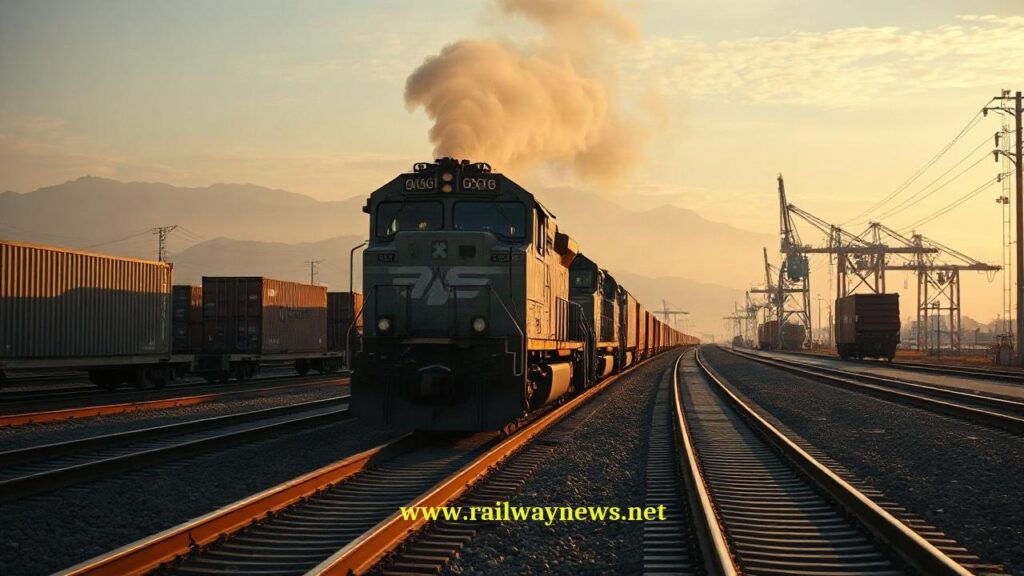
⚡ In Brief: Canadian National Railway, Ray-Mont Logistics, and the Prince Rupert Port Authority opened the C$750 million CANXPORT rail-to-container transload facility in British Columbia to expand Western Canada’s bulk export capacity.
PRINCE RUPERT, Canada – On August 28, 2026, Canadian National Railway (CN), Ray-Mont Logistics, and the Prince Rupert Port Authority (PRPA) officially opened CANXPORT, a C$750 million export logistics terminal at the Port of Prince Rupert. The terminal transfers bulk rail shipments into marine shipping containers to serve overseas markets in Asia. Public-sector backing includes C$150 million from the Canada Infrastructure Bank, nearly C$50 million from Transport Canada, and C$25 million from British Columbia’s StrongerBC initiative.
What Is the Full Scope of This Project?
CANXPORT provides dedicated rail-to-container transloading infrastructure across the petrochemical, forestry, agriculture, and mining sectors. The terminal serves as the initial operating asset of a broader C$3.0 billion capital program designed to triple cargo handling across the Prince Rupert gateway. Site preparation and civil development were executed under a primary contract awarded to an Indigenous joint venture comprising the Metlakatla First Nation, Lax Kw’alaams Band, Gitxaała Nation, and IDL Projects. Specific operational metrics regarding annual container throughput capacity in twenty-foot equivalent units (TEUs) were not disclosed by the project partners.
Key Project Data
| Parameter | Value |
|---|---|
| Project / Contract Name | CANXPORT Export Logistics Hub |
| Total Value | C$750 million |
| Parties Involved | Canadian National Railway (CN), Ray-Mont Logistics, Prince Rupert Port Authority (PRPA), Canada Infrastructure Bank (CIB), Transport Canada, Province of British Columbia, Coast Tsimshian / Gitxaała / IDL Projects JV |
| Timeline / Completion | Grand opening August 28, 2026; ongoing operations |
| Country / Corridor | Canada / CN Northern Transcon Corridor (Western Canada to Port of Prince Rupert) |
How Does This Compare to Similar Projects?
The Port of Prince Rupert handled C$8.1 billion in Canadian exports in 2025 as the country’s third-largest port, relying on the deepest natural harbor in North America to capture routing advantages over southern alternatives (Source: Prince Rupert Port Authority, 2026). In contrast to congested multi-operator hubs like Metro Vancouver, CANXPORT functions on an uncongested, single-railroad mainline directly connecting the Prairies to coastal terminals via CN’s network. On a global level, bulk commodities generated 41.75% of the total USD 370.0 billion rail freight transport market in 2025, demonstrating strong demand for specialized transload interchanges (Source: Mordor Intelligence, 2025). Independent verification of the facility’s exact daily railcar processing capacity was not available at time of publication.
Editor’s Analysis
CANXPORT directly resolves Western Canada’s container imbalance by loading empty inbound import containers with outbound grain, pulp, and specialty plastics. This rail-served transload model strengthens CN’s operational leverage on its northern corridor against Canadian Pacific Kansas City (CPKC) and US West Coast ports. With global rail freight projected to expand from USD 388.5 billion in 2026 to USD 602.7 billion by 2036 at a 4.5% compound annual rate, dedicated intermodal transfer hubs are critical to rail revenue quality (Source: Future Market Insights, 2026).
FAQ
Q: Who owns and operates the CANXPORT logistics facility?
A: The facility is operated by Montreal-based Ray-Mont Logistics in partnership with CN and the Prince Rupert Port Authority. The site development was executed through a joint venture involving the Metlakatla First Nation, Lax Kw’alaams Band, Gitxaała Nation, and IDL Projects.
Q: How was the C$750 million capital cost funded?
A: Financing includes a C$150 million loan from the Canada Infrastructure Bank, nearly C$50 million from Transport Canada’s National Trade Corridors Fund, C$25 million from British Columbia’s StrongerBC program, and private equity from the operating partners. The exact private-equity breakdown between Ray-Mont and CN was not disclosed.
Q: What commodities move through the CANXPORT terminal?
A: The transload facility handles bulk products from the agriculture, forestry, petrochemical, and mining sectors, shifting them from railcars into intermodal maritime containers. These containers are loaded onto transpacific container vessels calling at the Prince Rupert gateway.

Railway infrastructure, rolling stock and transport technologies specialist focused on global rail industry developments, high-speed rail systems, signaling technologies and freight transportation. Covering railway investments, public transport modernization, rail operations and international mobility projects across Europe, Asia and North America.
RELATED POSTS

October 8, 2026 1:15 pm
Alstom secured a €1bn contract to build 13 automated trains,...

October 1, 2026 7:09 am
United States regulators confirmed a September 30 deadline for the...

October 8, 2026 12:18 pm
Siemens Mobility signed an agreement with VinSpeed to supply 350...

October 4, 2026 5:14 pm
Alstom secured a CA$4.7 billion order from VIA Rail Canada...

October 5, 2026 6:12 pm
AECOM and Jacobs secured a contract in September 2026 to...

October 1, 2026 12:13 am
Illinois approved $1.5 billion annually for the Northern Illinois Transit...