
CHSRA Completes 59th Structure Cesar Chavez Underpass Fresno
California High-Speed Rail Authority launched its 59th structure, the Cesar Chavez Underpass, in Fresno in 2026.
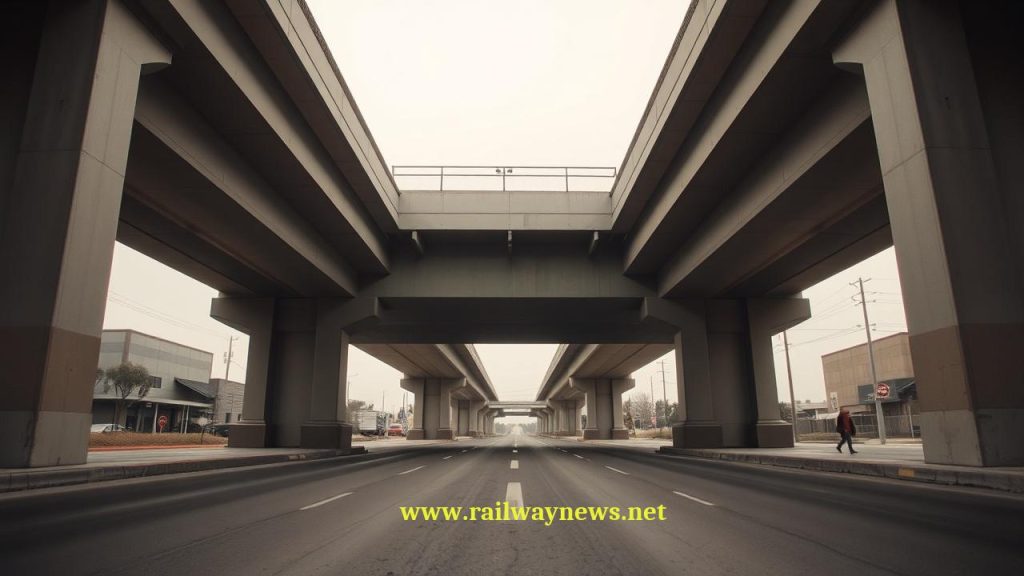
⚡ In Brief: The California High-Speed Rail Authority has completed its 59th structure, the Cesar Chavez Boulevard underpass in Fresno, reconnecting downtown with the Chinatown neighborhood beneath Union Pacific and future high-speed rail tracks.
FRESNO, USA – The California High-Speed Rail Authority (CHSRA) has opened the Cesar Chavez Boulevard underpass to traffic, marking the completion of the 59th major structure in its Central Valley segment. The grade separation project restores a key connection between downtown Fresno and the city’s Chinatown district. This is the first high-speed rail structure to be completed in 2026.
What Is the Full Scope of This Project?
The project is a grade separation underpass designed to eliminate an at-grade crossing for motor vehicles, bicycles, and pedestrians. The structure accommodates two lanes of traffic in each direction, along with bike lanes and protected walkways, passing beneath the existing Union Pacific Railroad freight line and the future high-speed rail alignment. While the structure was completed under the name Cesar Chavez Boulevard, the Fresno City Council has since voted to revert the street’s name to its originals—California Avenue, Ventura Street, and Kings Canyon Road—following allegations against the late labor leader (Source: abc30.com).
Key Project Data
| Parameter | Value |
|---|---|
| Project / Contract Name | Cesar Chavez Boulevard Underpass |
| Total Value | Not disclosed |
| Parties Involved | California High-Speed Rail Authority (CHSRA), City of Fresno, Union Pacific Railroad |
| Timeline / Completion | 2026 |
| Country / Corridor | USA / Central Valley Segment |
How Does This Compare to Similar Projects?
The completion of this 59th structure represents incremental progress for the California High-Speed Rail project, delivered as a discrete civil works package. In contrast, other major US transit projects are facing significant financial reassessments on a much larger scale. For example, Seattle’s Sound Transit is currently evaluating cost-saving options for its light rail expansion, with the narrowed West Seattle project alone estimated to cost between $4.9 billion and $5.3 billion in 2025 dollars (Source: KOMO News). This highlights CHSRA’s strategy of completing individual structures while other agencies manage multi-billion dollar corridor-wide budget challenges.
Editor’s Analysis
The completion of individual structures like the Fresno underpass provides tangible evidence of progress for CHSRA, which is critical for maintaining political and public support. However, the local controversy over the street’s name demonstrates the non-engineering, community-level challenges that large infrastructure projects must navigate. This focus on delivering discrete, usable infrastructure pieces contrasts with the large-scale funding and scope challenges seen in other US transit expansions, reflecting a potential trend toward more modular project execution to demonstrate consistent value (Source: MarketBeat).
FAQ
Q: Why is this underpass significant for Fresno?
A: The underpass reconnects downtown Fresno with the Chinatown neighborhood, eliminating a railway barrier that divided the areas for decades. It improves traffic flow and accessibility for vehicles, cyclists, and pedestrians beneath Union Pacific and future high-speed rail lines.
Q: What is the status of the street’s name?
A: While the project was completed as the Cesar Chavez Boulevard underpass, the Fresno City Council has voted to revert the name back to its originals: California Avenue, Ventura Street, and Kings Canyon Road. This change followed public allegations of abuse against the late labor leader, Cesar Chavez.
Q: How many more structures need to be built for the Central Valley segment?
A: The total number of structures planned for the 119-mile Central Valley segment was not specified in the announcement. This underpass marks the 59th completed structure to date for the project.

Railway infrastructure, rolling stock and transport technologies specialist focused on global rail industry developments, high-speed rail systems, signaling technologies and freight transportation. Covering railway investments, public transport modernization, rail operations and international mobility projects across Europe, Asia and North America.
RELATED POSTS

October 1, 2026 7:09 am
United States regulators confirmed a September 30 deadline for the...

October 8, 2026 12:18 pm
Siemens Mobility signed an agreement with VinSpeed to supply 350...

October 1, 2026 12:13 am
Illinois approved $1.5 billion annually for the Northern Illinois Transit...

October 5, 2026 1:13 pm
New York MTA confirmed a late 2026 DEIS release for...

October 6, 2026 9:17 am
Illinois approved $1.1M in state funds to upgrade two McHenry...

October 1, 2026 6:10 am
Amtrak approved a System Expansion Committee on July 30 to...