
China CR450 Completes 453 km/h Tests for 400 km/h 2026 Design
China’s CR450 high-speed train completed 453 km/h tests using domestically developed components for its 400 km/h commercial design by 2026.
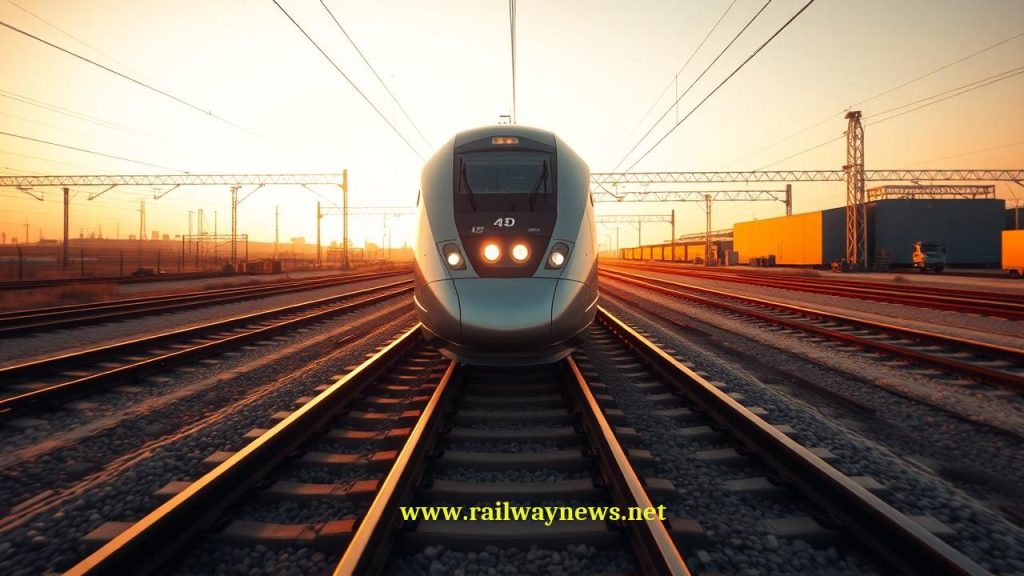
⚡ In Brief: China’s CR450 high-speed train project is on track for a 2026 design finalization after prototypes reached a test speed of 453 km/h, targeting a new commercial service standard of 400 km/h with domestically developed components.
BEIJING – China is advancing its CR450 high-speed train program, with two prototypes having completed approximately 300,000 kilometers of operational testing. As of March 2026, the project is on schedule to finalize its design for 400 km/h commercial operations, following a successful test run that reached 453 km/h. The development is being led by CRRC subsidiaries CRRC Changchun Railway Vehicles and CRRC Qingdao Sifang.
What Are the Technical Specifications?
The CR450 project has established a new technical framework for trains operating at 400 km/h, focusing on performance metrics comparable to the previous generation at lower speeds. At its target commercial speed, the train has an emergency braking distance of under 6,500 meters and energy consumption below 22 kWh per kilometer. The interior noise level is maintained at approximately 68 decibels, similar to the CR400 series operating at 350 km/h. A key project goal has been technological self-reliance, with major components including bogies, pantographs, and high-voltage cables being domestically developed.
Key Technical Data
| Parameter | Value |
|---|---|
| Technology / System Name | CR450 High-Speed Train |
| Total Value | Not disclosed |
| Parties Involved | China Railway, CRRC Changchun Railway Vehicles, CRRC Qingdao Sifang |
| Timeline / Completion | Design finalization expected in 2026 |
| Country / Corridor | China / Multiple test lines including Beijing Ring Railway |
Where Does This Technology Stand in the Market?
The CR450’s target commercial speed of 400 km/h aims to set a new global benchmark for scheduled passenger rail service. Currently, most high-speed services worldwide operate between 300 and 350 km/h. For comparison, Japan’s experimental ALFA-X Shinkansen is designed for 360 km/h commercial operation and has achieved 400 km/h in testing (Source: JR East, 2020). In Europe, Alstom’s Avelia Horizon (TGV M) platform is designed for a top commercial speed of 350 km/h, while Germany’s Siemens Velaro platform (ICE3) typically operates at up to 320 km/h (Source: Alstom, 2022). The CR450, if deployed at 400 km/h, would surpass these established operators in regular service speed.
Editor’s Analysis
The development of the CR450 is a direct manifestation of China’s national strategy to lead in high-tech manufacturing and achieve industrial self-sufficiency. By developing nearly all critical components domestically, CRRC and China Railway are reducing reliance on international supply chains and positioning the CR450 as a premier export product. This initiative aligns with the country’s broader economic goals, which saw an 11.1% rise in basic research spending in 2025 to foster such technological advancements (Source: INP, 2026). The project is less about incremental speed increases and more about demonstrating detailed system integration and domestic innovation capability on a global stage.
FAQ
Q: What is the main difference between the CR450 and the current CR400?
A: The primary difference is the commercial operating speed, with the CR450 designed for 400 km/h versus the CR400’s 350 km/h. The CR450 also incorporates a higher percentage of newly developed domestic components to achieve this performance while maintaining similar energy consumption and noise profiles.
Q: When will the CR450 enter commercial service?
A: The design is expected to be finalized in 2026 after the current testing program concludes. A specific date for entry into commercial passenger service has not been officially announced, but it would likely follow in the years immediately after design finalization.
Q: Will the CR450 require new railway lines to be built?
A: While the train can operate on existing high-speed infrastructure, achieving its top commercial speed of 400 km/h will likely require track, signalling, and power systems on select corridors to be upgraded or newly built to accommodate the higher operational demands.

Railway infrastructure, rolling stock and transport technologies specialist focused on global rail industry developments, high-speed rail systems, signaling technologies and freight transportation. Covering railway investments, public transport modernization, rail operations and international mobility projects across Europe, Asia and North America.
RELATED POSTS

October 1, 2026 7:09 am
United States regulators confirmed a September 30 deadline for the...

October 8, 2026 1:15 pm
Alstom secured a €1bn contract to build 13 automated trains,...

October 4, 2026 5:14 pm
Alstom secured a CA$4.7 billion order from VIA Rail Canada...

October 1, 2026 12:13 am
Illinois approved $1.5 billion annually for the Northern Illinois Transit...

October 6, 2026 2:14 am
Union Pacific launched export rail shipments with Ferromex to deliver...

October 1, 2026 6:10 am
Amtrak approved a System Expansion Committee on July 30 to...