
CDPQ Infra Launches Two Montreal REM Stations Planning
CDPQ Infra launched planning in June 2025 for two new REM stations in Montreal, with simultaneous construction recommended to limit costs after a city delay.
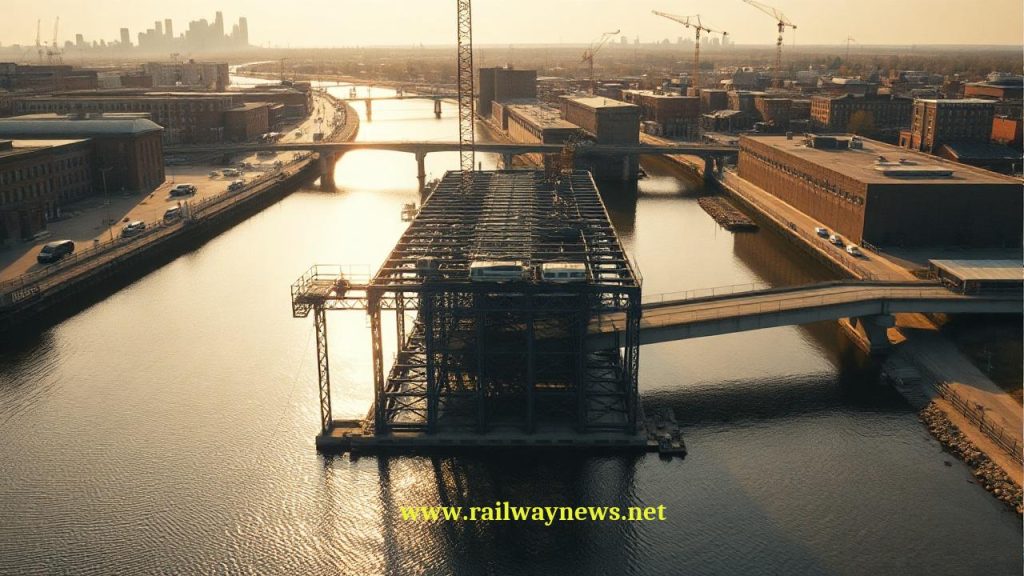
⚡ In Brief: CDPQ Infra, the Quebec government, and Montreal launched planning for two new REM stations — Griffintown–Bernard-Landry and a second near Bridge/Wellington — after a city-driven delay, with simultaneous construction recommended to limit costs.
MONTREAL, CANADA – CDPQ Infra, alongside the Government of Quebec and the City of Montreal, initiated the planning phase for two additional stations on the Réseau express métropolitain (REM) automated light-rail network. The Griffintown–Bernard-Landry station and a second station near Bridge and Wellington streets will support redevelopment around the Lachine Canal. No total project cost or specific in-service date was disclosed, though construction was originally slated for 2024 before a 2023 delay triggered by Montreal’s request for an extra station.
What Is the Full Scope of This Project?
The planning phase covers two new infill stations on the existing REM automated light-rail system serving Greater Montreal. The Griffintown station will serve the north side of the Lachine Canal and the Wellington Basin area, while the second station’s precise location and name remain undefined. CDPQ Infra recommended building both stations simultaneously to contain costs and minimize local disruption, after the city’s late addition of the second station forced a redesign of the originally planned single-station schedule. No passenger capacity forecasts, platform dimensions, or architectural designs were made public with the announcement.
Key Project Data
| Parameter | Value |
|---|---|
| Project / Contract Name | REM Griffintown–Bernard-Landry station & Bridge/Wellington station planning |
| Total Value | Not disclosed |
| Parties Involved | CDPQ Infra, Government of Quebec, City of Montreal |
| Timeline / Completion | Planning phase launched June 2025; original construction start was 2024; new timeline not disclosed |
| Country / Corridor | Canada / Montreal, Quebec |
How Does This Compare to Similar Projects?
Montreal’s move to add stations along an existing automated line mirrors a strategy of capturing land-use value around transit corridors, but it arrives at a time when other North American transit agencies face intense cost and delivery scrutiny. The Los Angeles County Metropolitan Transportation Authority (LACMTA), which marks its thirty‑second year in 2025, continues to draw criticism for expensive expansions, with reports highlighting crime and high per‑rider costs that call into question the return on large‑scale urban rail investments (Source: Independent Institute, 2025). Meanwhile, the Rail Baltica standard‑gauge corridor through the Baltic states is undergoing a fundamental timeline rethink as cost escalation and deliverability pressures mount, demonstrating how even flagship projects can stall when scope expands under tight deadlines (Source: Railway Gazette, 2025). In contrast, China is accelerating rail‑tourism integration with new scheduled services to boost local leisure economies, indicating that well‑targeted urban rail investments can align with broader economic development goals (Source: Tourism Review, 2025). The REM planning phase, delayed by a last‑minute station addition, echoes the risk that scope changes can erode schedule certainty — a lesson mirrored by both Los Angeles and Rail Baltica experiences.
Editor’s Analysis
CDPQ Infra’s decision to advance both REM stations at once, after a city‑driven pause, reflects a pragmatic approach to cost‑containment, but silence on the final price tag and timeline leaves the business case opaque. The parallel with Los Angeles’s transit criticism suggests that North American cities increasingly struggle to reconcile expanding networks with rider‑satisfaction and fiscal sustainability. While Montreal’s project is smaller in scale than a full new line, the shift to simultaneous delivery could become a template for infill‑station programs if it successfully limits disruption — a metric that investors and taxpayers will watch closely against the backdrop of Ballooning infrastructure costs globally.
FAQ
Q: Why was the Griffintown–Bernard-Landry REM station delayed?
A: Planning was paused in 2023 after the City of Montreal requested a second station near Bridge and Wellington streets, which required re‑scoping to build both stations at once and avoid multiple construction phases.
Q: When will the new REM stations open for service?
A: No opening date has been announced. The original Griffintown station was intended to begin construction in 2024, but the timeline has shifted; CDPQ Infra has only confirmed the planning phase is now underway.
Q: How will the simultaneous construction of two stations affect the existing REM network or nearby neighborhoods?
A: CDPQ Infra stated that building both stations simultaneously is intended to limit costs and overall community impact, but specific mitigation details, traffic management plans, or potential service disruptions have not been disclosed.

Railway infrastructure, rolling stock and transport technologies specialist focused on global rail industry developments, high-speed rail systems, signaling technologies and freight transportation. Covering railway investments, public transport modernization, rail operations and international mobility projects across Europe, Asia and North America.
RELATED POSTS

October 8, 2026 1:15 pm
Alstom secured a €1bn contract to build 13 automated trains,...

October 1, 2026 7:09 am
United States regulators confirmed a September 30 deadline for the...

October 8, 2026 12:18 pm
Siemens Mobility signed an agreement with VinSpeed to supply 350...

October 4, 2026 5:14 pm
Alstom secured a CA$4.7 billion order from VIA Rail Canada...

October 5, 2026 6:12 pm
AECOM and Jacobs secured a contract in September 2026 to...

October 1, 2026 12:13 am
Illinois approved $1.5 billion annually for the Northern Illinois Transit...