
Caulfield to Dandenong Elevated Rail Project: Victoria, Melbourne Level Crossing Removal
Melbourne’s Caulfield-Dandenong rail project is complete! Nine level crossings are gone, replaced by 3.2km of elevated track and five new stations.
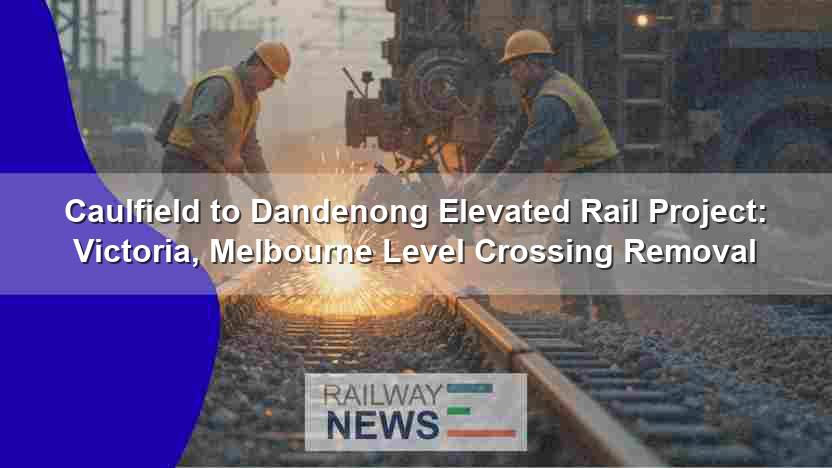
This article examines the Caulfield to Dandenong Elevated Rail Project, a significant infrastructure undertaking in Melbourne, Australia. The project aimed to alleviate chronic traffic congestion caused by numerous level crossings along the Cranbourne-Pakenham rail line, one of Melbourne’s busiest passenger routes. The overarching goals encompassed enhancing passenger safety, improving the reliability of train services, and creating vibrant, integrated communities through the repurposing of land previously occupied by rail lines at ground level. The project’s success is measured not only by the removal of level crossings and the creation of elevated rail but also by its impact on community development, job creation, and the innovative construction techniques employed. This analysis explores the engineering challenges overcome, the community benefits realized, and the sustainability aspects incorporated into the project’s design and execution. The project’s detailed scope involved the construction of elevated rail, the creation of new stations, and the integration of urban design elements to maximize the project’s positive impact on the surrounding area.
Project Overview and Scope
The Caulfield to Dandenong Level Crossing Removal Project drastically reshaped a significant portion of Melbourne’s southeastern rail network. The project’s primary objective was the elimination of nine level crossings along the Cranbourne-Pakenham line between Caulfield and Dandenong, notorious for causing significant traffic delays. This involved constructing approximately 3.2 kilometers of elevated rail. The project also included the construction of five new, modern stations at Carnegie, Murrumbeena, Hughesdale, Clayton, and Noble Park, substantially improving passenger access and amenity. Beyond the immediate rail improvements, the project incorporated extensive urban design elements, transforming the space beneath the elevated tracks into valuable community assets. This involved creating approximately 225,000 square meters of open space, developed into parks, plazas, pedestrian and cycling paths, and parking areas. The integration of urban design into the project was crucial in maximizing its community impact, transforming previously fragmented neighborhoods.
Engineering and Construction Innovations
The construction phase presented significant engineering challenges, requiring innovative solutions to minimize disruption to both rail operations and road traffic. The project utilized a combination of construction methods. In certain sections, advanced gantry cranes, coupled with an automated carrier system, were deployed to erect prefabricated sections of the elevated rail structure. This method, a first for Victoria, allowed for a substantial portion of the construction to be completed with minimal interruption to existing train services. Other sections employed more traditional crane methods using Super T beams. This flexible approach reflects a commitment to efficiency and minimizing operational disruptions. The project also demonstrated a significant reduction in road freight movements, with an estimated 75,000 fewer truck trips compared to alternative construction strategies. This highlights a proactive approach to environmental responsibility and minimizing the project’s environmental footprint.
Community Benefits and Urban Integration
The Caulfield to Dandenong project went beyond simply removing level crossings and building elevated rail. The project’s success is evident in its creation of vibrant community spaces. The repurposing of land beneath the elevated tracks has resulted in the creation of significant open spaces, fostering a stronger sense of community and enhancing the overall quality of life for residents. These spaces provide much-needed recreational areas, improved pedestrian and cyclist connectivity, and opportunities for social interaction. The design of the new stations is also notable for its integration into the surrounding communities, promoting accessibility and enhancing the overall aesthetic of the area. The creation of safer pedestrian and cyclist routes through dedicated pathways further highlights a commitment to community well-being and sustainable transport.
Project Sustainability and Environmental Considerations
Environmental considerations were integrated into the project’s design and execution from the outset. The elevated rail structure’s design allows for increased natural light, air circulation, and rainwater penetration to the ground level, supporting vegetation growth along the corridor. Noise reduction measures were also incorporated to mitigate the impact on nearby communities. The project’s commitment to sustainability is further reflected in the significant reduction in truck movements during construction, minimizing its carbon footprint and its overall environmental impact. The inclusion of sustainable design features also contributed to the project’s award-winning status in the Premier’s Sustainability Awards. The project underscores the possibility of large-scale infrastructure projects having a positive and lasting impact on local environment.
Project Summary
| Project Attribute | Details |
|---|---|
| Project Name | Caulfield to Dandenong Elevated Rail Project |
| Location | Melbourne, Victoria, Australia |
| Project Length | 3.2 km |
| Type of Project | Level Crossing Removal and Elevated Rail Construction |
| Connection of Cities/Suburbs | Caulfield and Dandenong |
| Number of New Stations | 5 (Carnegie, Murrumbeena, Hughesdale, Clayton, Noble Park) |
| Number of Level Crossings Removed | 9 |
| Open Space Created | Approximately 225,000 m² |
| New Trains Ordered | 65 high-capacity metro trains |
| Additional Passenger Capacity | 11,000 |
| Jobs Created | More than 2,000 |
Conclusions
The Caulfield to Dandenong Elevated Rail Project stands as a successful example of large-scale infrastructure development that successfully integrates transport improvements with urban renewal. The project’s achievement in removing nine level crossings significantly alleviated traffic congestion and improved safety along one of Melbourne’s busiest rail corridors. The innovative construction methods employed minimized disruption to train services and road traffic, showcasing a commitment to efficiency and community impact. The creation of five new stations significantly enhanced passenger access and amenity, while the repurposing of land under the elevated rail into valuable public spaces demonstrates a holistic approach to urban development. The project’s success is not solely measured by the completion of the elevated railway. The creation of extensive open spaces, the revitalization of surrounding neighborhoods, and the lasting positive impact on the community are crucial elements of its overall success. The project’s commitment to sustainability through noise reduction strategies, environmental design considerations, and reduced truck movements further enhances its long-term value. The Caulfield to Dandenong project serves as a compelling model for future infrastructure projects, highlighting the potential to combine essential transport upgrades with significant community benefits and urban regeneration. The project’s detailed approach to integrating transport infrastructure with urban design principles demonstrates the long-term benefits of a well-planned and executed infrastructure project.
Company Information:
Lendlease: A global real estate and infrastructure group.
CPB Contractors: A leading Australian construction company.
WSP (formerly WSP Parsons Brinckerhoff): A global engineering professional services consulting firm.
Aurecon: A global engineering, management and advisory company.
Metro Trains Melbourne: The operator of Melbourne’s metropolitan train network.
Cox Architecture: An Australian architectural firm.
ASPECT Studios: A landscape architecture and urban design firm.

Railway infrastructure, rolling stock and transport technologies specialist focused on global rail industry developments, high-speed rail systems, signaling technologies and freight transportation. Covering railway investments, public transport modernization, rail operations and international mobility projects across Europe, Asia and North America.